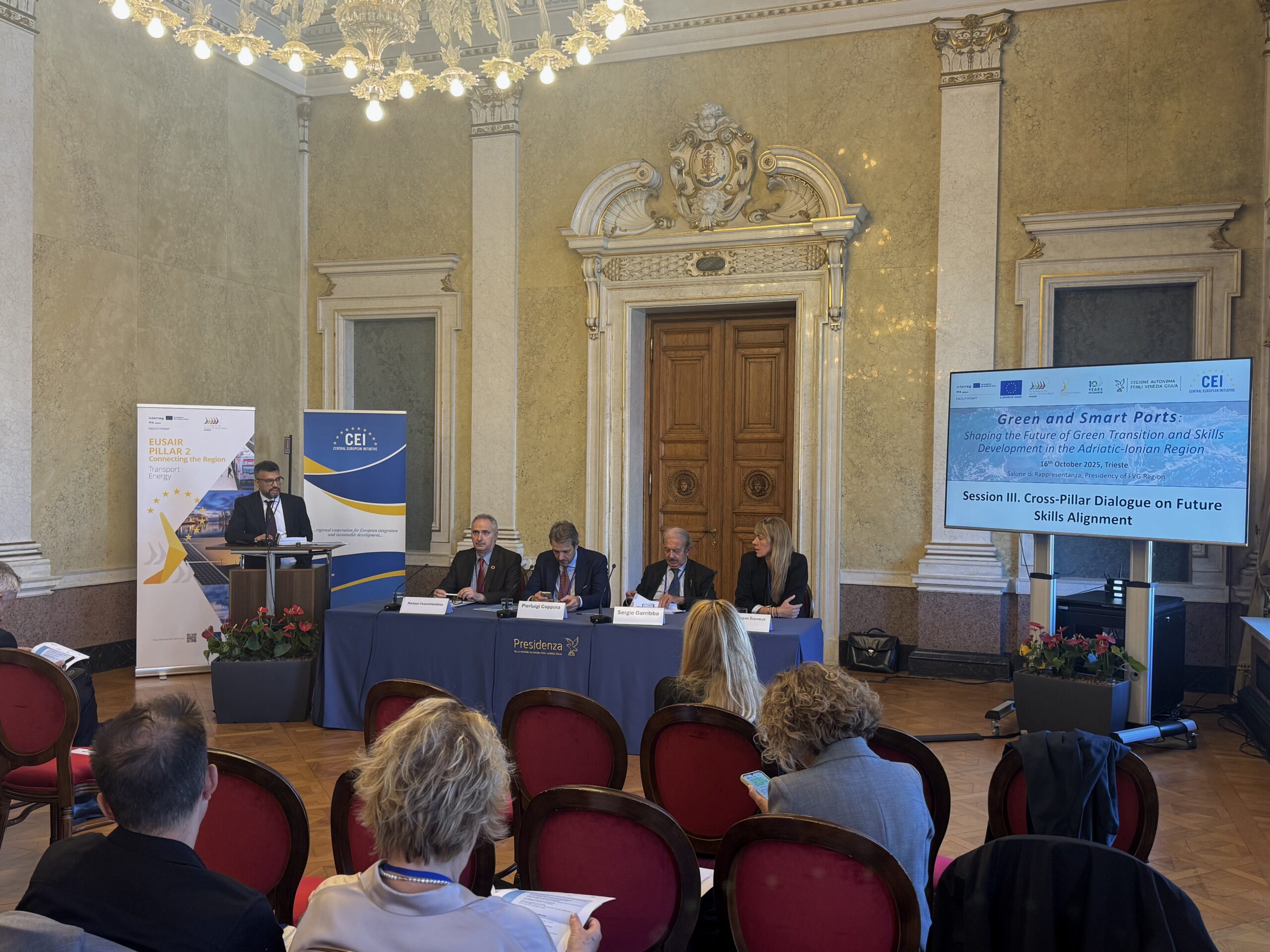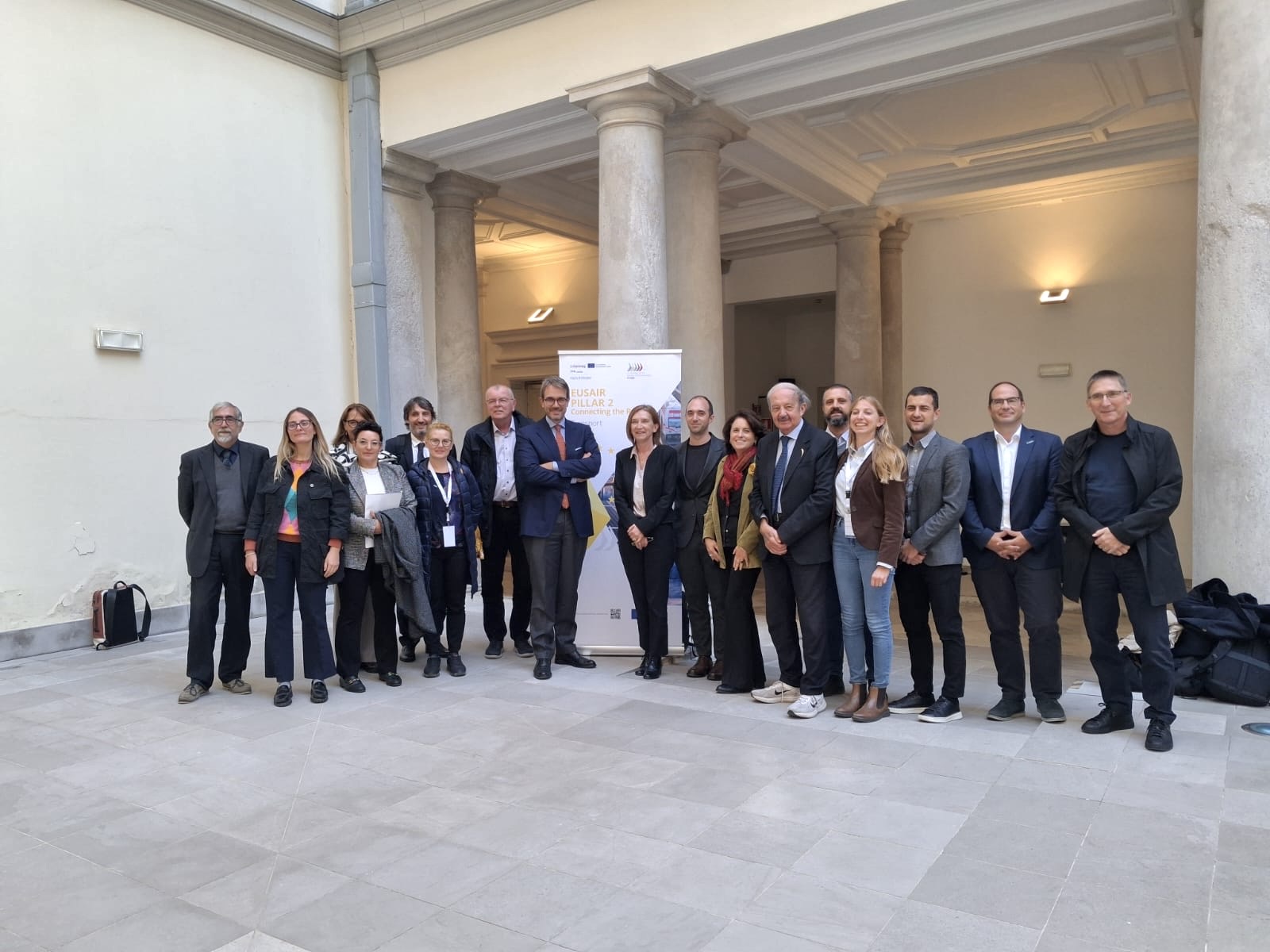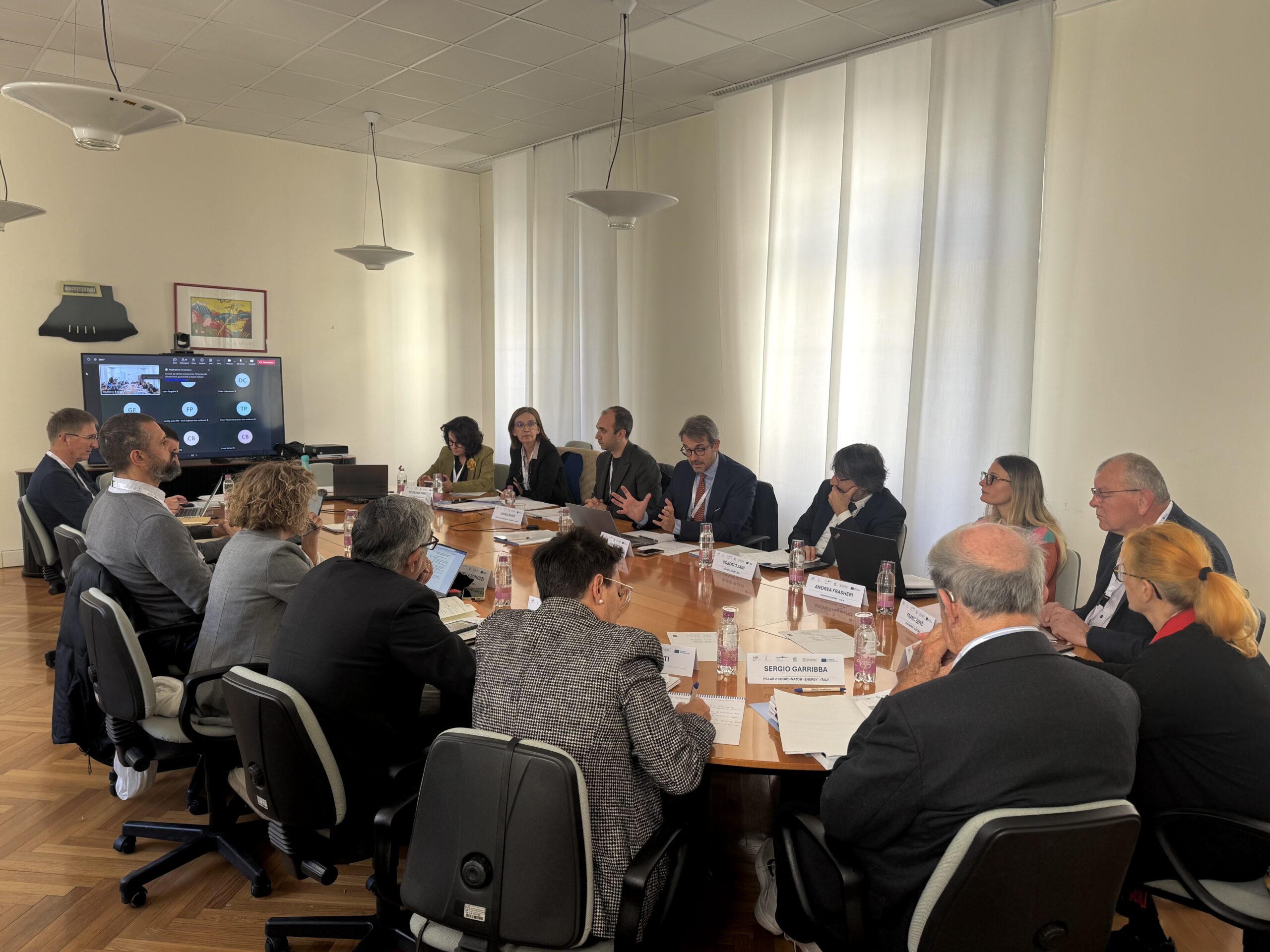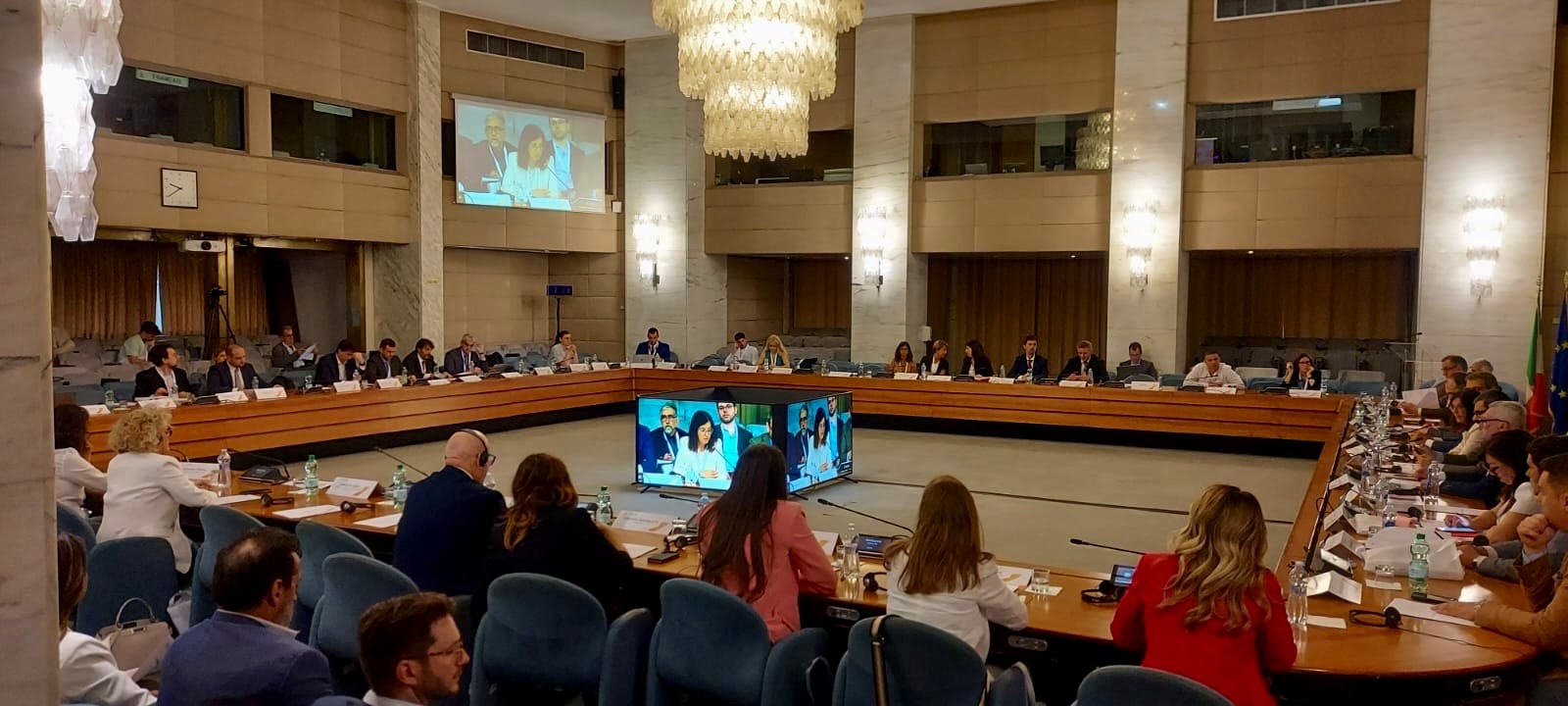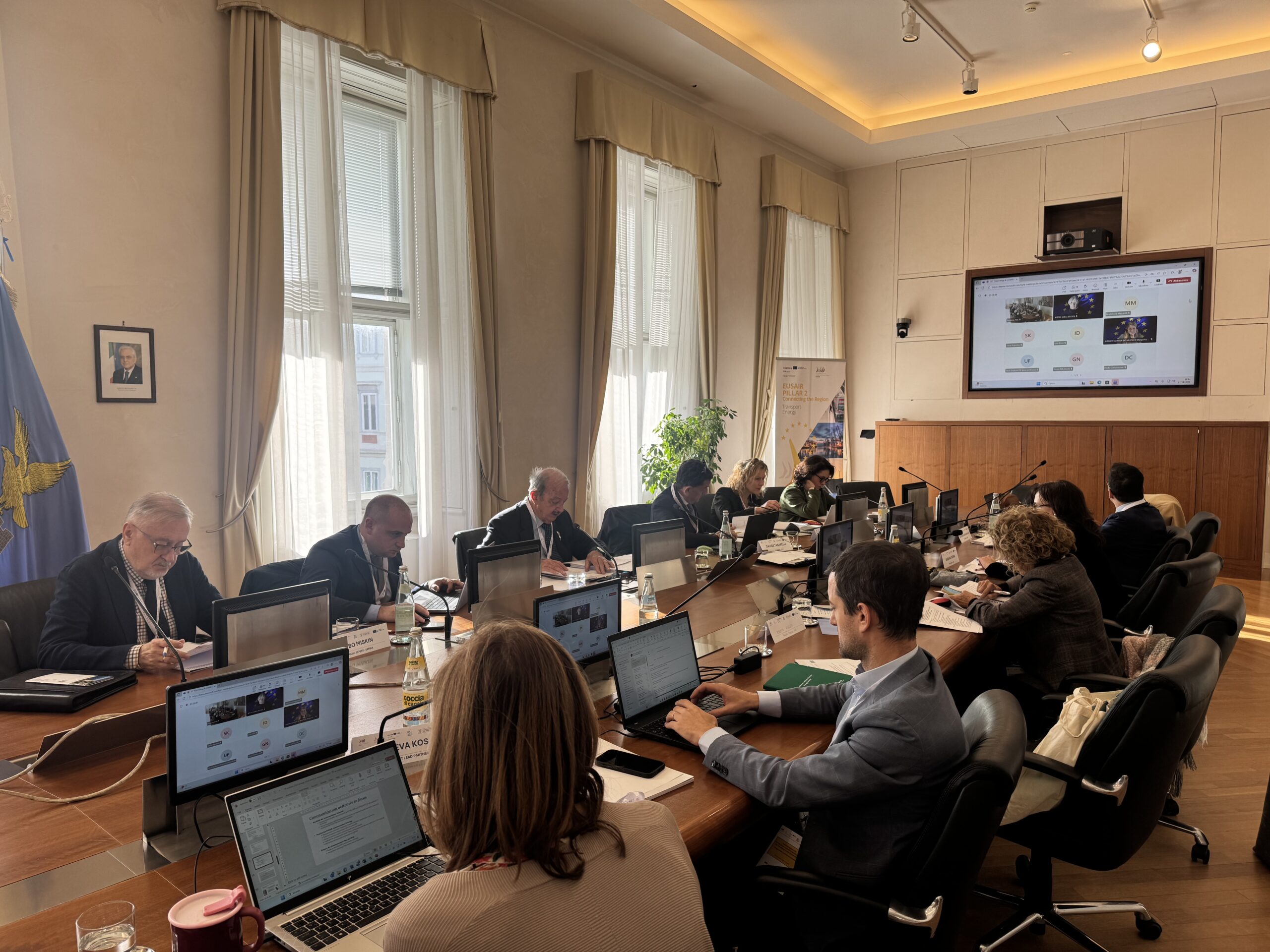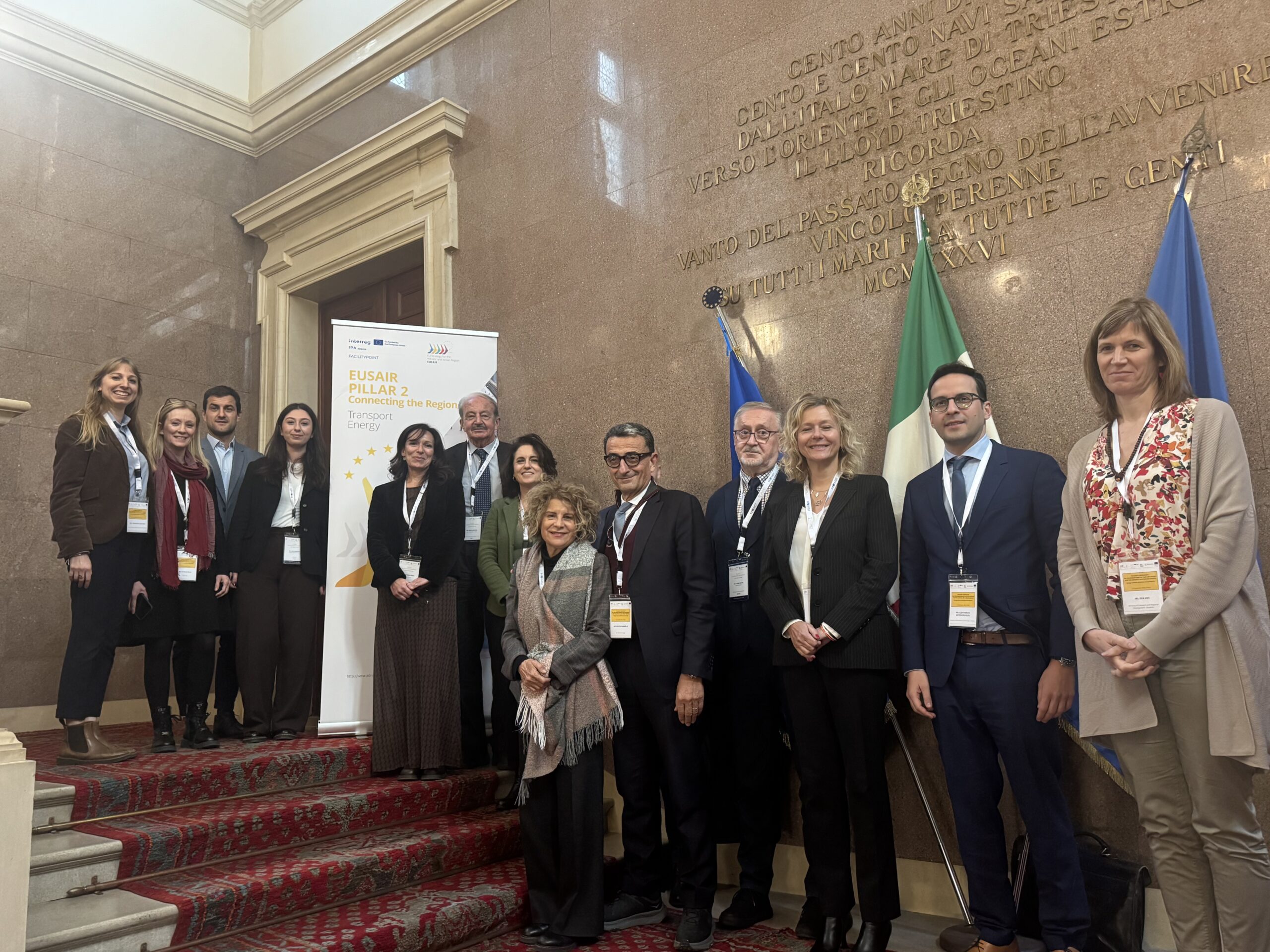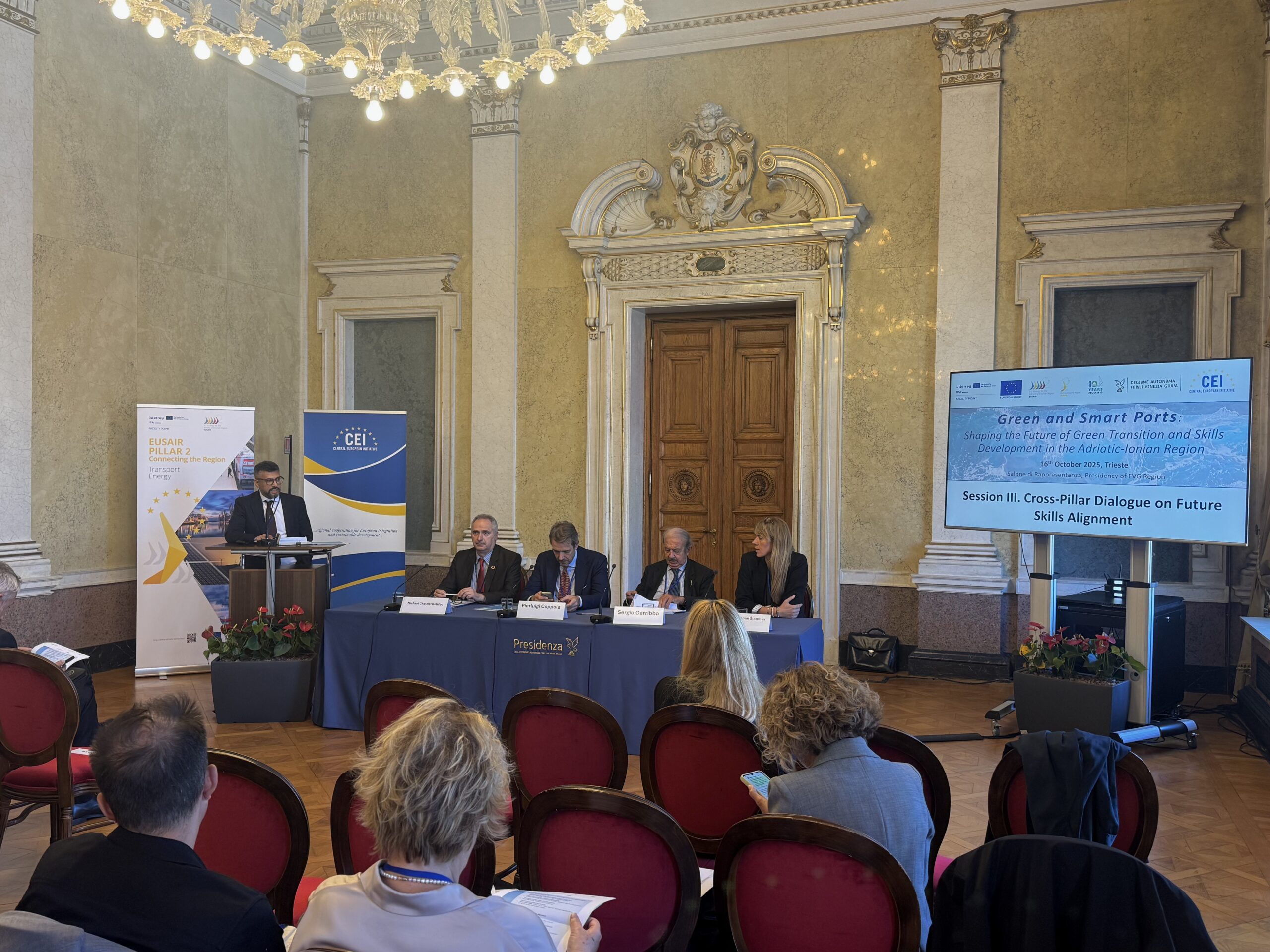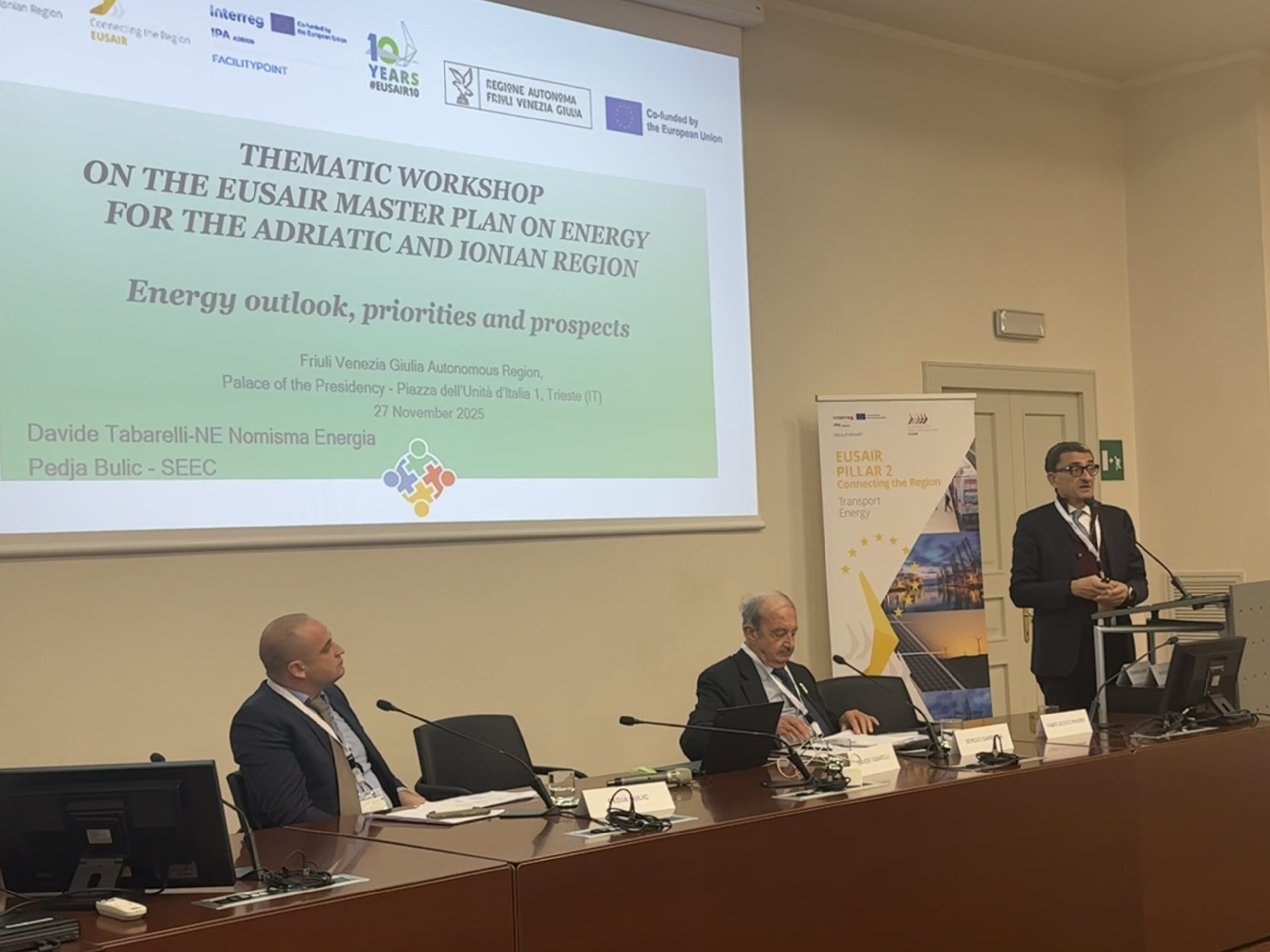
Connecting the Region is the second thematic priority (Pillar 2) of the EUSAIR. It focuses on strengthening transport and energy connectivity across the Adriatic-Ionian Region and deepening integration with the European Union. By fostering close cooperation among participating countries, this pillar supports coordinated policies and shared investments that improve how people, goods, and energy move across borders. The focus is on developing efficient, safe, and competitive transport networks—linking ports, cities, and hinterlands through reliable multimodal connections—while advancing a greener, more resilient TEN-T system. At the same time, Pillar 2 promotes a well-functioning internal energy market by supporting infrastructure development, renewable energy, energy efficiency, and secure energy supply. Through joint action in transport and energy systems management, EUSAIR Pillar 2 helps build a more cohesive, inclusive, and competitive Adriatic-Ionian macro-region, aligned with EU climate and energy goals and open to future growth and innovation.

Connecting the Region, the second thematic priority (Pillar 2) aims to strengthen transport and energy connectivity across the Adriatic–Ionian Region and to deepen integration with the European Union. Achieving this requires close cooperation among participating countries to align policies, coordinate investments, and jointly manage critical infrastructure. The focus is on developing efficient, safe, sustainable, and competitive transport and energy systems.

ACTIVITIES BY TOPIC – TRANSPORT

To achieve the abovementioned objectives, Pillar 2 will focus on three topics:

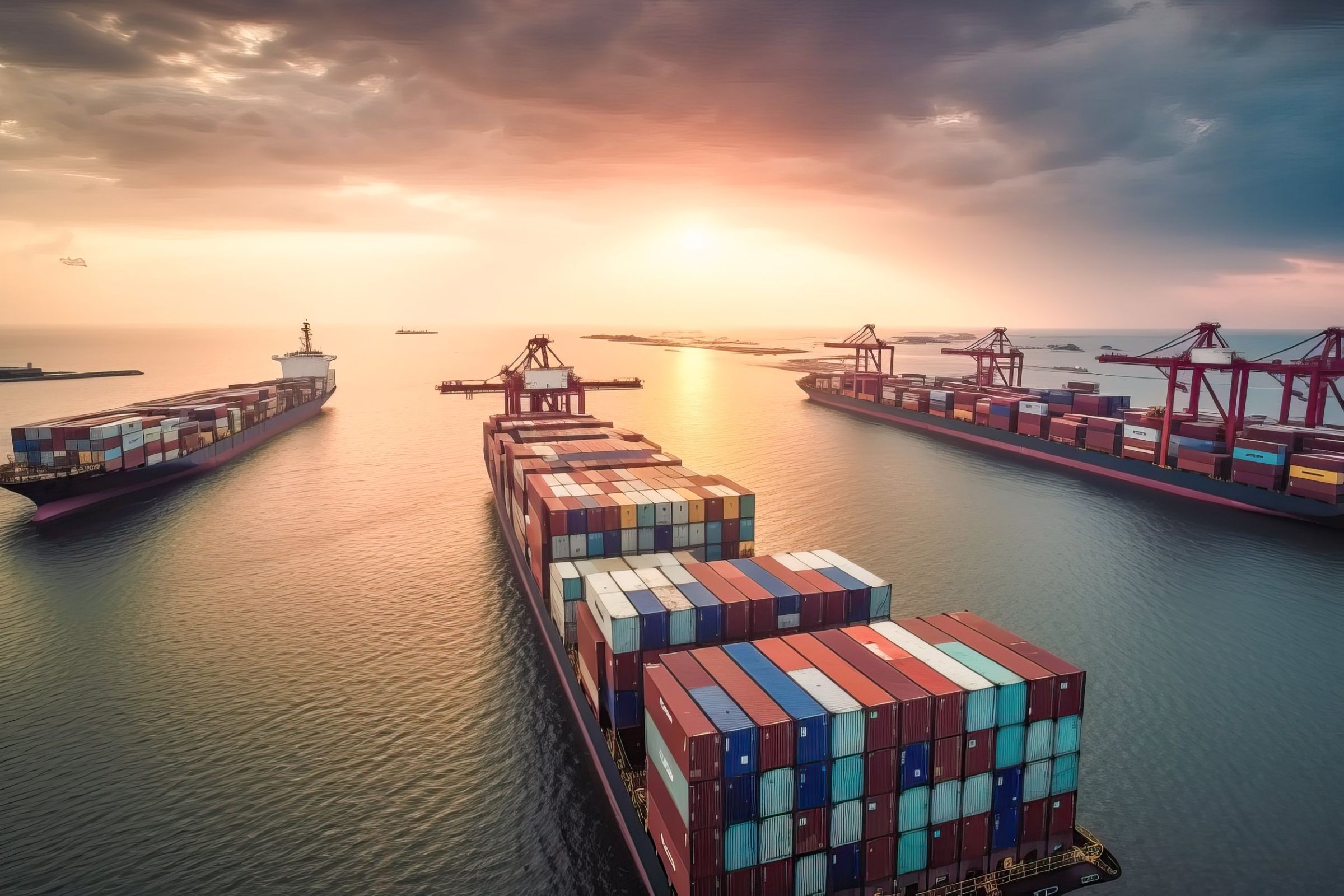
TOPIC 1: Maritime transport

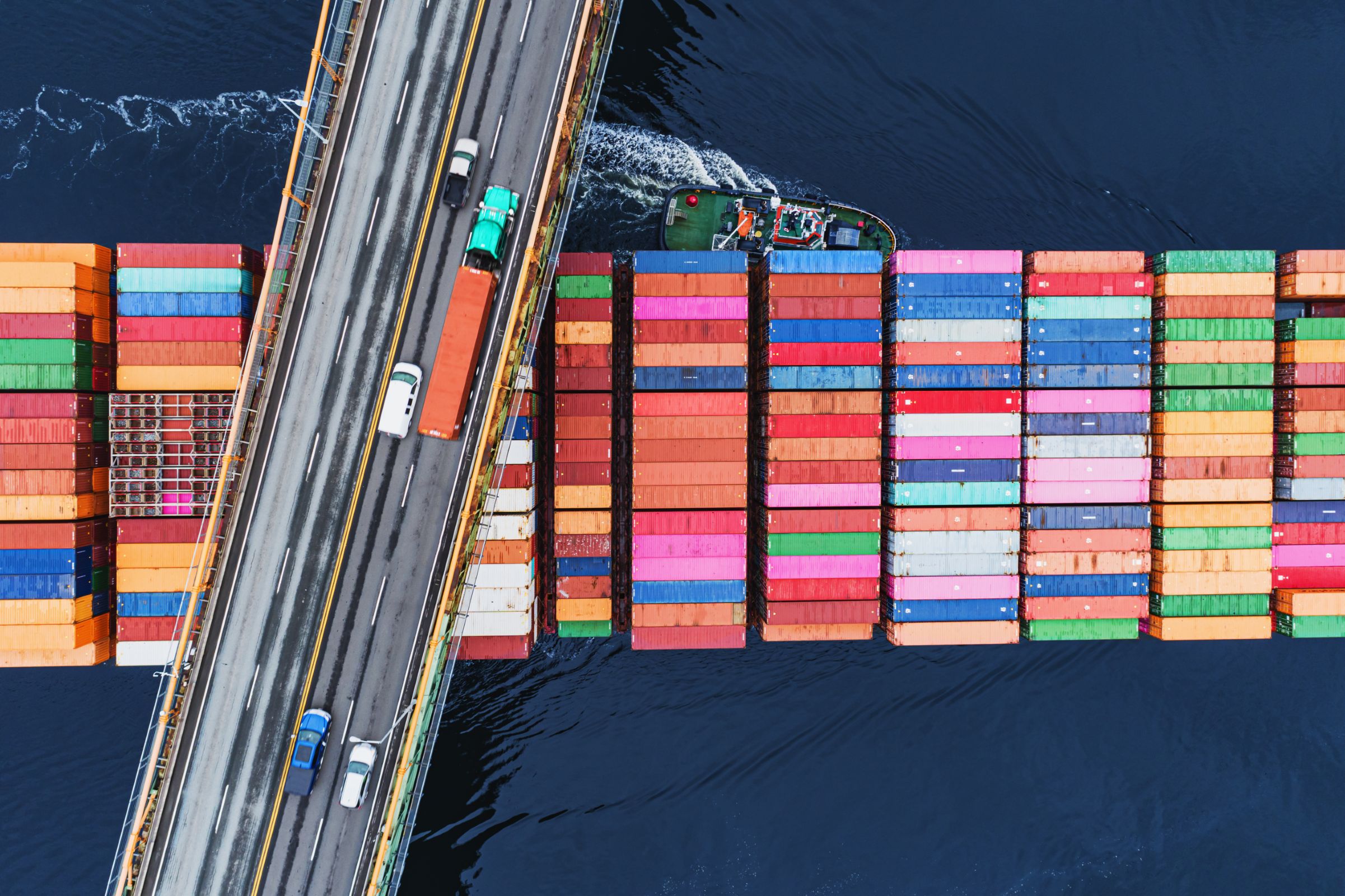
The main objective of this topic is to enhance the safety, security, and competitiveness of port operations, and to develop an interconnected, macro-regional port system. This will be achieved through:

  • increasing safety and security of port operations and resilience of infrastructure, through a vessel traffic monitoring and information system and investments in ports to increase safety, security and ports’ capacity and interconnectivity;
  • improving the effectiveness of port infrastructure and equipment, hence the competitiveness of maritime transport services, through the interoperability of IT systems and solutions in ports including the development and/or improvement of Port Community System;
  • greening ports and maritime transport and increasing the number of certified ports (ISO 14001, Port Environmental Review System and Eco-Management and Audit Scheme);
  • removing roadblocks to project investments, focusing on the enabling factors for the creation and development of regional enterprises along the free and regulated European market principles.
TOPIC 2: Multi-modal connectivity

The main objective of this topic is to develop reliable multi-modal and intermodal connections with the hinterland, both for freight and passengers. This will be achieved through:

  • new investment projects in ICT infrastructure to improve multi-modal connections;
  • interoperable rail infrastructure and services among countries of the Adriatic-Ionian region to increase the rail connections between cities in the Western Balkans;
  • increased rail transport capacity and quality thorough a reduction of missing links and bottlenecks and upgraded rail network of the region to TEN-T standards;
  • increased road safety of rail and road networks.
TOPIC 3: Urban nodes

The main objective of this topic is to support the integration of urban nodes and regional transport systems into a greener TEN-T network. This will be achieved through:

  • the adoption of Sustainable Urban Mobility Plans for all urban nodes in the region to actively promote sustainable mobility solutions, and sustainable logistics measures;
  • integrated public transport services solutions (including also fare structure) for the largest urban nodes, covering their functional urban areas, to increase the modal share of public transport;
  • better coverage of bike lanes and networks (more km of cycling lanes) in all urban areas, connecting the cities with their commuting areas and measures to promote cycling, to increase bike modal share.

Achievements

EUSAIR Masterplan of Transport

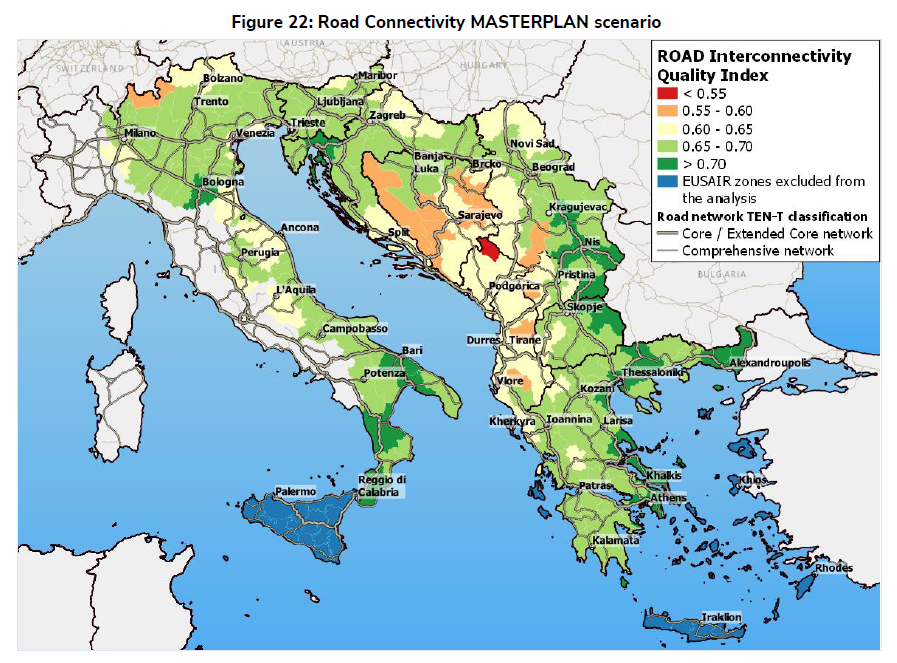
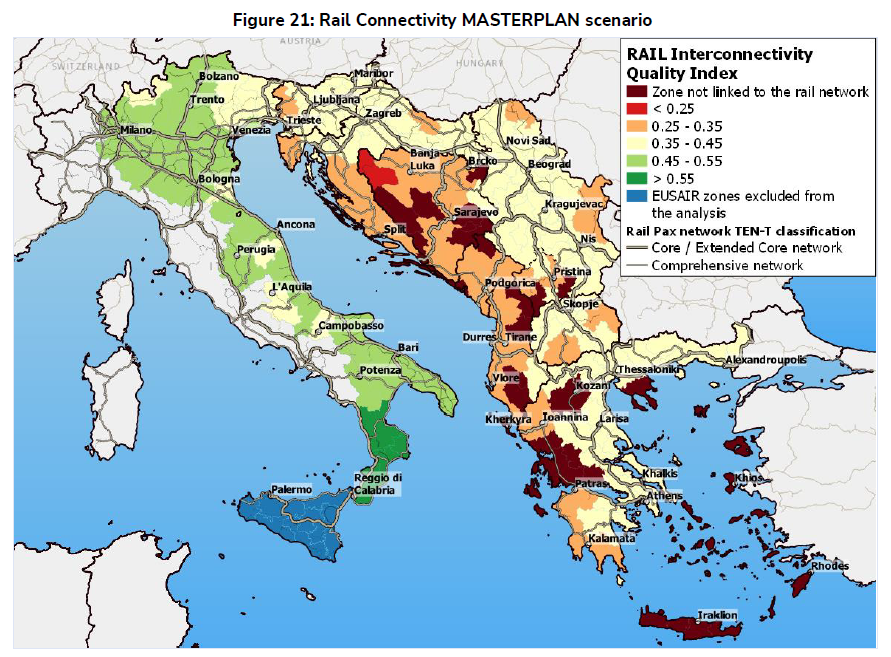
The EUSAIR Masterplan of Transport represents the main strategic achievement of Pillar 2 in the transport sector. Developed through the cooperation of all participating Countries within EUSAIR, the Masterplan provides a shared long-term vision document for the development of transport infrastructure and services across the Adriatic-Ionian Region.

Based on a comprehensive analysis of existing transport networks, accessibility gaps and ongoing and planned infrastructure projects, the Masterplan outlines future development scenarios with time horizons to 2030 and 2050. Its objective is to support a more integrated, multimodal and sustainable transport system, aligned with EU sustainable mobility policy and capable of improving connectivity across the Region.

By establishing a common macroregional framework for transport planning, the Masterplan enables decision-makers to analyse infrastructure needs and development scenarios from a shared perspective, strengthening policy coordination and supporting coherent investment planning across the Adriatic-Ionian Region.

EUSAIR Multimodal Transport Model (EMTM)

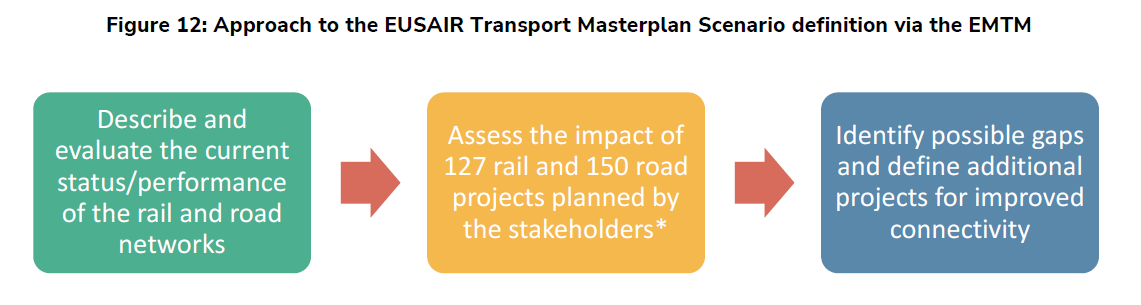
The EUSAIR Multimodal Transport Model (EMTM) is a key technical achievement of Pillar 2, providing a tool to support multimodal transport planning in the Adriatic-Ionian Region. Developed within the Thematic Steering Group (TSG2) on Transport, EMTM is a model simulating passenger and freight demand flows for both rail and road transports, supporting the assessment of infrastructure investment taking into consideration socio-economic development, network performances, accessibility and environmental impacts.

By modelling different future infrastructure scenarios, including the completion of ongoing and planned projects, the EMTM helped identify persistent accessibility gaps and critical bottlenecks across the Region. The simulations provided quantitative evidence to support coordinated infrastructure planning and policy decisions.

Through this shared analytical tool, EUSAIR countries gained a comprehensive overview of the transport system of the Adriatic-Ionian Region and strengthened their capacity to plan future investments based on comparable data, scenario analysis and measurable impacts.

Identification of priority actions

Through continuous cooperation the Thematic Steering Group (TSG2) on Transport has identified a set of projects of macro-regional cross-country relevance to be prioritized for the development of the Adriatic-Ionian transport system, in order to promote more sustainable transport modes and foster economic growth, territorial cohesion and competitiveness.

The process was built on the analytical work carried out through the EUSAIR Masterplan of Transport and was supported by technical discussions among ministries, national experts and regional stakeholders. These exchanges highlighted key challenges affecting the Region, including uneven accessibility levels, cross-border bottlenecks and the need to ensure the alignment of infrastructure development with environmental sustainability.

As a result of this coordinated work, countries converged on several shared areas for action, including the digitalisation and greening of ports, stronger intermodal connections between maritime gateways and hinterland networks, improved interoperability of transport systems and the promotion of sustainable urban mobility. These priorities were later integrated into the revised EUSAIR Action Plan, providing a clearer strategic orientation for cooperation and project development within Pillar 2.

Strengthening stakeholder engagement and cooperation

One of the key achievements of Pillar 2 has been the creation of a consolidated framework for cooperation among stakeholders of the Adriatic-Ionian Region in the field of transport policy and planning.

Through the work of the Thematic Steering Group (TSG2) on Transport, representatives of national ministries, transport authorities and technical experts regularly exchange information, discuss common projects and strategic initiatives. Through this coordinated process, 58 projects were labelled by TSG2 as strategically relevant for the Macroregion, including 27 infrastructure projects and 31 small-scale pilot actions and feasibility studies. These initiatives represent different levels of maturity, ranging from project proposals to ongoing and completed actions, and contribute to strengthening connectivity and cooperation across the Adriatic-Ionian transport system.

The stakeholder engagement has facilitated discussions on cross-border connectivity, interoperability of infrastructure and services, and bottlenecks affecting border crossing points. By sharing experiences, data and planning approaches, participating countries strengthened their capacity to address these challenges collectively and to coordinate the planning and modernisation of transport infrastructure across the Region.

ACTIVITIES BY TOPIC – ENERGY

To achieve the abovementioned objectives, Pillar 2 will focus on two topics:

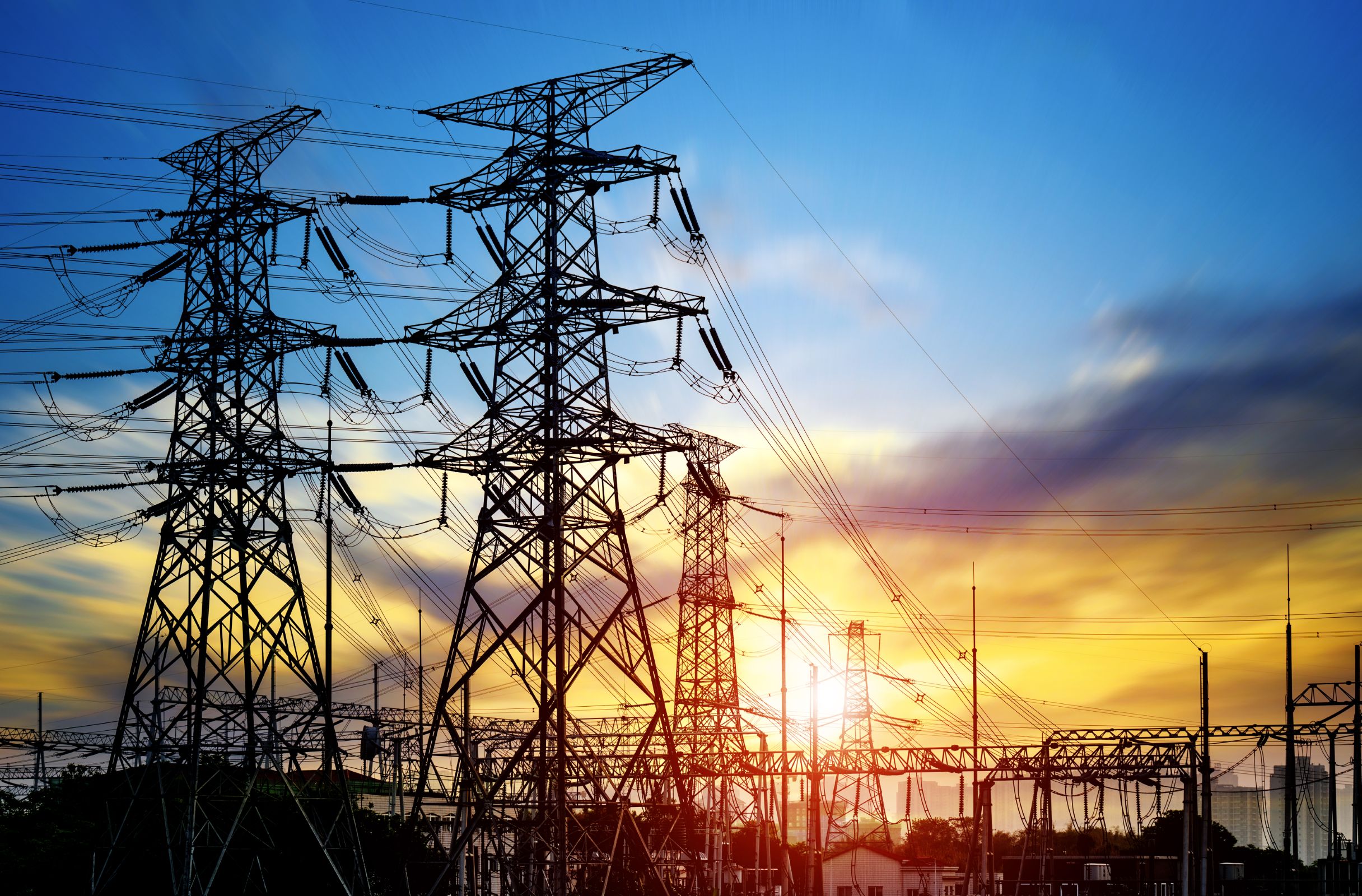
TOPIC 4: Energy networks

The main objective of this topic is to achieve a well-interconnected and well-functioning internal energy market supporting the three energy policy objectives of the EU, i.e. confronting climate change, enhancing security of supply and competitiveness. This will be achieved through:

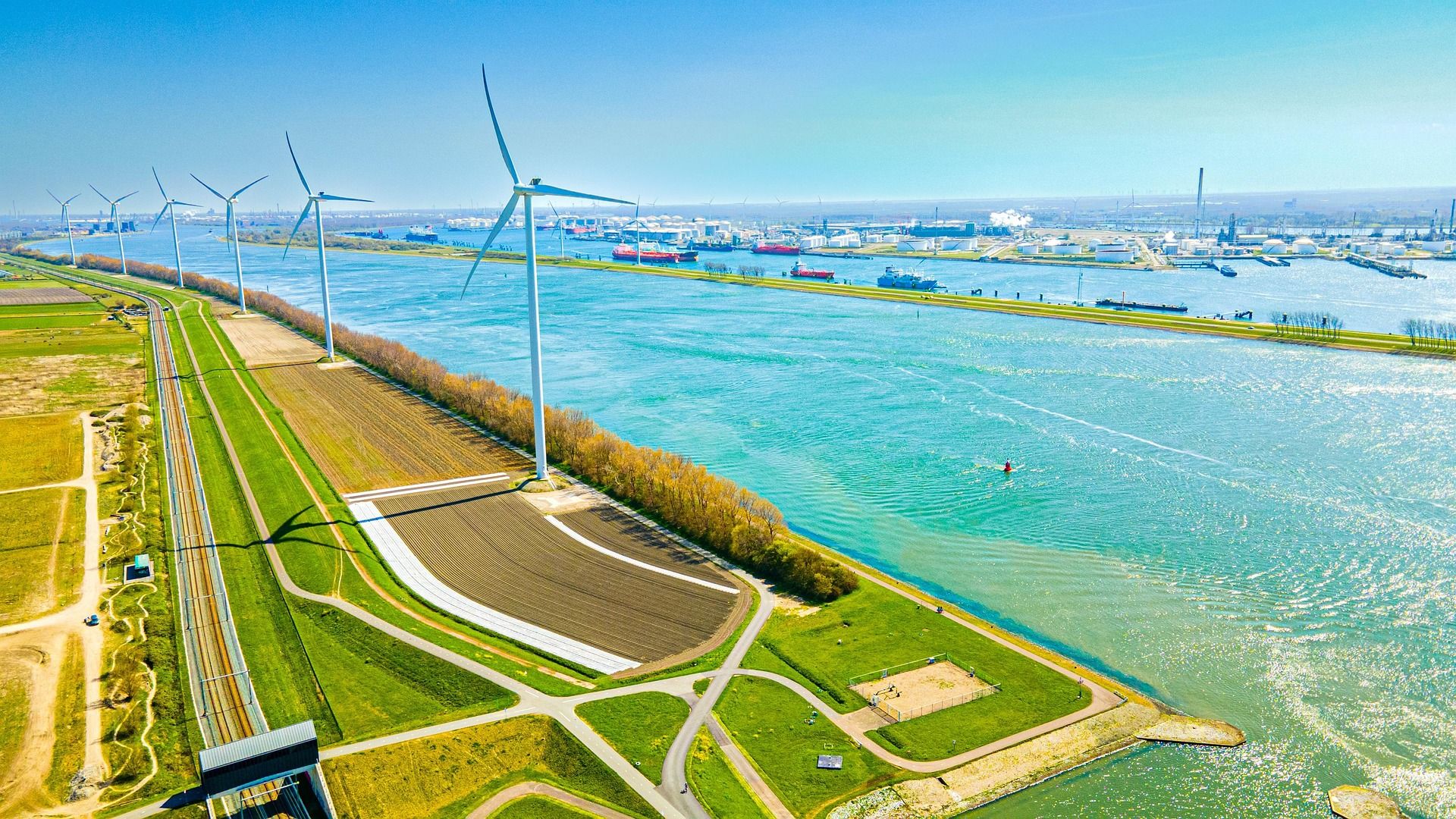
  • developing integrated power networks and markets towards a green Adriatic-Ionian region based on renewable energies production and consumption;
  • building interconnected energy systems and better integrated grids to support renewable energy sources;
  • fostering energy market integration, energy competitiveness and security of energy supply of the Adriatic-Ionian region;
  • removing roadblocks to project investments, focusing on the enabling factors for creation and development of regional enterprises along the free and regulated European market principles.
TOPIC 5: Decarbonising the energy systems

The main objective of this topic is to confront the challenges of the energy transition towards decarbonised and resilient energy systems, while promoting renewable energy sources and energy efficiency. This will be achieved through:

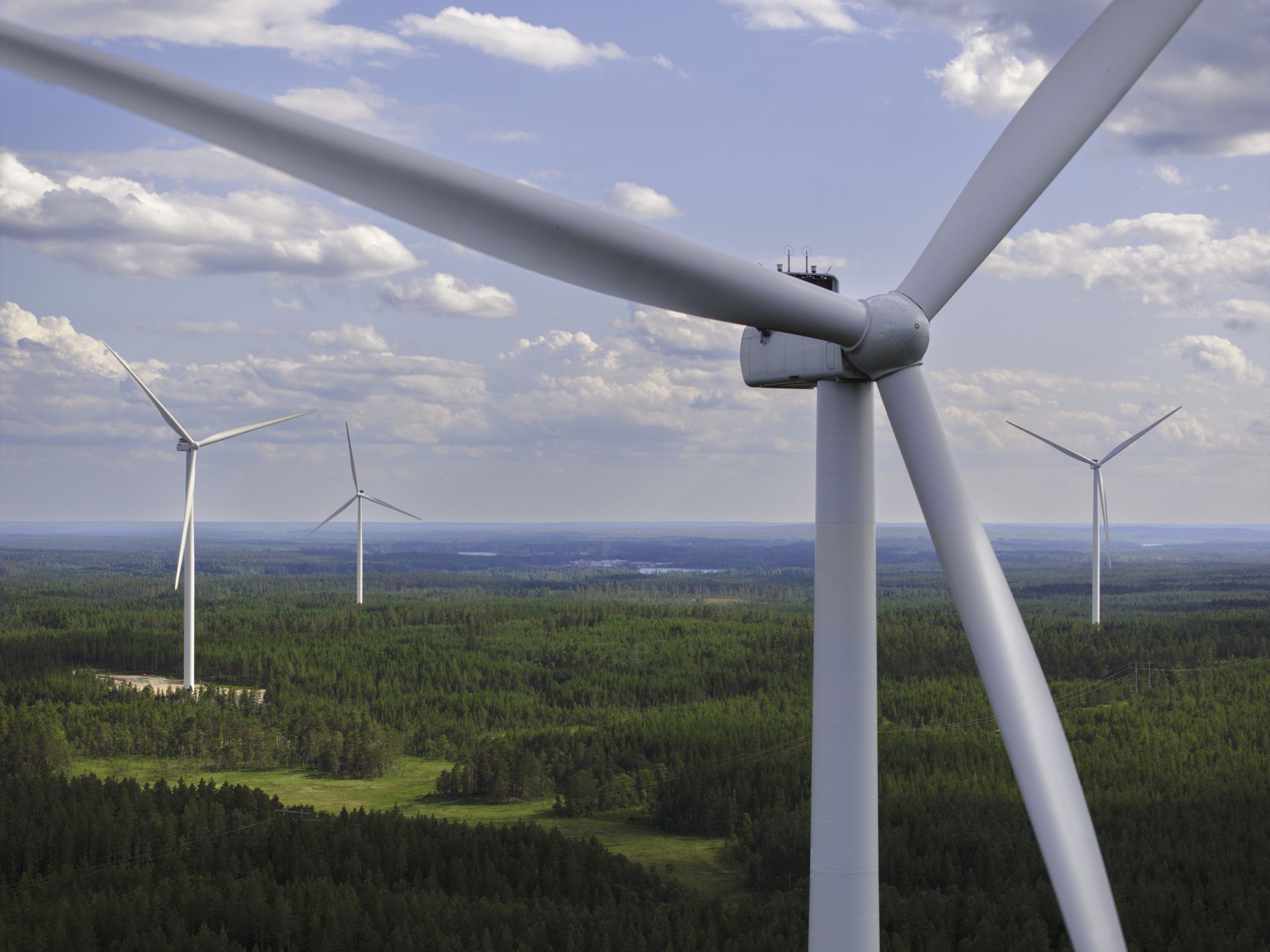
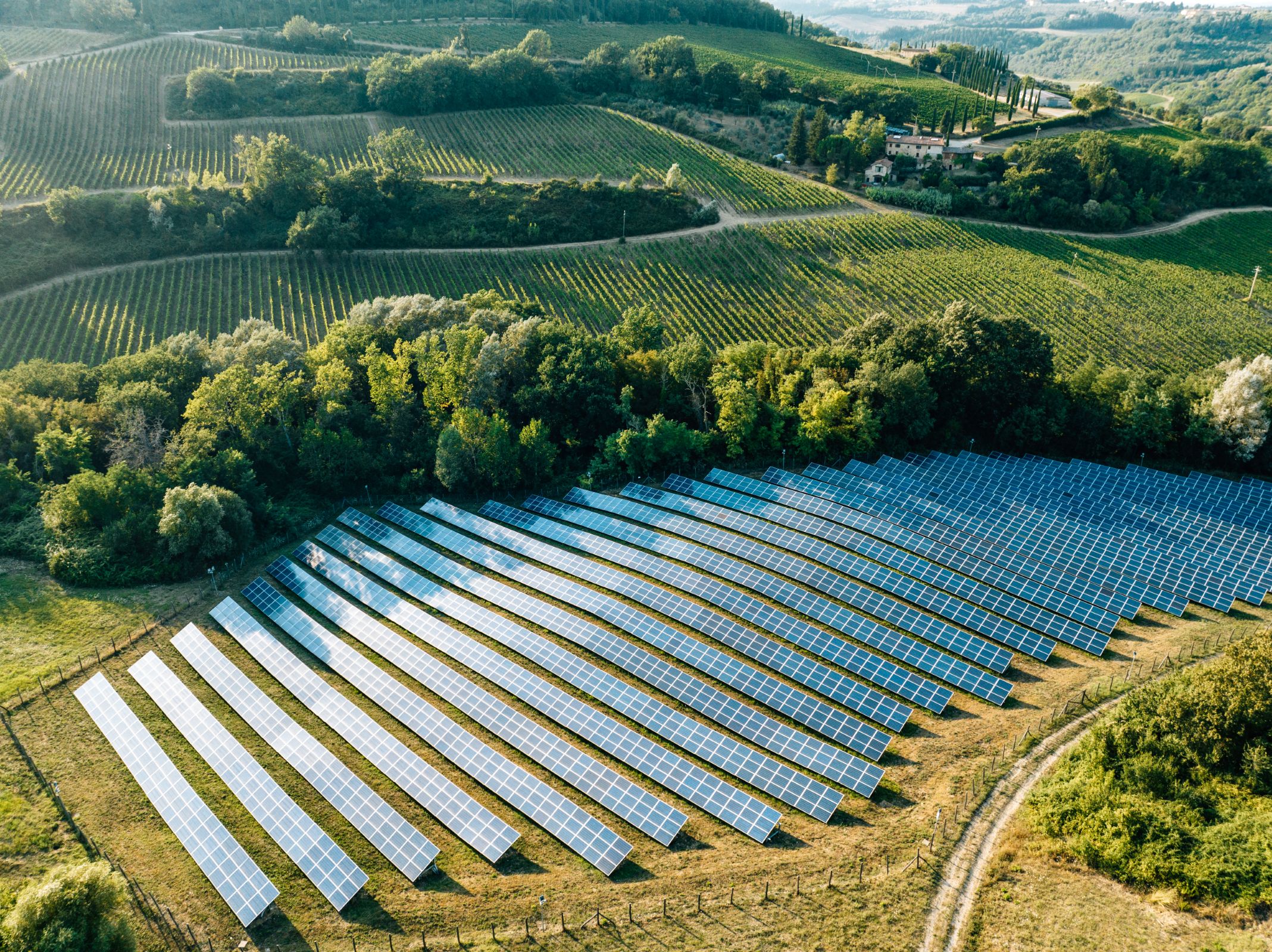
  • increasing the share of renewable energy in the energy mix across the Adriatic-Ionian Region;
  • improving and enhancing energy efficiency of the economies of the Adriatic-Ionian region, through better energy use and management and thus reducing the energy intensity, in terms of the energy required for GDP unit;
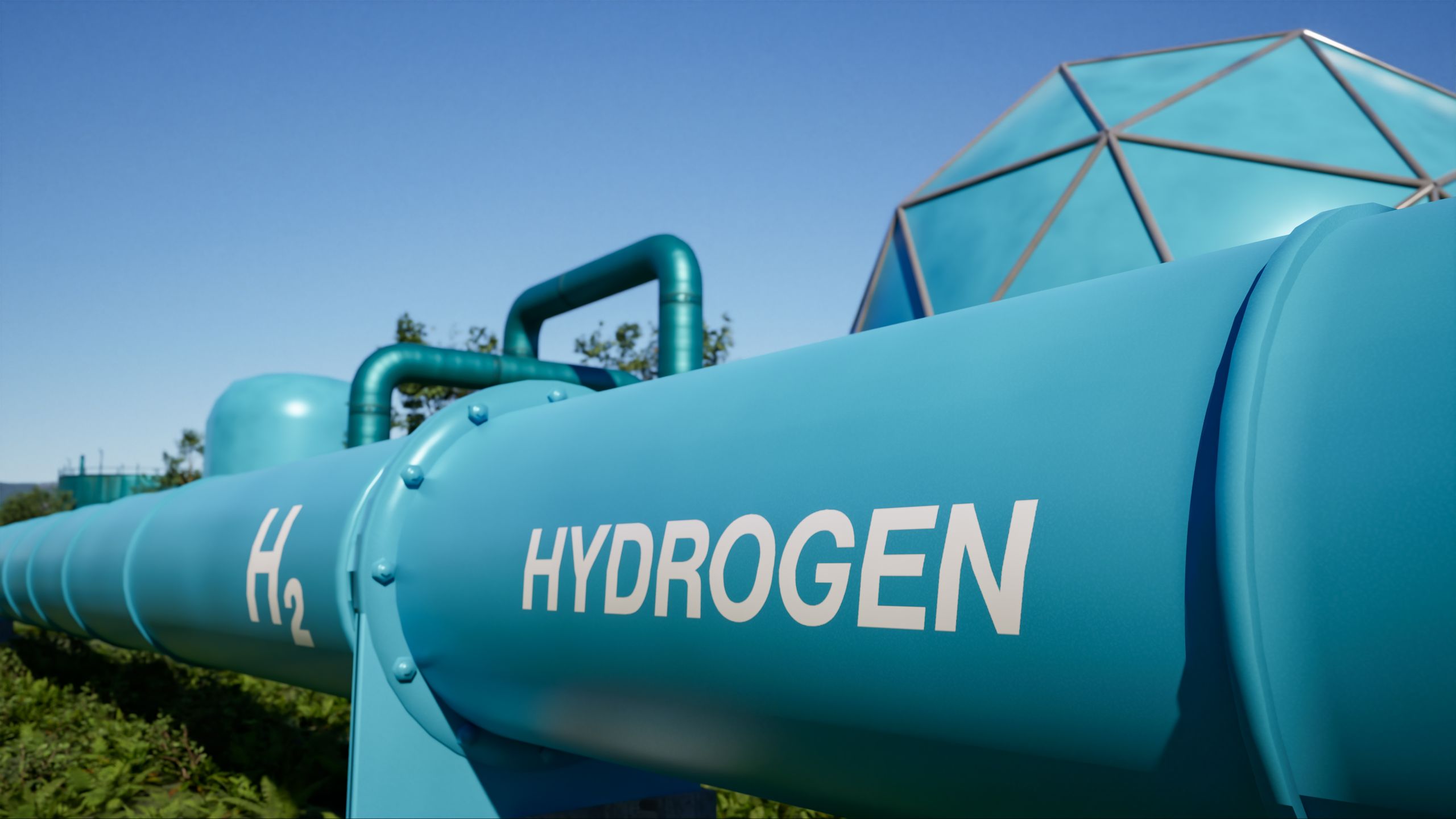
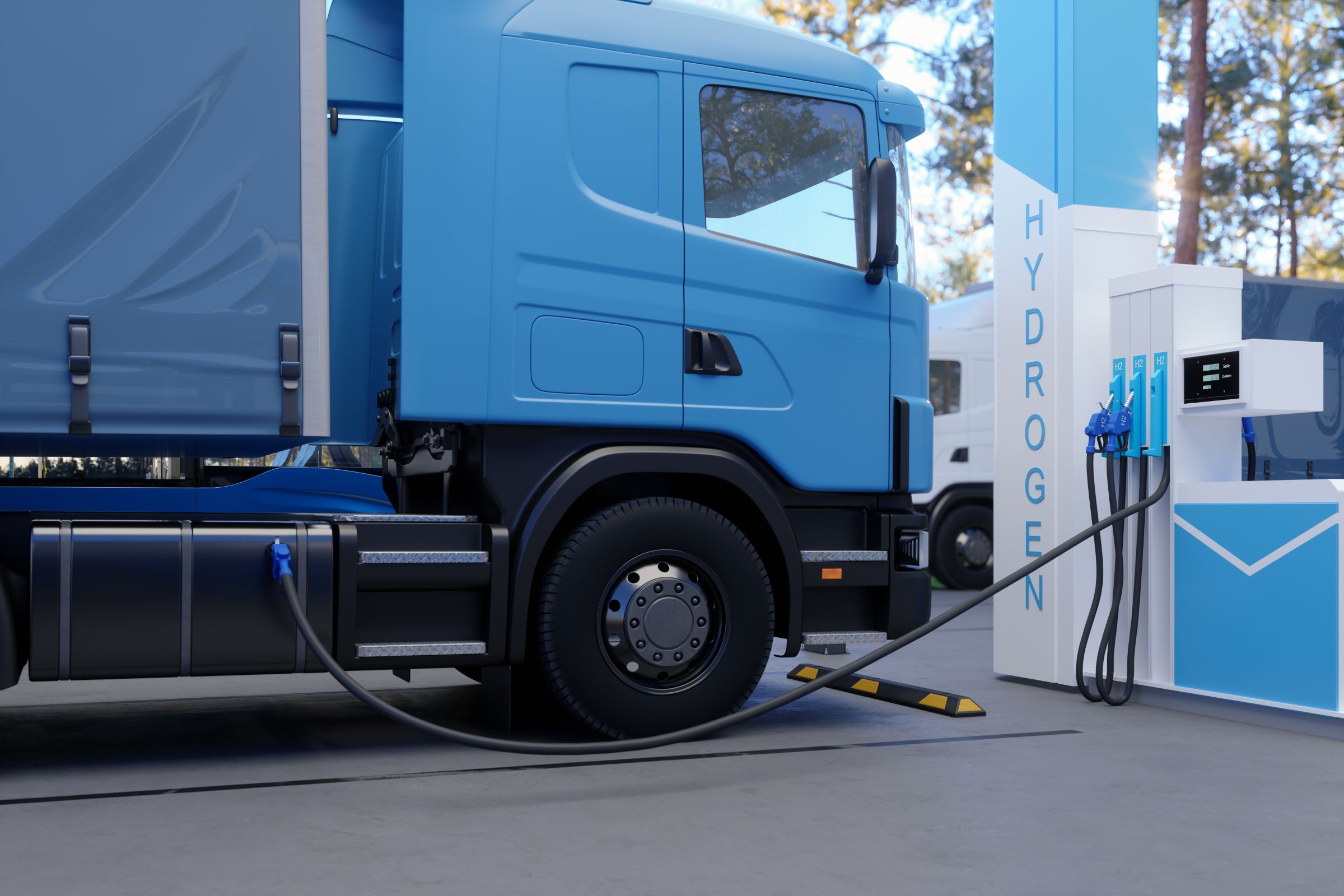
  • introducing and deploying renewable hydrogen in the energy mix (particularly for the decarbonisation of hard-to-abate industries) while increasing cooperation on advanced energy technologies in the Adriatic-Ionian Region;
  • promoting better cohesion through the development of energy communities in the Adriatic-Ionian Region;
  • ensuring affordable energy supply by fighting energy poverty and protecting energy consumers.
Achievements

EUSAIR Masterplan on Energy for the Adriatic and Ionian Region

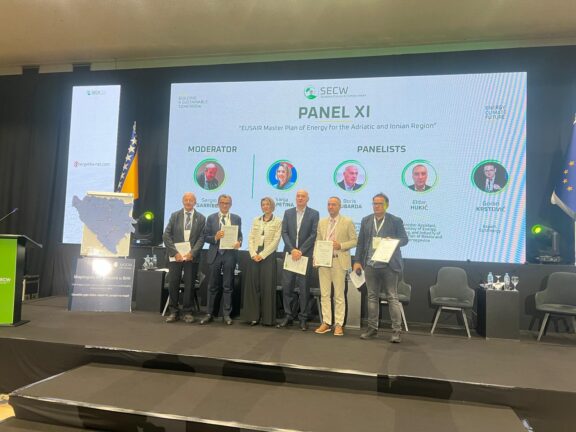
The development of the EUSAIR Masterplan on Energy represents a main strategic achievement of Pillar 2 – Connecting the Region in the Energy sector. The Master Plan has been conceived and prepared through a cooperation amongst all the EUSAIR Participating Countries within the EUSAIR Thematic Steering Group 2 (TSG2) on Energy. The Master Plan on Energy aims at providing energy policy makers with shared outlook on the priorities, directions and projects characterising the energy systems through the Adriatic and Ionian Region.

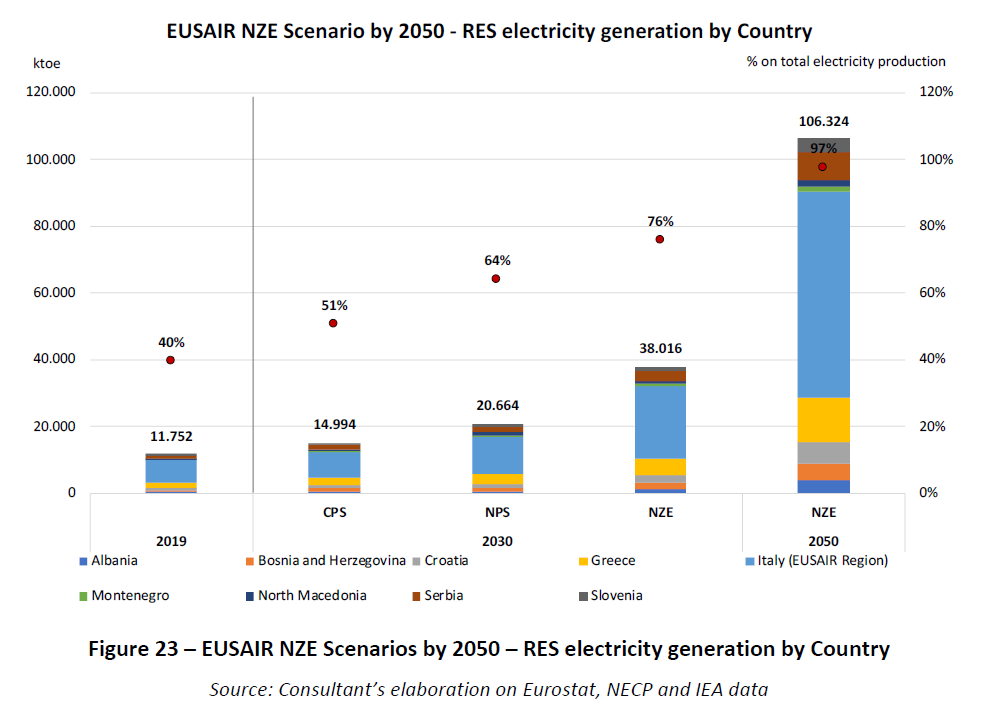
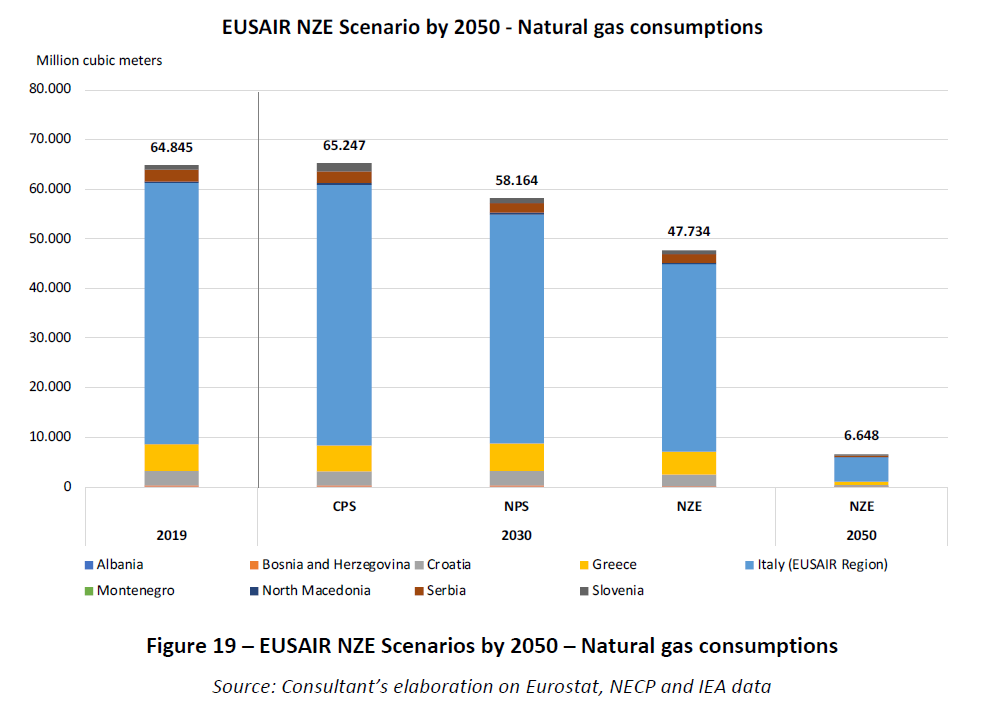
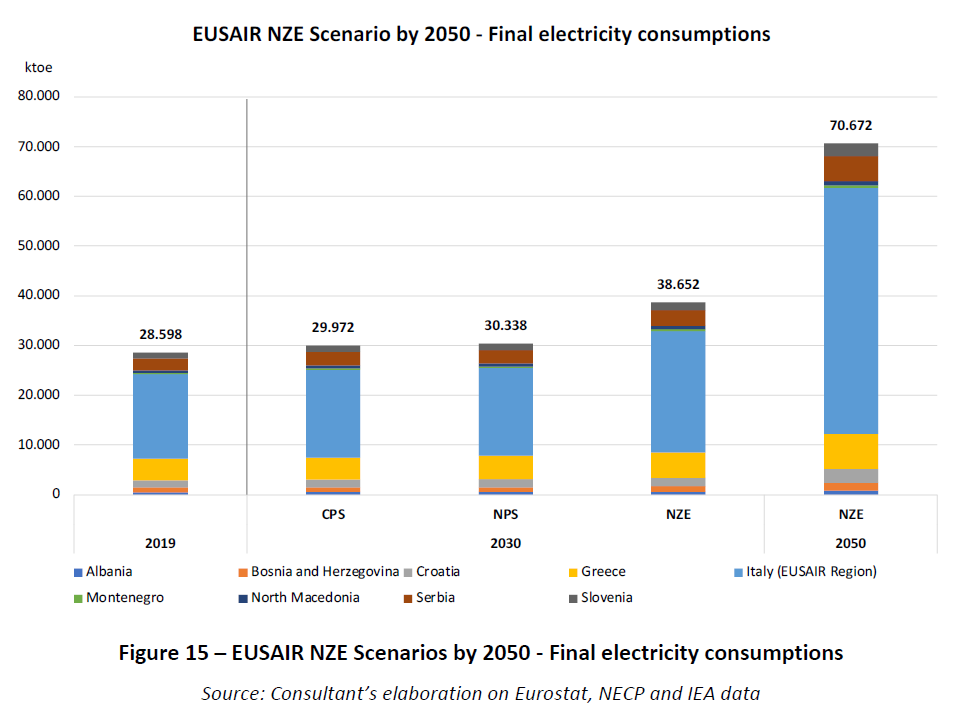
Reference is made to two energy Scenarios which would shape policies and programmes towards the years 2030 and 2050. The first, the Current Energy Policies Scenario, reflects the continuation of existing national policies and priorities, with gradual convergence among Countries over time. The second, the Net-Zero Carbon Emissions Scenario, explores a pathway towards fully decarbonised energy systems in the Region by around 2050, with the convergence of policies and programmes into the EU and the prospect of EU’s enlargement to the Western Balkans.

The Masterplan is supporting the transition towards more efficient, secure and sustainable energy systems. It promotes improved interconnections of energy networks, enhanced security of supply and the progressive decarbonisation of the regional energy systems, contributing to the objectives of energy efficiency, green energy development and climate neutrality.

By providing a shared reference framework for energy policy and infrastructure development, the Masterplan helps EUSAIR participating Countries align their strategies and coordinate future investments across the Adriatic and Ionian Region.

Identification and implementation of projects of macroregional relevance in the energy sector

A key achievement of Pillar 2 has been the identification and promotion of strategic energy infrastructure projects contributing to the integration, security and competitiveness of energy systems in the Adriatic-Ionian Region.

Through cooperation within the Thematic Steering Group (TSG2) on Energy, EUSAIR participating Countries identified initiatives of macroregional importance aimed at strengthening cross-border energy connections and supporting the development of a more integrated regional energy market.

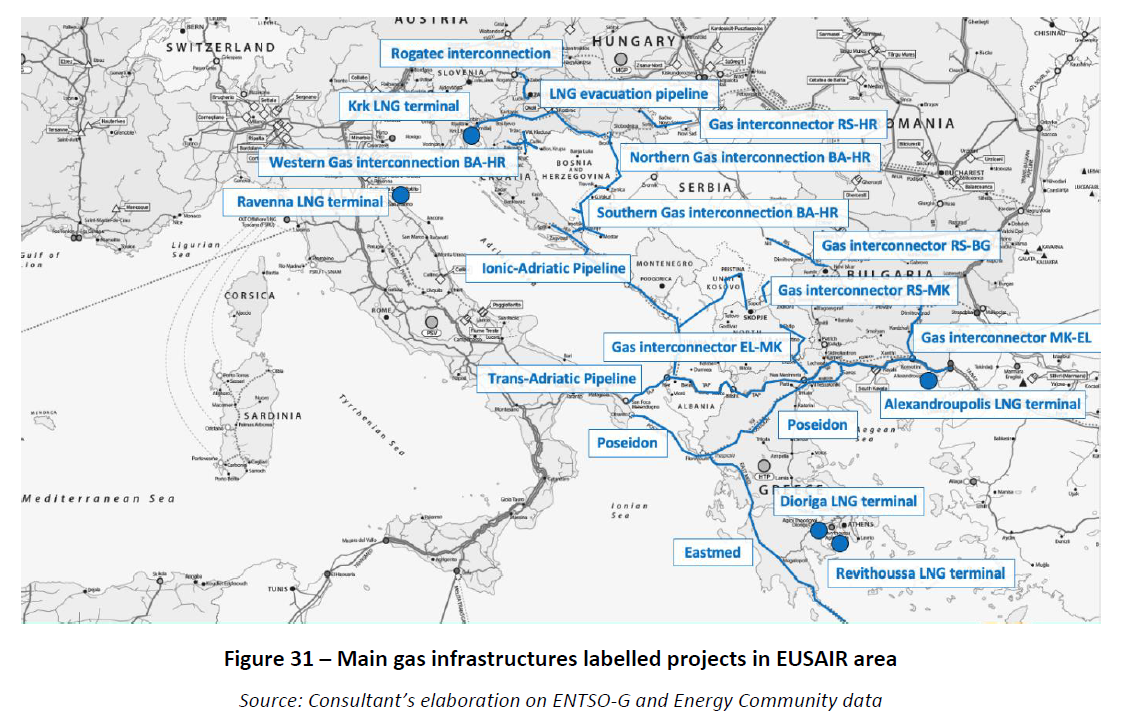
As a result of this coordinated effort, 33 projects were identified as “EUSAIR-labelled energy projects”. These projects include energy infrastructure developments such as LNG terminals and logistics designed to improve the resilience, diversification and reliability of energy supply.

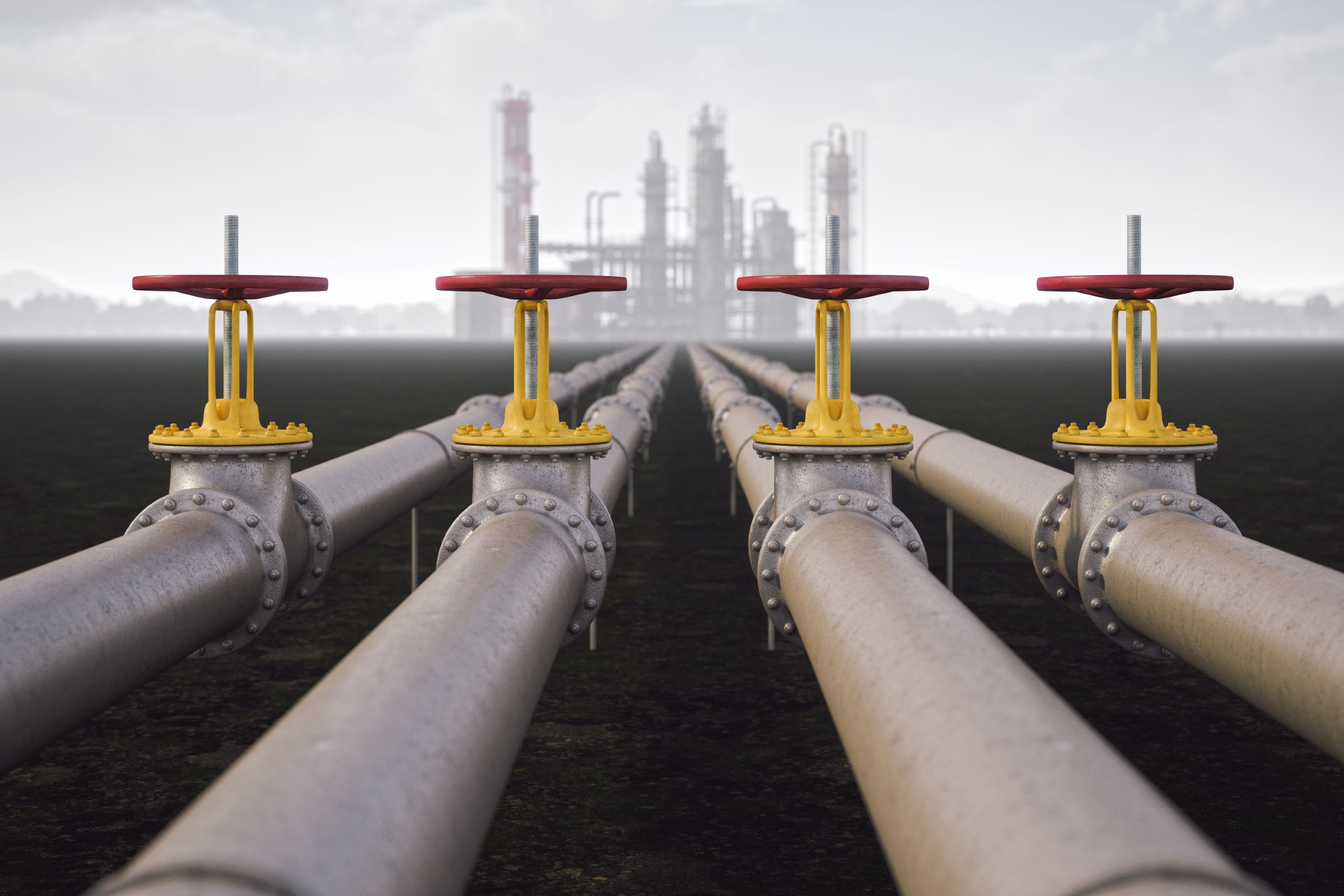
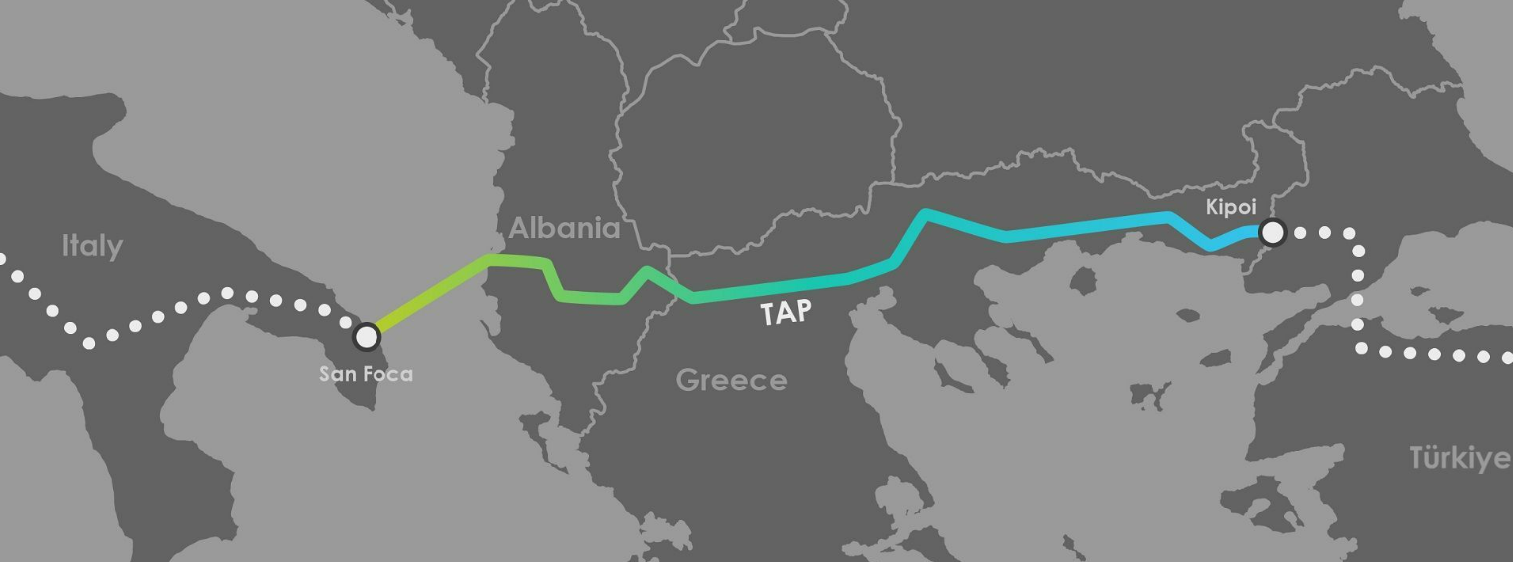
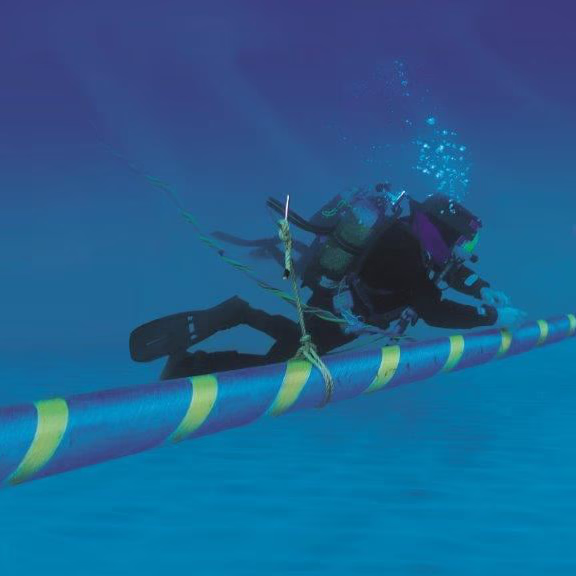
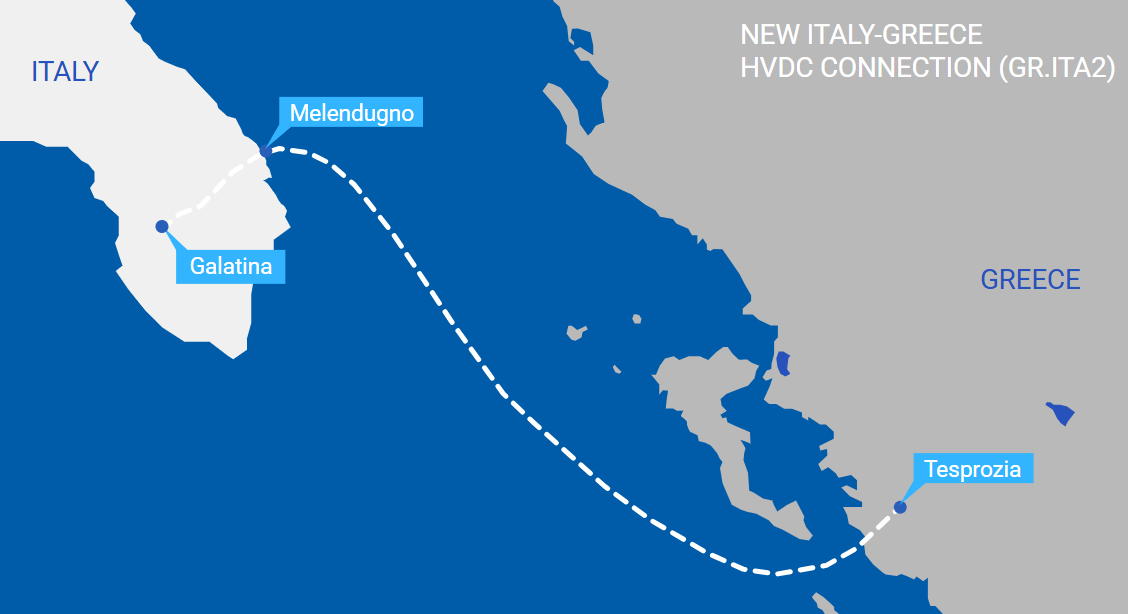
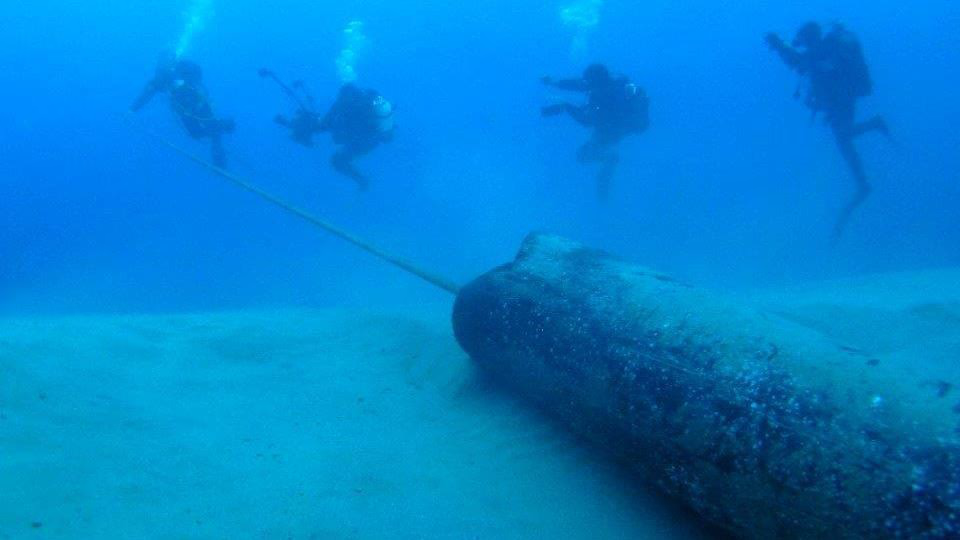
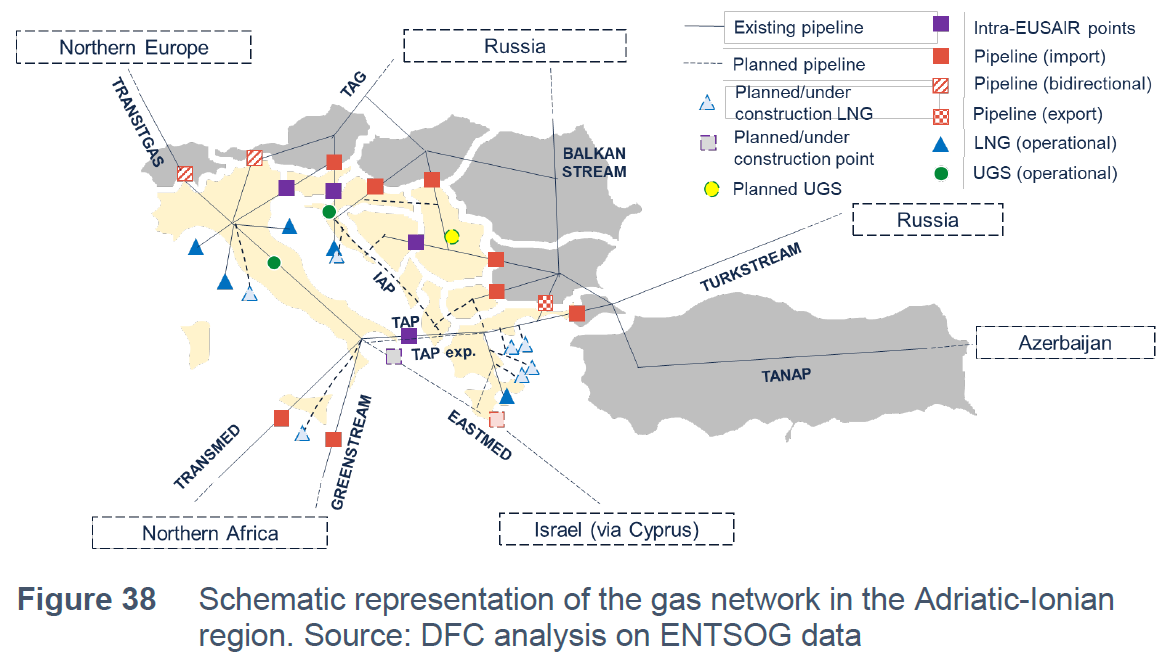
Among the most significant examples are the projects MON.ITA undersea power link between Montenegro and Italy, the GRITA2 high-voltage direct current connection between Greece and Italy, the Trans-Adriatic Pipeline (TAP) linking the Caspian gas corridor to Southern Europe, and the Floating Storage and Regasification Units (FSRU) in the ports of Vlora (Albania) and Ravenna (Italy). These initiatives contribute to strengthening energy connectivity and competitiveness between the Adriatic-Ionian Region and the wider European energy system.


Road Map for electricity market integration and natural gas hub of the Adriatic-Ionian Region

Promoting the integration of electricity and natural gas markets across the Adriatic and Ionian Region is a top priority to ensure efficiency, competitiveness and security. EUSAIR Pillar 2 – Energy prepared and developed special initiative and project to the purpose.

A Road Map has been designed and proposed for accelerating electricity and gas market integration within the Adriatic and Ionian Region and between the Region and the wider EU energy markets. The EUSAIR participating Countries and the relevant administrations and energy regulatory authorities are called to identify steps and actions required to improve coordination, strengthen cross-border trading and move towards a more integrated regional energy market.

The Road Map highlights the need for both adequate infrastructure and harmonised regulatory frameworks to enable the efficient movement of energy across national borders. It outlines actions aimed at aligning national legislation and market design with the European Regulatory Framework, supporting the progressive integration of EUSAIR participating Countries into the wider European energy market.

For electricity markets, the Road Map identifies key areas such as risk preparedness, forward capacity allocation, congestion management, electricity balancing, system operations, network code for emergency and restoration. In the natural gas sector, the proposed actions include measures related to interoperability, network code, capacity allocation management and tariffs network.

By defining these steps and priorities, the Road Map provides a practical framework guiding participating Countries towards deeper energy market integration, improved competitiveness and enhanced security of supply across the Adriatic and Ionian Region.

Renewable energy potential for power production and priorities in the Adriatic and Ionian Region

An assessment has been conducted and accomplished with the support of the Governments of the EUSAIR participating Countries to analyse the potential of renewable energy sources through the Adriatic and Ionian Region while coping with the two-sided goal of competitive and secure energy supply on one hand and the transition towards decarbonised or net-zero carbon energy systems by mid-century on the other hand.

The Adriatic and Ionian Region is characterised by significant geographic, environmental, and economic diversity. The Region is facing both opportunities and challenges in the energy transition, climate resilience, conservation of biodiversity and cross-border infrastructure development. Within this context the EUSAIR Pillar 2 and its Thematic Steering Group 2 (TSG2) on Energy are playing a key role supporting energy security, improving interconnectivity, and accelerating the deployment of renewable energy technologies.

In this context, the assessment which has been accomplished is providing strategic inputs and guidelines to the Governments and energy policy makers regarding the most important renewable energy potential, barriers and obstacles to renewable energies development. The assessment integrates environmental and climate considerations and gives an overview on how renewable energy deployment contributes to security of supply.

Themes like the digitalisation within the renewable energy sector in the Region, interdependence between greenhouse gas (GNG) targets and just transition and energy poverty policies, as well as the preparedness of the Region to meet the long-term climate and energy targets are also analysed.

The findings of this assessment aim both at immediate priority setting as well as an overview in hour the Adriatic and Ionian Region is preparing for the net-zero carbon energy context.

Enhancement of energy stakeholders’ involvement, interaction and cooperation

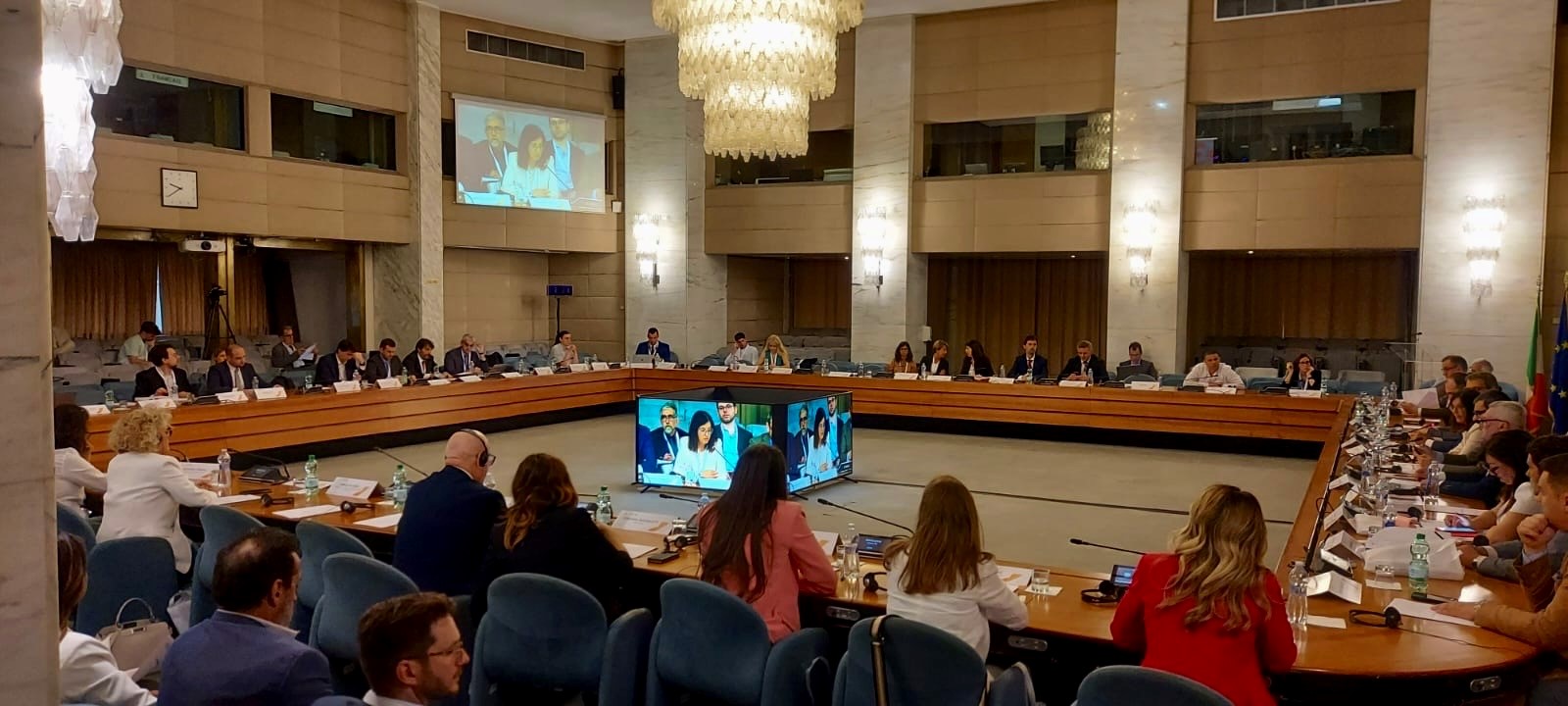
Strengthening dialogue and cooperation among energy stakeholders is an important component of Pillar 2 activities in the energy field. Energy systems involve a wide range of actors, including industry players, energy utilities, public administrations and regulatory authorities, consumers and citizens, whose participation is essential for the successful development and implementation of energy programmes and projects.

Through workshops, conferences and meetings organised within the framework of the Thematic Steering Group 2 (TSG2) on Energy, Pillar 2 created opportunities for these stakeholders to exchange views and contribute to discussions on the future of energy systems in the Adriatic and Ionian Region. Topics addressed include climate change mitigation, energy security, digitalisation of energy systems and ensuring access to energy at affordable and competitive prices.

Engaging industry representatives has helped identify technological opportunities and potential financing solutions for strategic projects, while the participation of consumer associations and civil society organisations has supported the identification of environmental concerns and social acceptance issues related to energy infrastructure development.

This collaborative approach has strengthened cooperation across the Adriatic and Ionian Region and contributed to building broader support for the transition towards more sustainable, secure and integrated energy systems.

CONTACTS

ESP Platform & TOOLS

Use the ESP platform to support the implementation and coordination of Pillar activities.