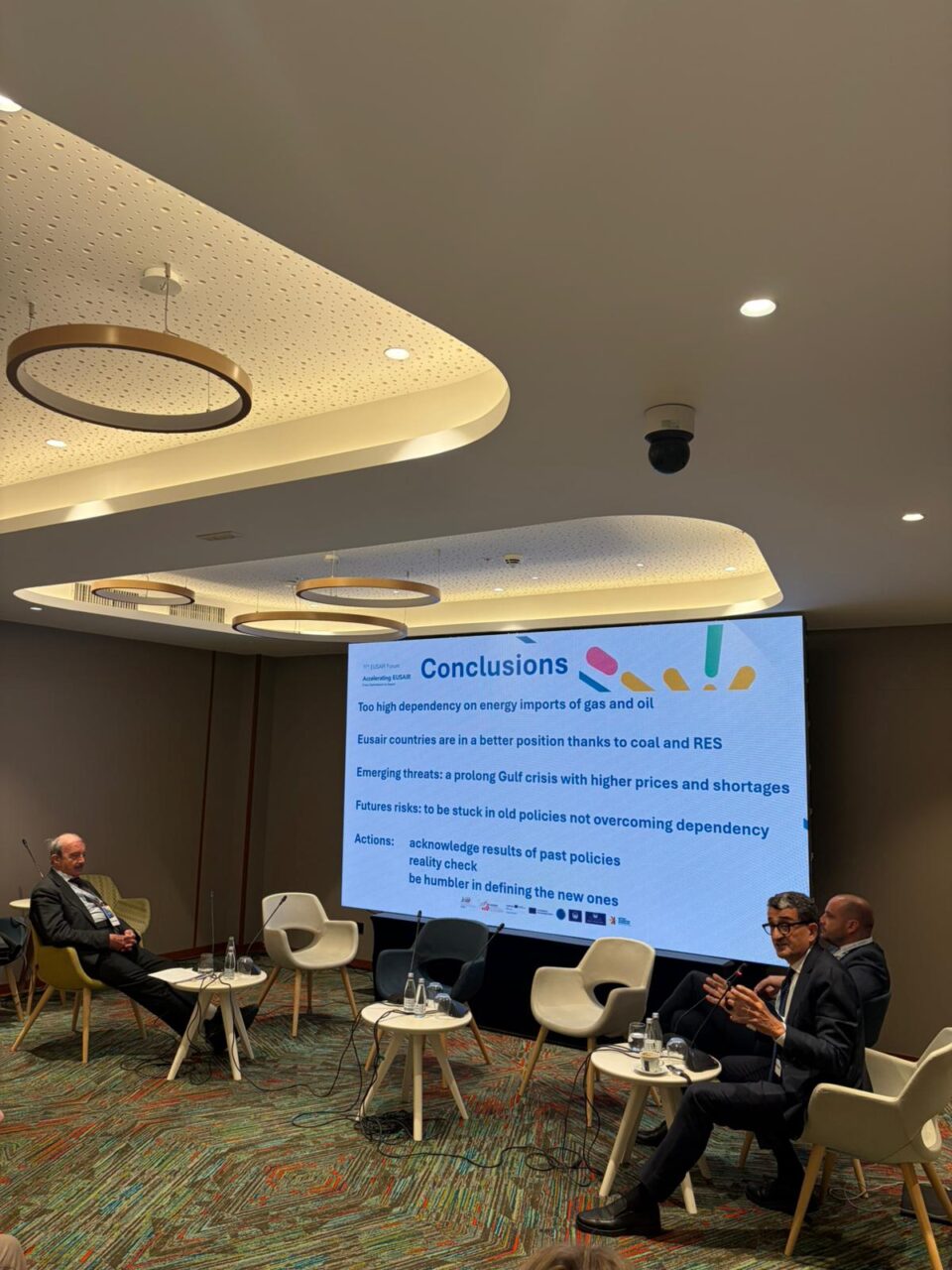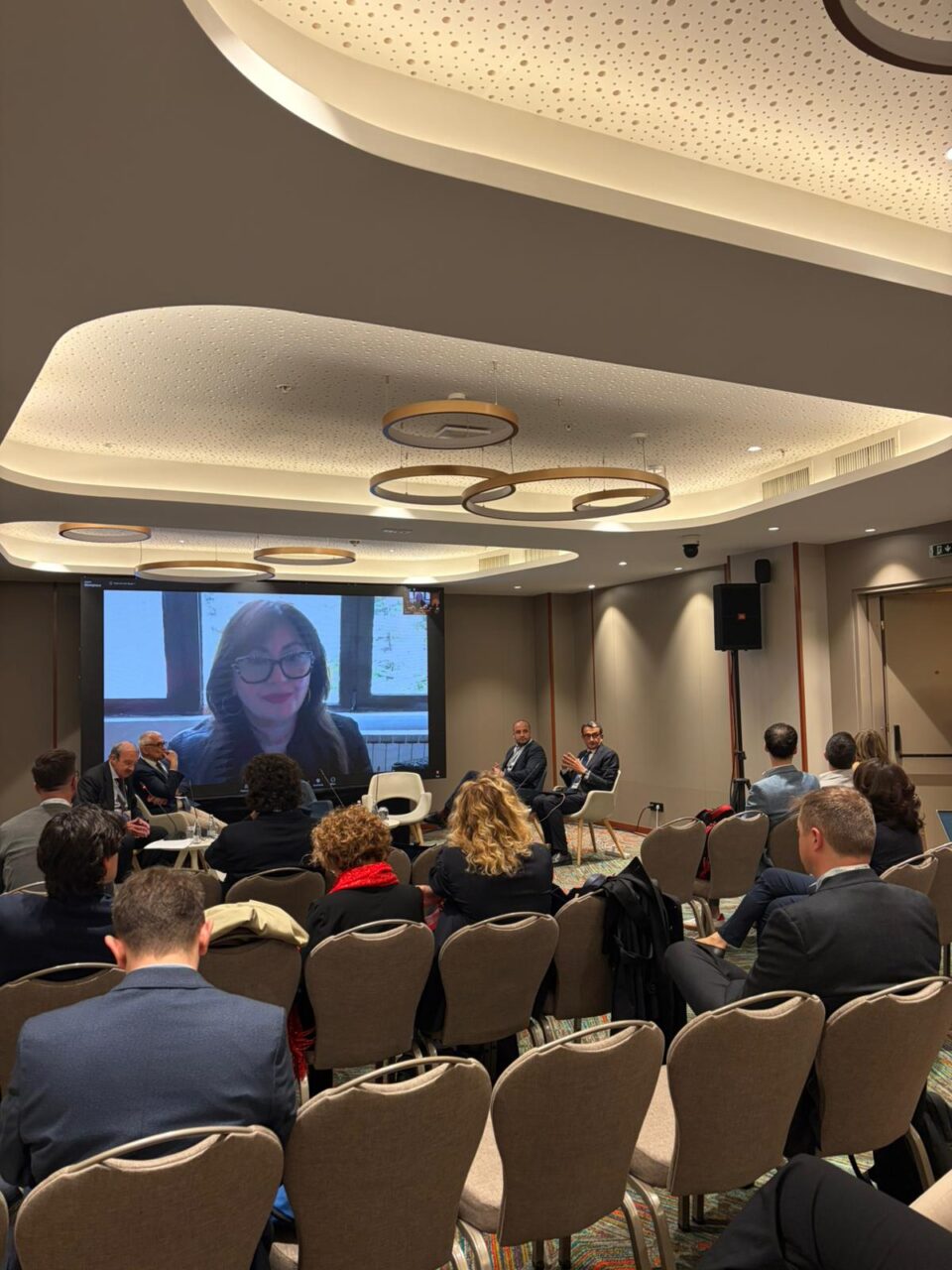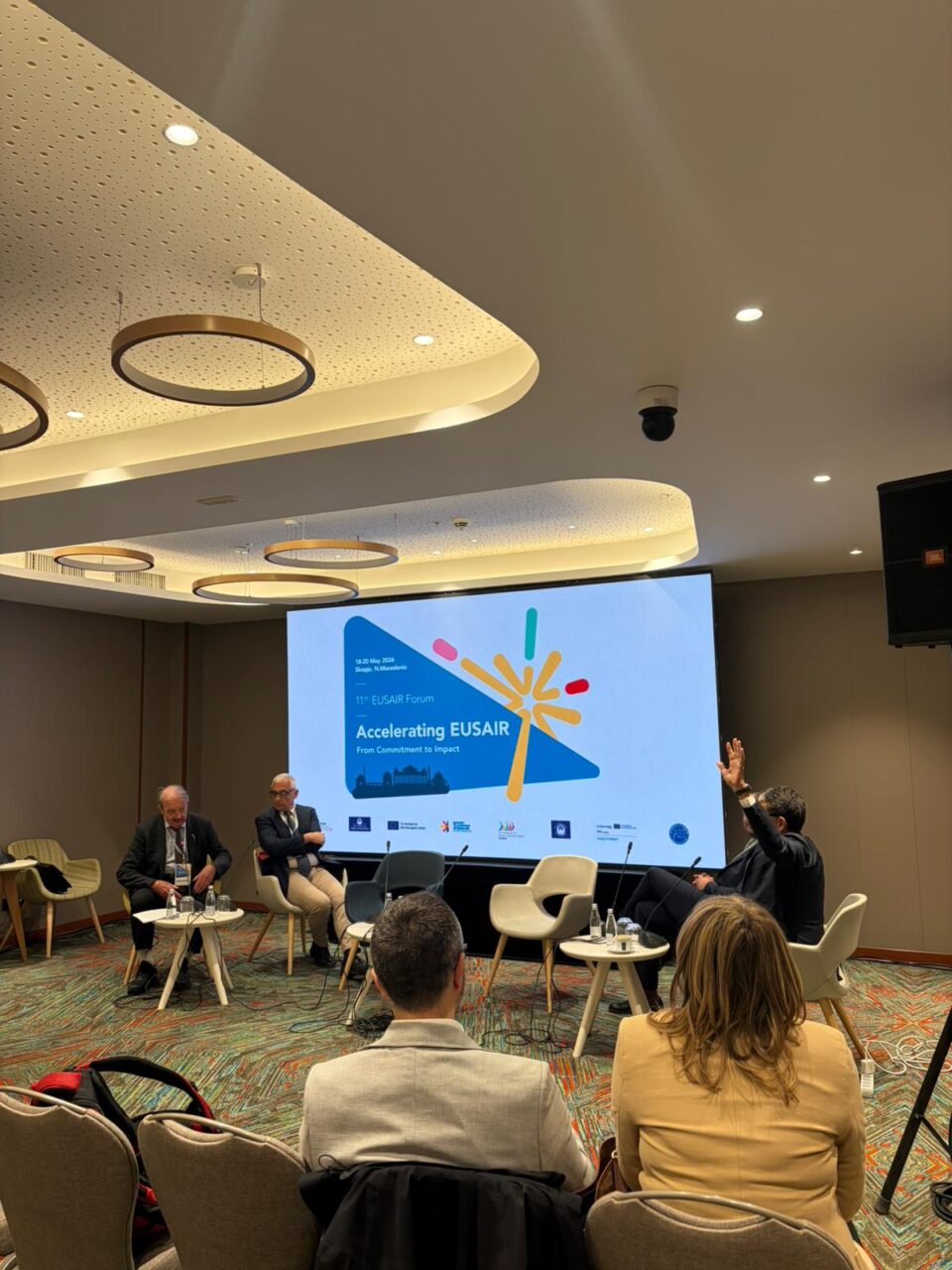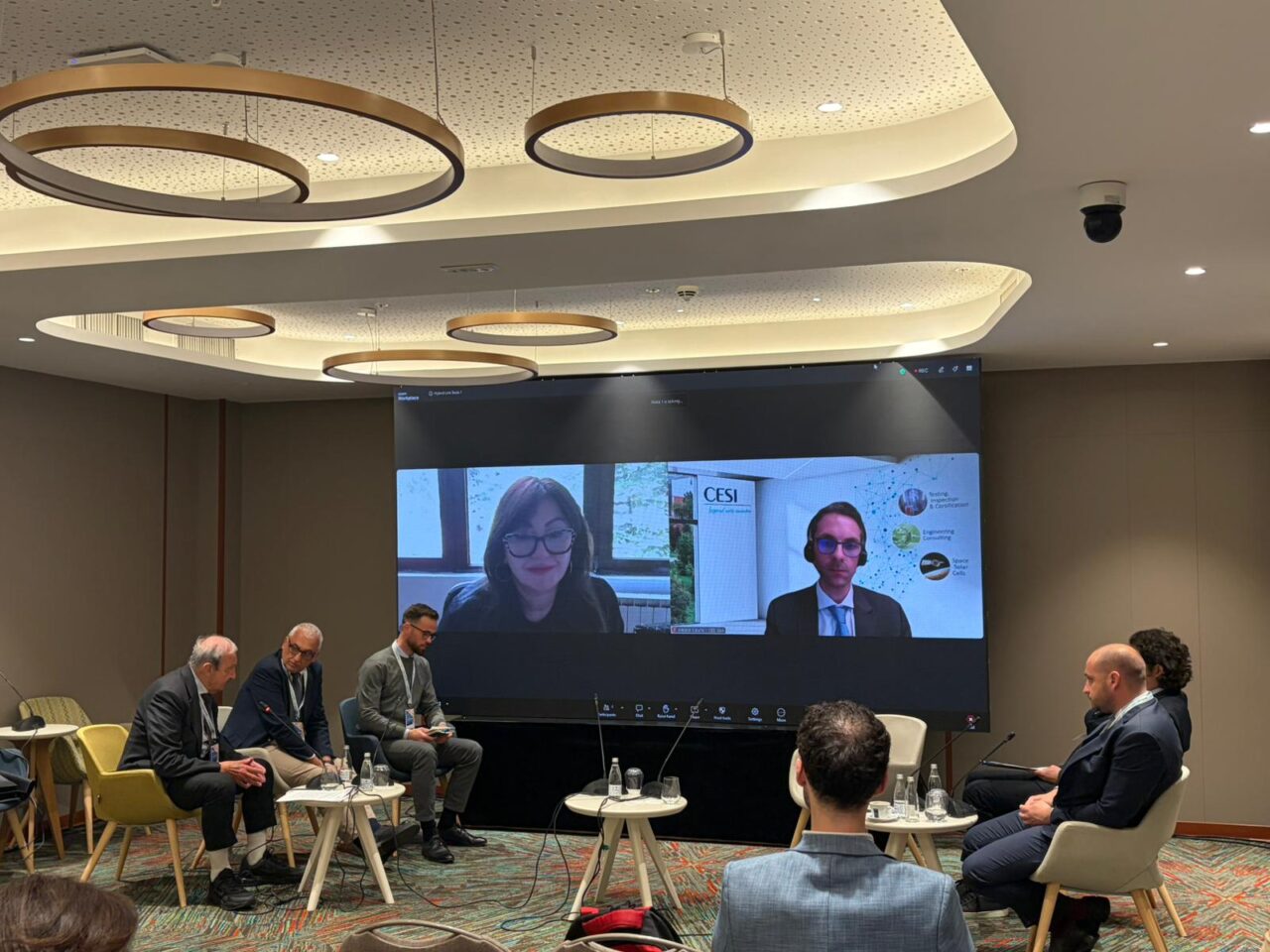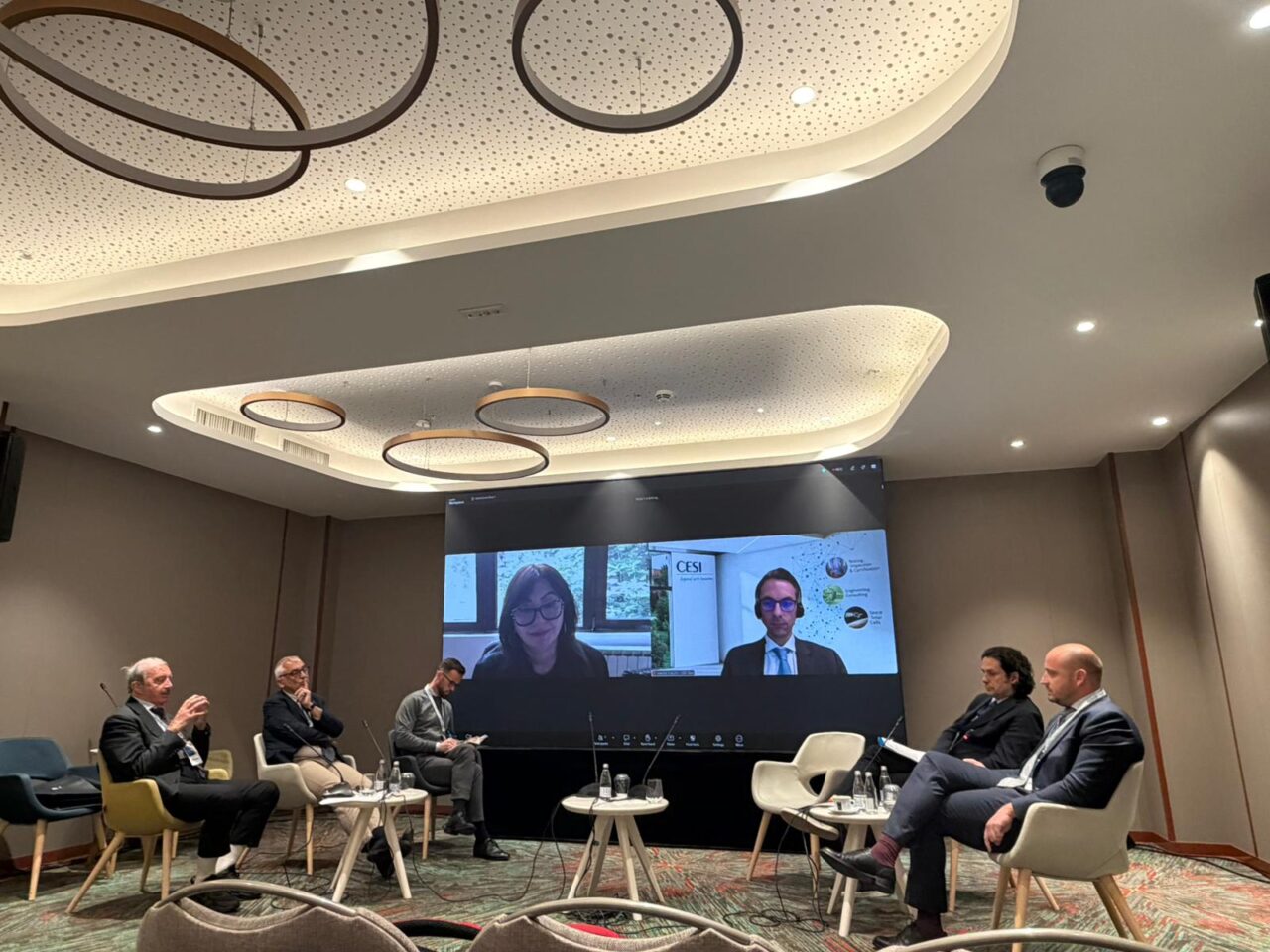
Energy security and the transition towards more resilient and sustainable systems took centre stage at the Energy Thematic Session of the 11th EUSAIR Annual Forum, held in Skopje (North Macedonia) from 18 to 20 May 2026. Moderated by Prof. Sergio Garribba (Pillar 2 Energy Coordinator), the session offered a timely reflection on how the Adriatic-Ionian region can strengthen its capacity to respond to current and future energy challenges.
The discussion opened with a broad assessment of the regional energy landscape. Mr. Davide Tabarelli (President, Nomisma Energia) highlighted how global developments — including the 2022 gas crisis and ongoing geopolitical tensions — have exposed the region’s vulnerability to external shocks, reinforcing the urgency of reducing energy dependency and modernising existing systems. Despite differences across countries, common challenges persist; yet so do significant opportunities, particularly in the development of renewable energy sources and the deepening of regional cooperation. The energy transition, the session underlined, should be understood not merely as a regulatory obligation, but as a driver for innovation, investment and long-term sustainability.
Infrastructure emerged as a critical enabler of this transition. Mr. Alessio Cipullo (Head of Italy and EU Public Affairs, CESI SpA) reaffirmed the central role of electricity grids as the backbone of a modern energy system — increasingly essential to support electrification, integrate renewables and ensure stability of supply across borders. The Adriatic-Ionian region, it was noted, is well positioned to act as a strategic energy hub, strengthening connections between EU Member States and neighbouring countries, provided that investment in interconnected, future-proof networks keeps pace with evolving demand.
The added value of macro-regional cooperation ran as a thread throughout the session. Mr. Alberto Biancardi underlined the role of Twinning projects as effective instruments for capacity building, knowledge transfer and the alignment of practices across countries — tools particularly relevant for accelerating convergence in the region. Mr. Peter Hlusek (Gas Market Expert, Energy Community Secretariat) further stressed the importance of coordinated EU action in tackling energy crises, contributing to security of supply and mitigating the impact of elevated energy prices on households and economies alike.
In conclusion, the session confirmed that ensuring energy security in the Adriatic-Ionian region requires a balanced and forward-looking approach — one that combines infrastructure development, market integration and coordinated investment with the sustained exchange of experience that the EUSAIR framework is uniquely placed to provide. By fostering joint initiatives and capitalising on existing cooperation instruments, the macro-region can advance towards energy systems that are more resilient, better interconnected, and equipped to address both current vulnerabilities and the long-term imperatives of the clean energy transition.