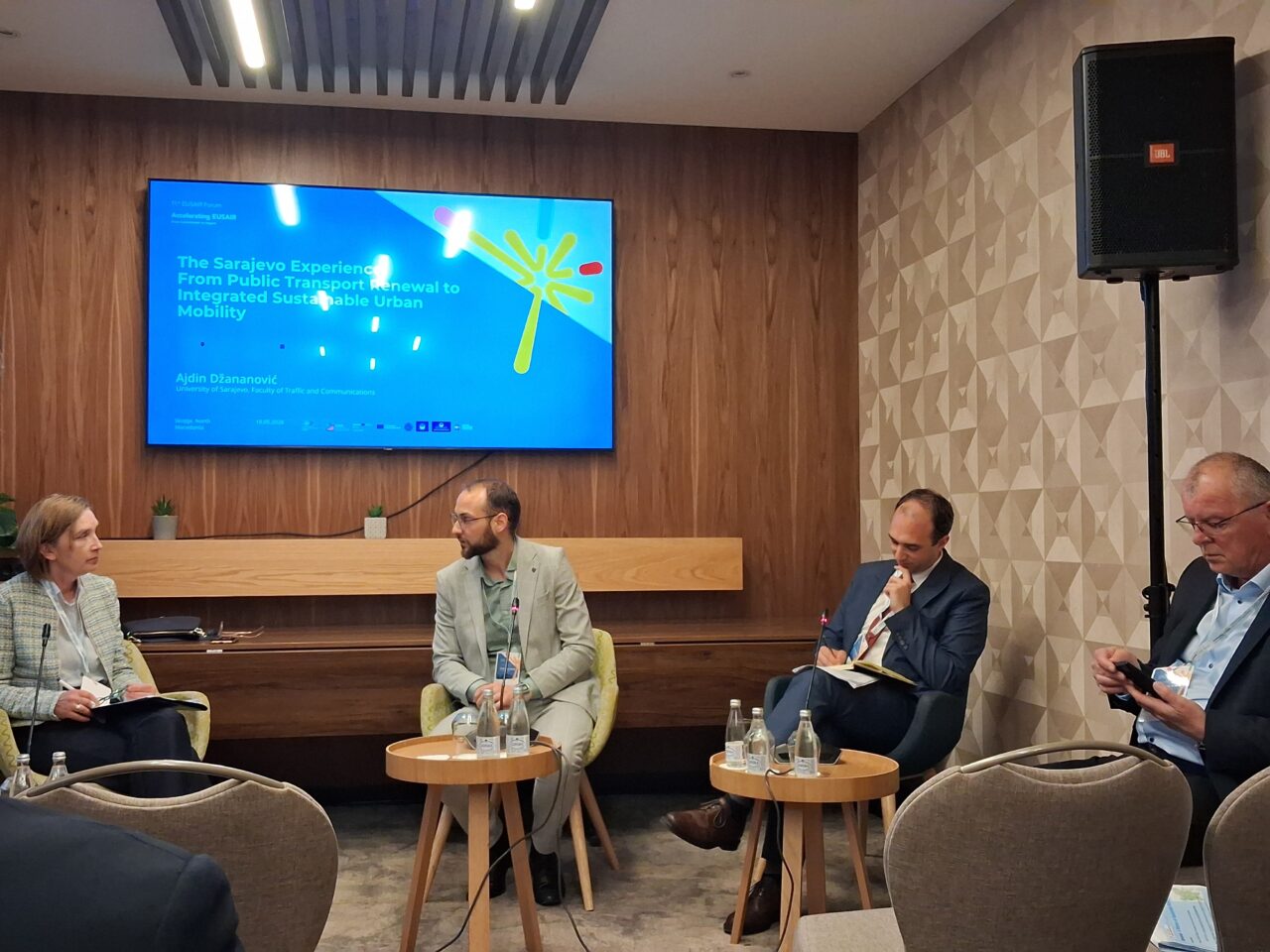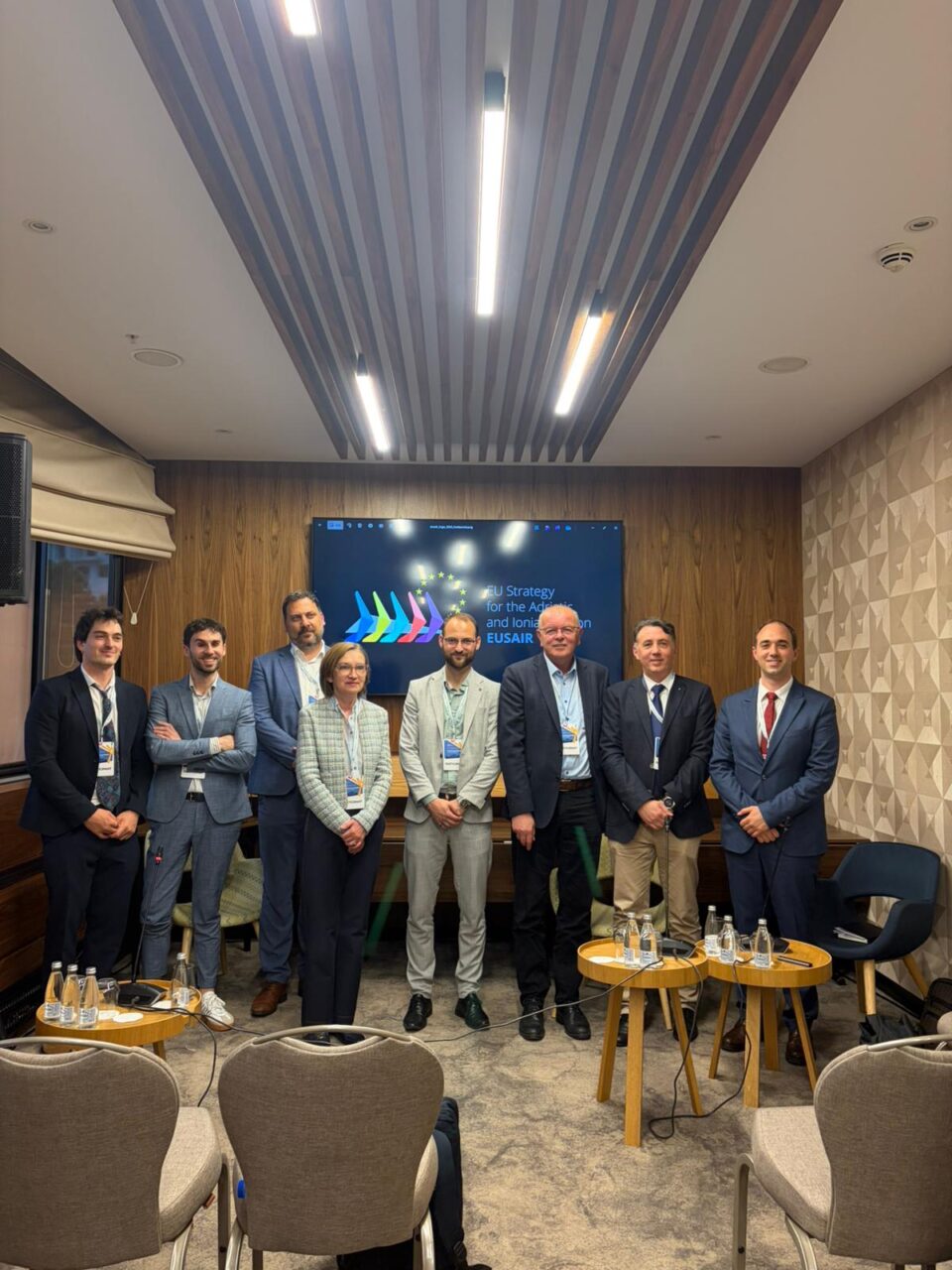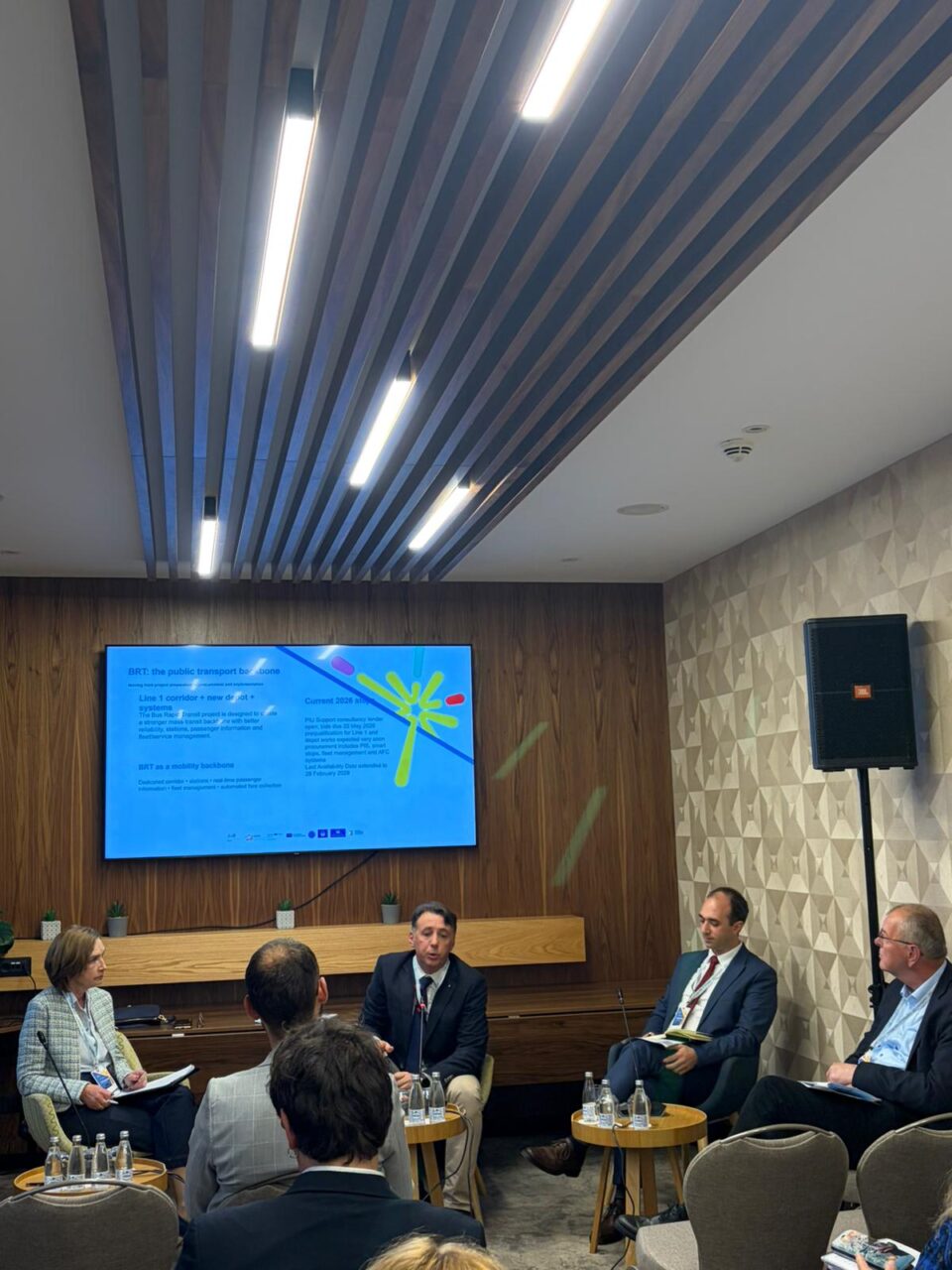
Within the framework of the 11th EUSAIR Annual Forum, held in Skopje (North Macedonia) from 18 to 20 May 2026, the Transport Thematic Session brought together representatives from national and local institutions, academia, and the EUSAIR Youth Council to exchange experiences and showcase concrete examples of sustainable urban mobility across the region. The session, titled “Boosting the uptake of Sustainable Urban Mobility Policies: best practices and ongoing initiatives in the Adriatic-Ionian Cities”, was moderated by Ms. Jasminka Kirkova (Pillar 2 Coordinator, Ministry of Transport and Communications, North Macedonia) and Mr. Jovica Rakic (Pillar 2 Coordinator, Ministry of Construction, Transport and Infrastructure, Serbia).
The discussion highlighted a range of good practices from Western Balkan cities, underlining the region’s commitment to advancing towards modern, integrated and sustainable urban transport systems. Drawing on concrete urban experiences, Mr. Lovren Markic (City of Skopje) and Mr. Ajdin Džananović (University of Sarajevo) illustrated how cities are progressively adopting innovative and low-emission mobility solutions. A central theme was the role of Sustainable Urban Mobility Plans (SUMPs) as key strategic tools to translate EU policy objectives into concrete local actions, enabling cities to better coordinate investments and policies.
Strengthening public transport infrastructure — including mass rapid transit systems such as tram and metro networks — was identified as a backbone for sustainable mobility.
Mr. Franc Zepic (Ministry of Infrastructure, Slovenia) illustrated how policy objectives can be translated into practice, drawing on Slovenia’s experience in advancing sustainable urban mobility. Equally important is the expansion of cycling networks, contributing to decarbonisation objectives and improved quality of urban life, alongside the promotion of intermodal solutions that enable seamless connections between different modes of transport.
Digitalisation and innovation emerged as key enablers of this transition. In particular, the deployment of Mobility as a Service (MaaS) solutions — such as integrated ticketing systems, single fares and real-time travel information — was highlighted as a crucial step towards more user-centric, accessible and efficient transport systems.
The session reaffirmed the added value of macro-regional cooperation within EUSAIR, particularly in facilitating the exchange of knowledge and the transfer of good practices. The active participation of Mr. Francesco Moroni and Mr. Klajdi Kaziu (EUSAIR Youth Council, representing San Marino and Albania respectively) further highlighted the importance of engaging younger generations in shaping the future of sustainable mobility across the region. Speakers also underlined the role of cross-border cooperation and the capitalisation of existing projects, including Interreg initiatives, in supporting the development of urban nodes within the TEN-T network and accelerating alignment with EU standards, especially in enlargement countries.