
10 Years of the EU Strategy for the Adriatic and Ionian Region

Celebrating a Decade of Cooperation

This year marks the 10th anniversary of the EU Strategy for the Adriatic and Ionian Region (EUSAIR), a visionary framework that has brought together 10 participating countries in a shared commitment to regional cooperation, sustainability, and innovation.

Since its launch in 2014, EUSAIR has served as a dynamic platform for fostering dialogue, aligning strategic priorities, and implementing impactful cross-border cooperation.
From sustainable blue growth and environmental protection to improved connectivity and cultural preservation, each country has played a vital role in a decade of collective progress. This page celebrates those milestones, showcasing success stories that reflect the power of collaboration.

Each month in 2025 we share how each participating country has helped shape a more sustainable, connected, and thriving Adriatic and Ionian region.

Read the National Perspective of all 10 EUSAIR Participating Countries below.

CROATIA

10 Years of the EU Strategy for the Adriatic and Ionian Region: Croatia’s Perspective

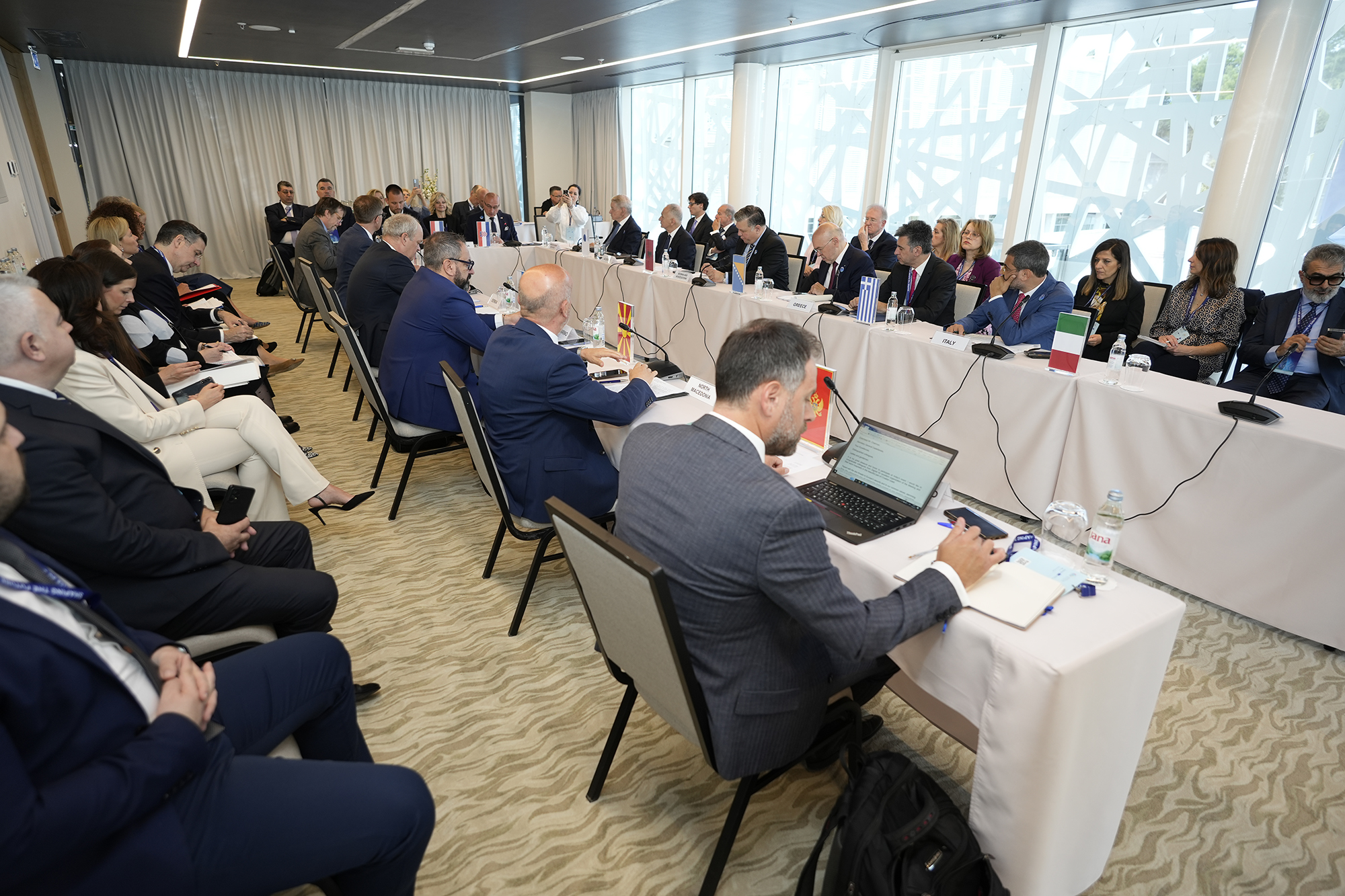
As one of four EU member states engaged in this innovative regional cooperation among ten countries forming the area around Ionian and Adriatic Seas, Croatia places significant emphasis on dialogue and collaboration. Sitting at the same table with representatives from nine other nations is both challenging and rewarding, Croatian representatives highlight, emphasizing that much of the progress made in recent years would not have been possible without such an approach.

When discussing the benefits Croatia has gained from the Strategy, the conversation could go on indefinitely. Therefore, we asked Croatian representatives involved in the implementation of the EU Strategy for the Adriatic and Ionian Region to highlight specific examples from each thematic area.
Here’s what they emphasized:

Regional tourism cooperation – bringing together countries that, while competitors in tourism, aim to build a shared future.

Introduction of the fifth, social pillar focused on social issues, a crucial dimension Croatia strongly advocated during its 2023/2024 presidency.

Enhanced position in EU transport planning – strengthening Croatia’s role in the TEN-T network of European transport corridors through regionally developed documents.

Cross-border environmental protection projects – fostering sustainable management systems.

Youth inclusion was special priority for National Coordinator Lidija Pansegrau Hadrović, head of the Department for European Macro-Regions at the Ministry of Foreign and European Affairs.

SLOVENIA

10 Years of the EU Strategy for the Adriatic and Ionian Region: Slovenian Perspective

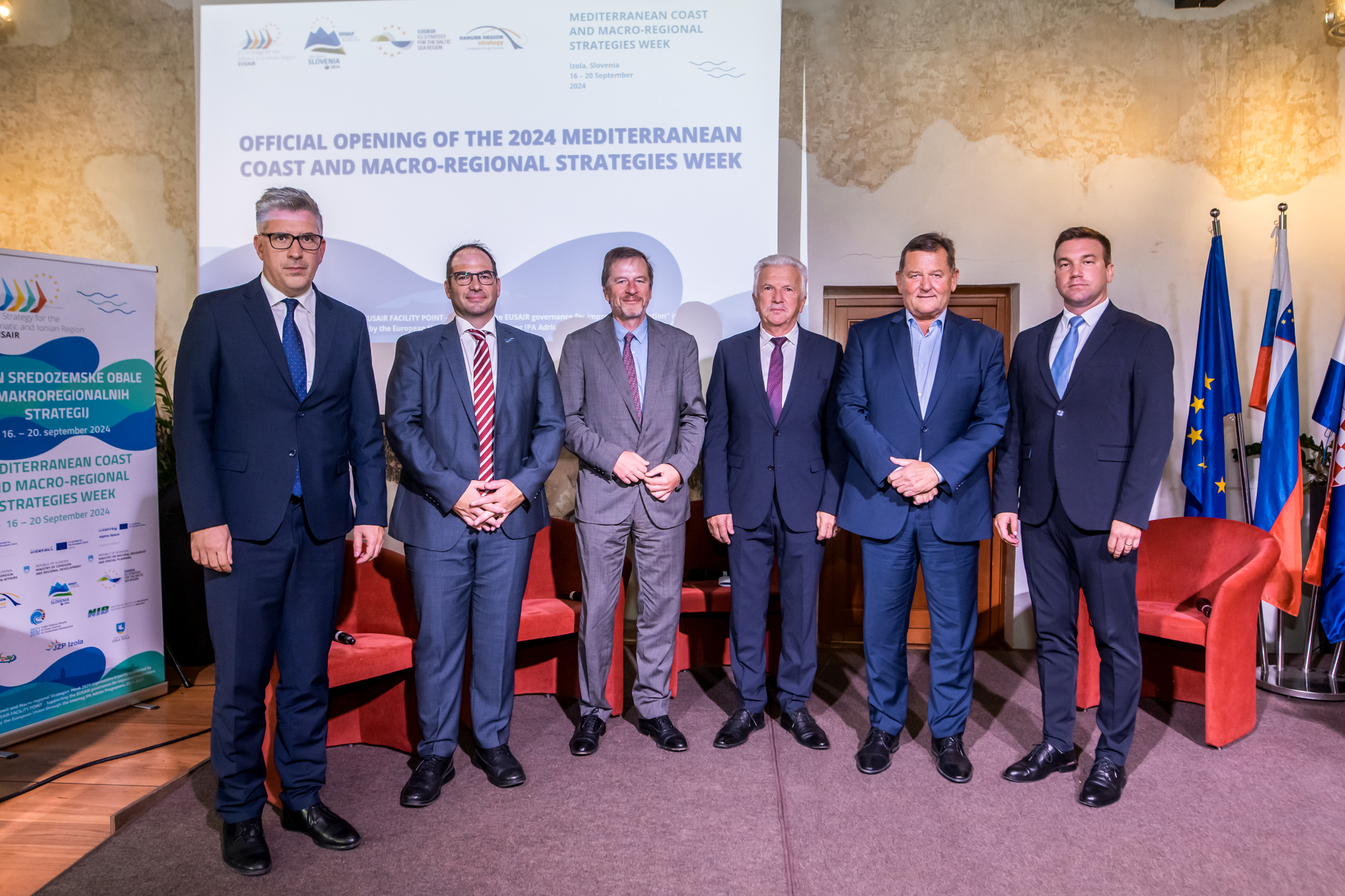
Macro-regional cooperation is of great importance to Slovenia. Due to its geographical location, Slovenia has the opportunity to participate in three EU macro-regional strategies: the Danube, the Adriatic-Ionian, and the Alps. Participation offers numerous benefits for each participating country and provides valuable leadership experience through the rotating presidencies of these strategies. It is precisely through these presidencies that Slovenia has gained significant macroregional leadership experience.

Notably, Slovenia successfully presided over the EU Strategy for the Adriatic and Ionian Region for the first time, overseeing its (then) 9 participating countries during the most challenging period in recent European and world history—2020-2021—amid the global COVID-19 pandemic. The experiences gained during that presidency and the capacities developed have been applied to subsequent presidencies of the Danube Strategy (2022–2023) and the Alps Strategy (2024), as well as at the national level. 
SAN MARINO

10 Years of the EU Strategy for the Adriatic and Ionian Region: San Marino Perspective

San Marino joined the EU Strategy for the Adriatic and Ionian Region (EUSAIR) in 2022, after participating in the Adriatic and Ionian Initiative since 2019 and initiating an Association Agreement process with the EU in 2015. Though not a Member State, San Marino established official relations with the European Union in 1983 and currently maintains various agreements with the Union, such as the Cooperation and Customs Union Agreement and the Monetary Agreement, which grants San Marino the right to use the Euro as its official currency.

San Marino attaches great importance to its participation in EUSAIR, which in the past three years has enabled the Republic to strengthen regional cooperation with the other nine countries, with which it enjoys excellent bilateral and multilateral relations.

Since joining, San Marino has increased youth involvement in EUSAIR’s governance, with two national delegates in the inaugural Youth Council. San Marino students have also participated in the POPRI competition, highlighting youth entrepreneurship and innovation.

Photo © Ivanna Lebediuk


SERBIA

Serbia’s decade-long participation in EUSAIR has brought significant national achievements and positioned the country as a key regional actor.

Serbia’s key contribution to EUSAIR is reflected both in its leading role in drafting the Master Plan of Energy Networks for the Adriatic-Ionian Region, aligning with the Green Agenda for the Western Balkans and REPowerEU, and in strengthening waterborne transport through its Inland Waterway Traffic Strategy, reinforcing its position as a regional connector in energy and transport.

Serbia’s ten years Strategy for the Development of Inland Waterway Traffic provides a roadmap to revitalize transport, while the project 4PETHABECO (Interreg IPA Adrion 2021-2027)  ensures long-term transnational cooperation and sustainable biodiversity protection across the region.

Moreover, Serbia piloted the Youth Guarantee as a crucial step toward addressing youth unemployment aligned with EU standards, which improved school-to-work transitions for NEET youth and strengthened cooperation among institutions and local actors.

Through the SP4EUSAIR project (Interreg IPA Adrion 2021-2027), Serbia has strengthened its capacity to manage EU funds and implement the Strategy.

NORTH MACEDONIA

As the ninth member of EUSAIR who joined in 2020, North Macedonia’s geographic location is significant for the continuity of infrastructure: interconnected, sustainable transport and energy networks across the entire Adriatic-Ionian region.
With the inclusion of North Macedonia, the EUSAIR’s family increased by 2 million inhabitants and expanded its area of influence, actions, and implementation by 25 713 km². Moreover, it contributes to the EU enlargement efforts in the Western Balkans, as well as regional cooperation and good neighbourly relations.

As the youngest EUSAIR country, North Macedonia successfully participated in organising the main regional event for environment-related transnational cooperation — the 6th Mediterranean Coast and Macro-regional Strategies Week at the very start of its EUSAIR membership.

ITALY

Leadership provided by Italy during its 𝗘𝗨𝗦𝗔𝗜𝗥 𝗣𝗿𝗲𝘀𝗶𝗱𝗲𝗻𝗰𝘆 𝟮𝟬𝟭𝟳-𝟮𝟬𝟭𝟴 brought the Catania Declaration, a decisive milestone for the EUSAIR which set important strategic decisions which led to better 𝗘𝗦𝗜𝗙 𝗮𝗻𝗱 𝗜𝗣𝗔 planning processes. Italy had a proactive role in embedding EUSAIR priorities into the 𝟮𝟬𝟮𝟭-𝟮𝟬𝟮𝟳 𝗘𝗨 𝗖𝗼𝗵𝗲𝘀𝗶𝗼𝗻 𝗣𝗼𝗹𝗶𝗰𝘆, but also in launching the 𝗔𝗱𝗿𝗶𝗮𝘁𝗶𝗰 𝗮𝗻𝗱 𝗜𝗼𝗻𝗶𝗮𝗻 𝗪𝗼𝗿𝗸𝗶𝗻𝗴 𝗚𝗿𝗼𝘂𝗽 to coordinate among European Territorial Cooperation (ETC) Programme Managing Authorities. This expanded with the constitution of 𝗘𝗨𝗦𝗔𝗜𝗥 𝗔𝗰𝘁𝗶𝗼𝗻 𝗟𝗮𝗯𝘀 to support the embedding process by promoting shared methodologies, identifying synergies, and preparing joint actions.

The 𝗘𝗨𝗦𝗔𝗜𝗥 𝗠𝗮𝘀𝘁𝗲𝗿 𝗣𝗹𝗮𝗻 𝗼𝗳 𝗧𝗿𝗮𝗻𝘀𝗽𝗼𝗿𝘁, considered a strategic tool by Italy in its role of Coordinator of 𝗣𝗶𝗹𝗹𝗮𝗿 𝟮 on 𝗧𝗿𝗮𝗻𝘀𝗽𝗼𝗿𝘁 𝗮𝗻𝗱 𝗘𝗻𝗲𝗿𝗴𝘆, is a key document laying the foundation for a common understanding of transport policy in the Adriatic-Ionian Region, analysing opportunities, challenges and ongoing projects, while proposing a shared vision on a multimodal, integrated, greener and more effective regional transport system.

Parallel efforts led to the elaboration of the 𝗠𝗮𝘀𝘁𝗲𝗿 𝗣𝗹𝗮𝗻 𝗼𝗳 𝗘𝗻𝗲𝗿𝗴𝘆, supporting the promotion of energy policy objectives of competitiveness, energy security and sustainability, leading to the decarbonisation of energy systems, fostering a sustainable green and digital transition in the area.

MONTENEGRO

Montenegro and the European Union established formal relations through the Stabilisation and Association Process in July 2001. On 15 December 2008, Montenegro submitted a request for EU membership. Accession negotiations with Montenegro were opened two years before the establishment of EUSAIR, in June 2012, and are still ongoing. The political commitment of the Montenegrin authorities to the strategic goal of European integration has been consistently reaffirmed and maintained as the country’s key priority.

ALBANIA

Despite its modest size, covering an area of 27.400 sq km, and a population of 2.877.797 as of 2025, Albania holds growing geopolitical and strategic importance. It is a member of NATOan EU candidate countrya key player in regional stability in the Western Balkans, and an EUSAIR founding country. Bordered by Montenegro to the north, Kosovo[1] and North Macedonia to the east, and Greece to the south, with a coastline of 360 km facing the Ionian and Adriatic Seas and a mountainous terrain that constitutes about 70% of the country’s area, it is a rising star in the Adriatic–Ionian Region from an economic development point of view.