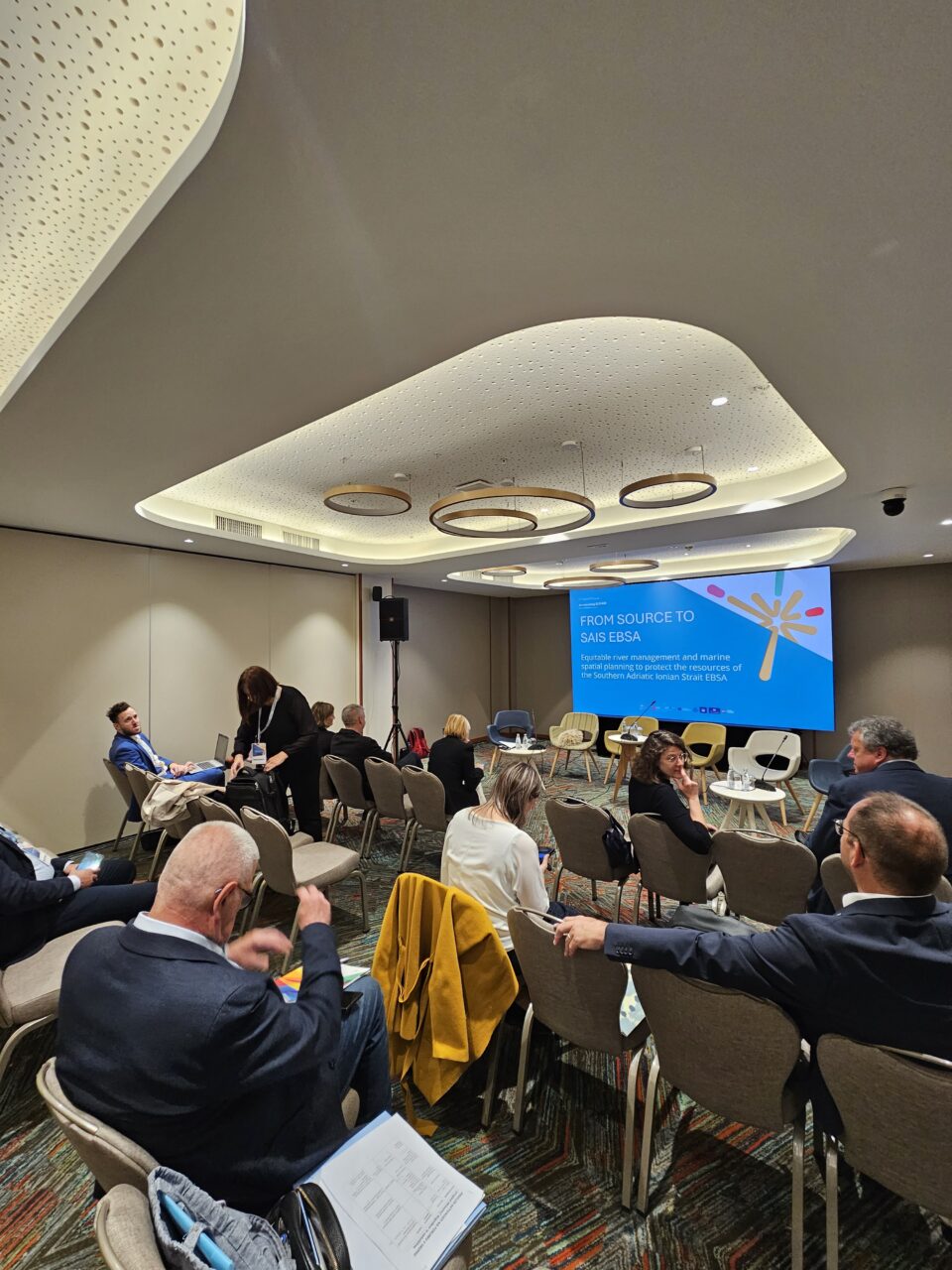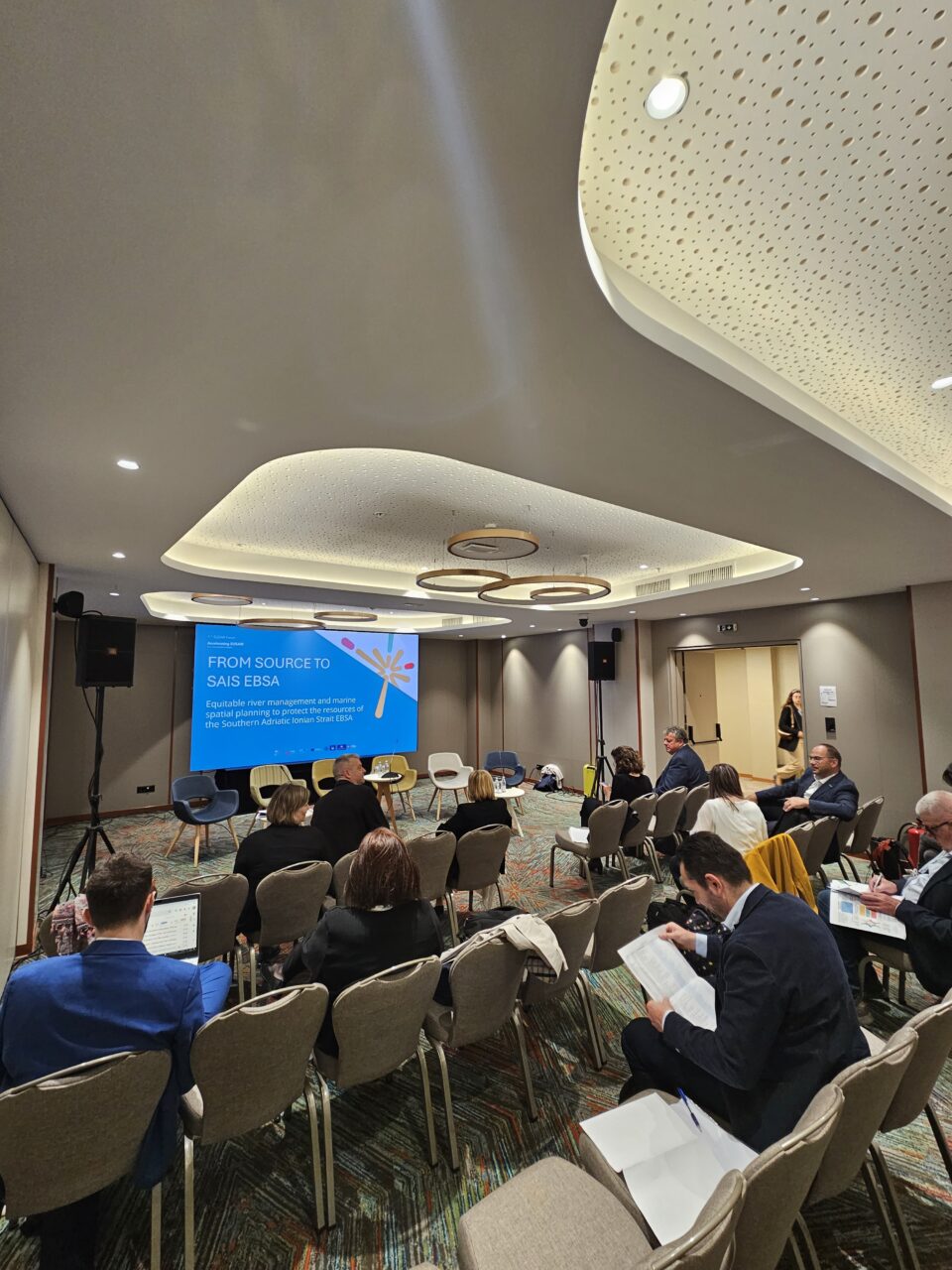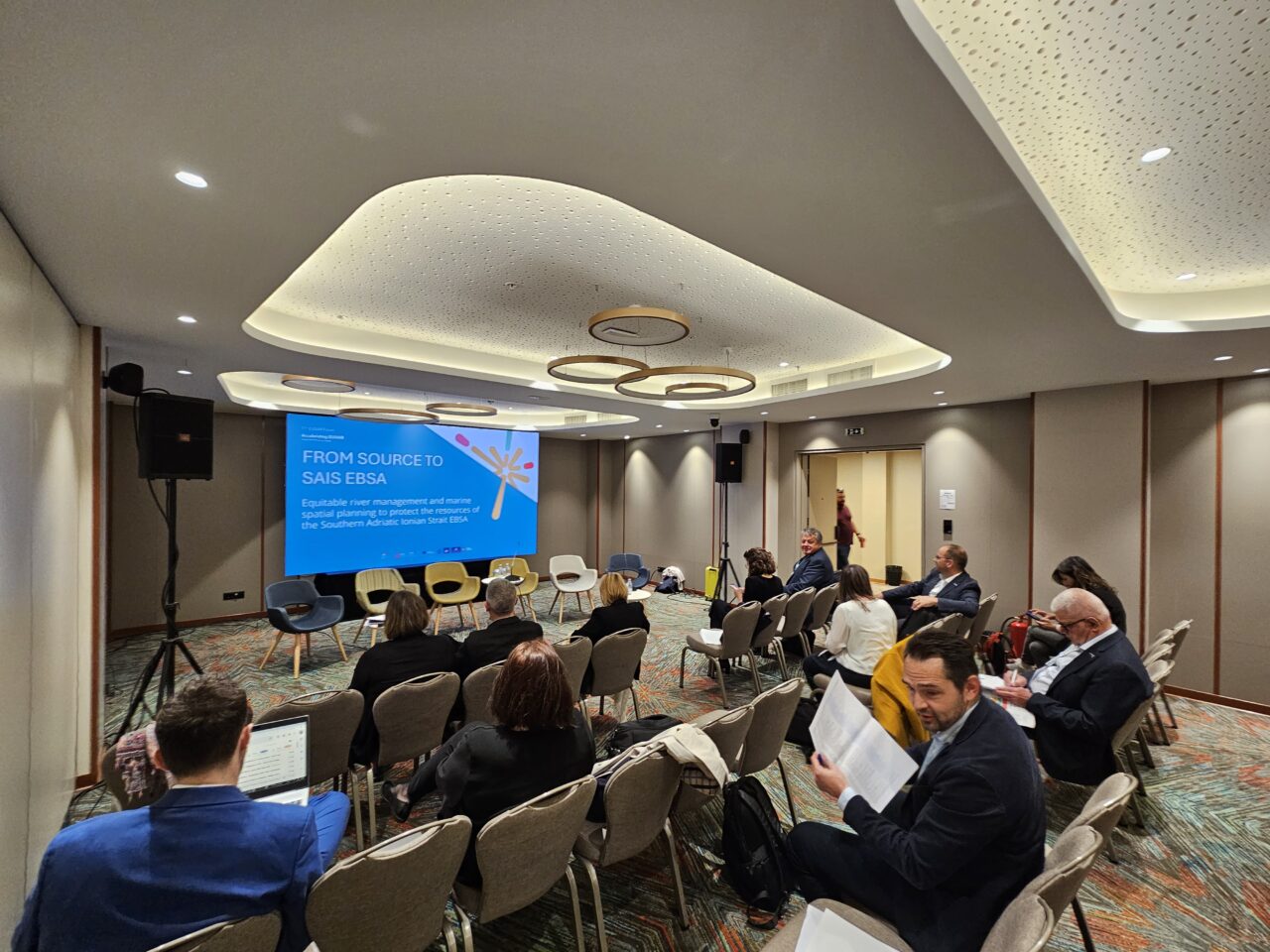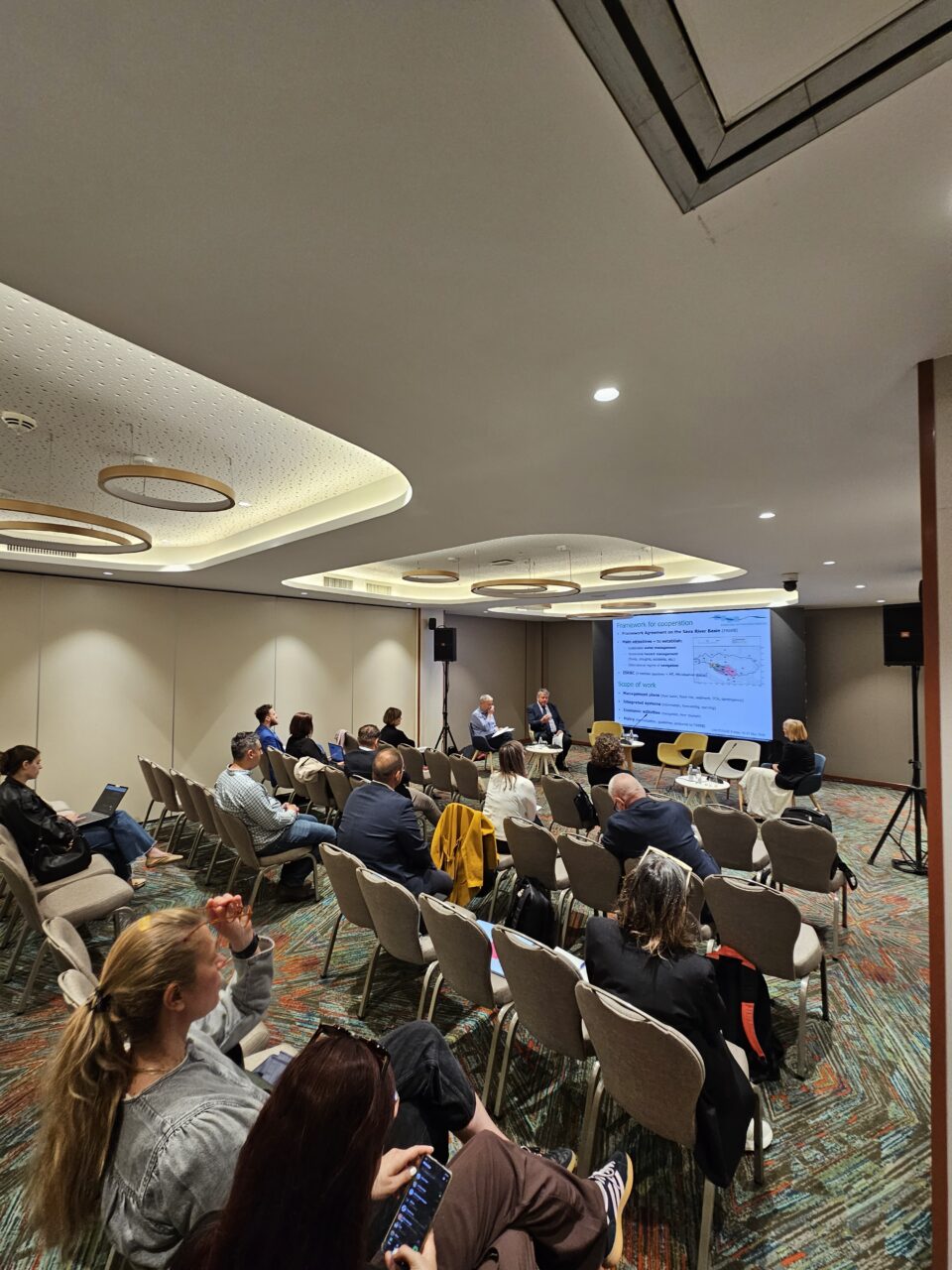
The Pillar 3 inter‑pillar session reaffirmed that environmental challenges in the Adriatic–Ionian region require integrated, cross‑border and inter‑sectoral cooperation, reflecting the reality that ecosystems do not follow administrative boundaries. The discussion strongly emphasised the need for a coherent “source‑to‑sea” governance approach, linking upstream river basin management with downstream marine spatial planning.
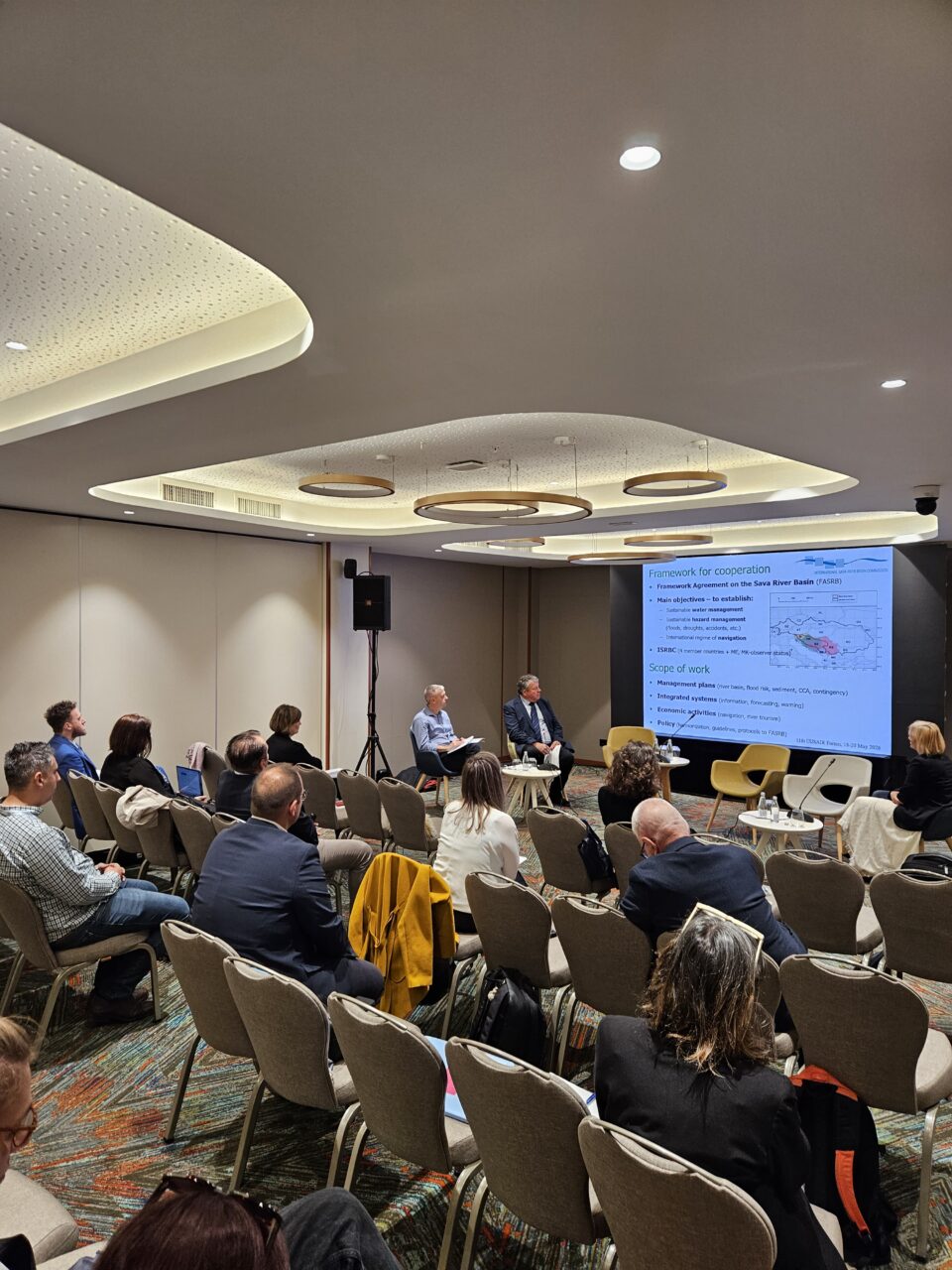
Insights shared during the panel highlighted the importance of coordinated water management frameworks and transnational cooperation mechanisms. Experiences from the International Sava River Basin Commission demonstrated how structured institutional cooperation, long‑term coordination, and shared operational tools can support effective basin‑wide governance, enhance climate resilience and serve as a reference model for wider macroregional cooperation.
The discussions also stressed that strengthening river basin management upstream is essential for achieving effective marine conservation outcomes downstream. Contributions addressing water management and planning perspectives illustrated the growing recognition that aligning freshwater, coastal and marine planning is critical for maintaining ecosystem services and ensuring sustainable development across interconnected systems.
A key theme emerging from the session was the importance of inclusive and participatory governance models, particularly in the context of marine spatial planning. Experiences shared from organisations such as WWF Italy highlighted that engaging sectoral stakeholders — including fisheries, tourism operators, civil society and local communities — is fundamental to ensuring that conservation measures are relevant, accepted and implementable. The panel underlined the need to move beyond consultation towards co‑creation of solutions, fostering ownership and long‑term commitment among stakeholders.
Panellists agreed that ecosystem‑based marine spatial planning (MSP) plays a central role in balancing environmental protection with socio‑economic activities. MSP was recognised as a key tool for managing competing uses — including tourism, fisheries, aquaculture, energy and transport — while reducing spatial conflicts and improving coherence between land‑based and marine planning, particularly in coastal areas. At the same time, the discussion highlighted the continued need for stronger data integration, including both environmental and socio‑economic data, to support transparent and equitable decision‑making processes.
The role of sustainable tourism and nature‑based solutions was another important dimension addressed during the session. Contributions from representatives of the tourism sector highlighted that tourism actors are increasingly recognising the value of investing in nature‑based solutions that enhance climate resilience and ecosystem health. While such approaches may involve upfront costs, their long‑term benefits — including improved destination quality, risk reduction and sustained economic value — position them as essential components of a sustainable blue economy.
The session also explored how broader governance frameworks can support the effective management of Ecologically or Biologically Significant Marine Areas (EBSAs). In particular, it was emphasised that stronger alignment between EU policy frameworks and Regional Seas programmes can provide clearer guidance and support for developing coherent governance strategies in the Adriatic–Ionian region. Such alignment can strengthen policy coherence, support implementation, and ensure that biodiversity protection efforts are both operational and sustainable.
Looking ahead, the Southern Adriatic–Ionian Strait EBSA (SAIS‑EBSA) was identified as a promising pilot case for advancing integrated governance approaches. The session highlighted its potential to demonstrate how cross‑border cooperation, inter‑pillar coordination and improved planning tools can contribute to achieving the EU’s biodiversity and sustainability targets, including the 2030 objectives. At the same time, it revealed persistent challenges, particularly in strengthening governance coordination, improving stakeholder engagement mechanisms, and ensuring access to reliable socio‑economic data.
In conclusion, the session reaffirmed the role of Pillar 3 in promoting policy coherence, cross‑sectoral collaboration and sustainable environmental management across the Adriatic–Ionian region. Advancing source‑to‑sea approaches, strengthening stakeholder‑driven governance, integrating nature‑based solutions across sectors, and improving data‑driven planning were identified as key priorities for ensuring a resilient, sustainable and inclusive future for the macroregion.
Furthermore, the session highlighted that strengthening interregional cooperation through a comprehensive “Source to Sea” approach connecting the Danube and Black Sea regions with the Mediterranean is essential for increasing the resilience of river basins and coastal areas, while improving the overall health of the wider marine ecosystem. Particular emphasis was placed on the significant opportunity to enhance cooperation and policy coherence through stronger linkages among existing regional frameworks and conventions, including the Alpine Convention, the International Commission for the Protection of the Danube River (ICPDR), the Black Sea Commission (BSC), and the Barcelona Convention/UNEP-MAP. The discussion also underlined the strong potential for creating synergies between the EUSDR, EUSAIR and EUSALP macroregional processes, which could substantially contribute to more coordinated and integrated management of freshwater, coastal and marine systems across the wider region.
As a concrete example of effective transboundary cooperation, participants referred again to the achievements of the International Sava River Basin Commission (ISRBC), which demonstrate how institutionalised cooperation among countries within an international river basin can significantly strengthen resilience, risk reduction and coordinated governance. In particular, the Sava Flood Warning System was highlighted as a successful operational model for joint data sharing, flood forecasting and early warning cooperation.
The discussion further stressed that improving cooperation among Adriatic countries requires the timely reactivation of the Commission for the Protection of the Adriatic Sea and Coastal Areas, together with its permanent expert working groups dedicated to monitoring, contingency planning, and ICZM/MSP. Strengthening these institutional coordination mechanisms would significantly enhance the region’s capacity to address transboundary environmental challenges and to implement ecosystem-based approaches more effectively across the Adriatic–Ionian region.
Building on the political momentum generated through processes and reference frameworks such as the UNOC-3 Ministerial Declaration MED 50, the decisions adopted under COP24 of the Barcelona Convention, UNEA-7, and the 28th Ordinary Meeting of the ICPDR, the session recognised a major opportunity for countries of the region to jointly develop an ambitious interregional Danube–Black Sea–Mediterranean project under the new GEF MED Programme. Such an initiative could provide an important operational framework for strengthening ecosystem resilience, improving integrated “Source to Sea” governance, and enhancing coordination between policies, financing instruments and implementation mechanisms across the entire interconnected macroregional system.