EUSAIR’s work is organised around 4 Pillars:
- Blue growth
- Transport and energy connectivity
- Environmental quality
- Sustainable tourism
Each of them is co-coordinated by EU member state/non-EU member state pair so that our non-EU countries get real opportunity to manage and govern selected EU policy as being EU member state. This is a unique tool EUSAIR is exploiting to further integrate EU neighbour countries into EU way of addressing policy design, implementation and financing. EUSAIR is also the only Macro-regional strategy that is managed and chaired regardless of the EU status of its members.
EUSAIR established (by financial support of ADRION programmes) governance support structure – EUSAIR Facility Point which is rather unique in comparison with other Macro-regional Strategies. Why? Because in EUSAIR Facility Point has project partners in all EUSAIR countries, meaning also all non-EU countries have their own structure that facilitates needed governance activities within the individual country. This is very complex structure, difficult to be managed within the ERDF rules, but not impossible. But on the other hand it is a unique driving force, supporting all levels of implementation and facilitating active involvement of all key players in all participating countries, hosting meetings and events in the whole territory of the Strategy, allowing its key implementers to get to know and understand each other better, to trust each other and in the end to be able to decide and take actions in mutual agreement.
In 2020, Slovenia took over leadership of the Strategy from Serbia. Both of the Presidencies faced, among other, COVID-19 crisis, but this is not affecting EUSAIR plans nor joint EUSAIR implementation agenda.
EUSAIR managed to adopt list of flagships to be embedded in future Cohesion policy and IPA programmes, which was shared with relevant Programming Authorities including EC’s DG REGIO and DG NEAR. It has also, together with other 4 Macro-regional Strategies and very valuable support of INTERACT Program, immediately identify areas of possible coordinated intervention to fight against COVID-19 crisis.
And why is contribution of EUSAIR and other Macro-regional Strategies SIGNIFICANT TODAY and not only TOMORROW? Because we have:
- functioning networks in all countries of the region,
- mutual trust,
- a number of already identified and mutually agreed activities that can directly contribute to the recovery topics.
Four of latter were discussed during the traditional 5th Mediterranean Coast and Macro-Regional Strategies Week at Slovenian coast:
- Tourism recovery – EC with its experts and Macro-regional Strategies’ experts joined forces to explore possibilities of joint actions to be proposed to Programming Authorities for inclusion in new financial programmes.
- Increasing EU resilience in food production by systematic planning of green infrastructure to provide necessary biodiversity.
- EUSAIR contribution to European Green Deal and Green Agenda for Western Balkan – identified number of EUSAIR flagships that can, if implemented, have significant contribution to the set goals, particularly in the area of biodiversity and green mobility and will be submited for the 1 billion European Green Deal call (Horizon). Up to €9 billion of funding for investment flagships in the areas of transport, energy, green and digital transition are made available related to EC’s published Economic and Investment Plan for the Western Balkans. The implementation of those projects can help accelerate convergence with the EU and speeding up the process of EU integration.
- Smart Specialisation network within the Adriatic-Ionian region was formed. It will in cooperation of EUSAIR Pillars contribute to smart recovery and smart and green growth.
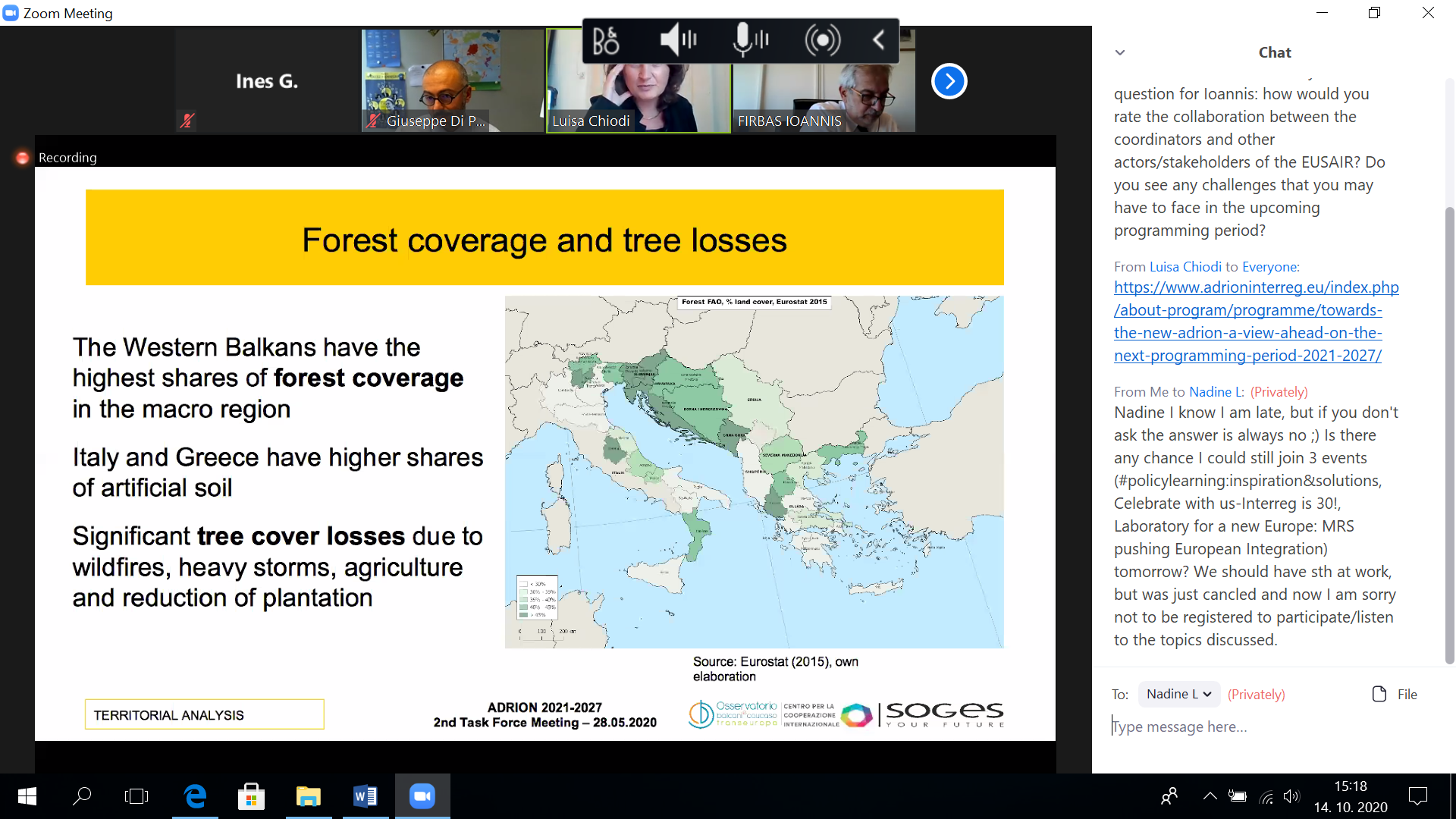
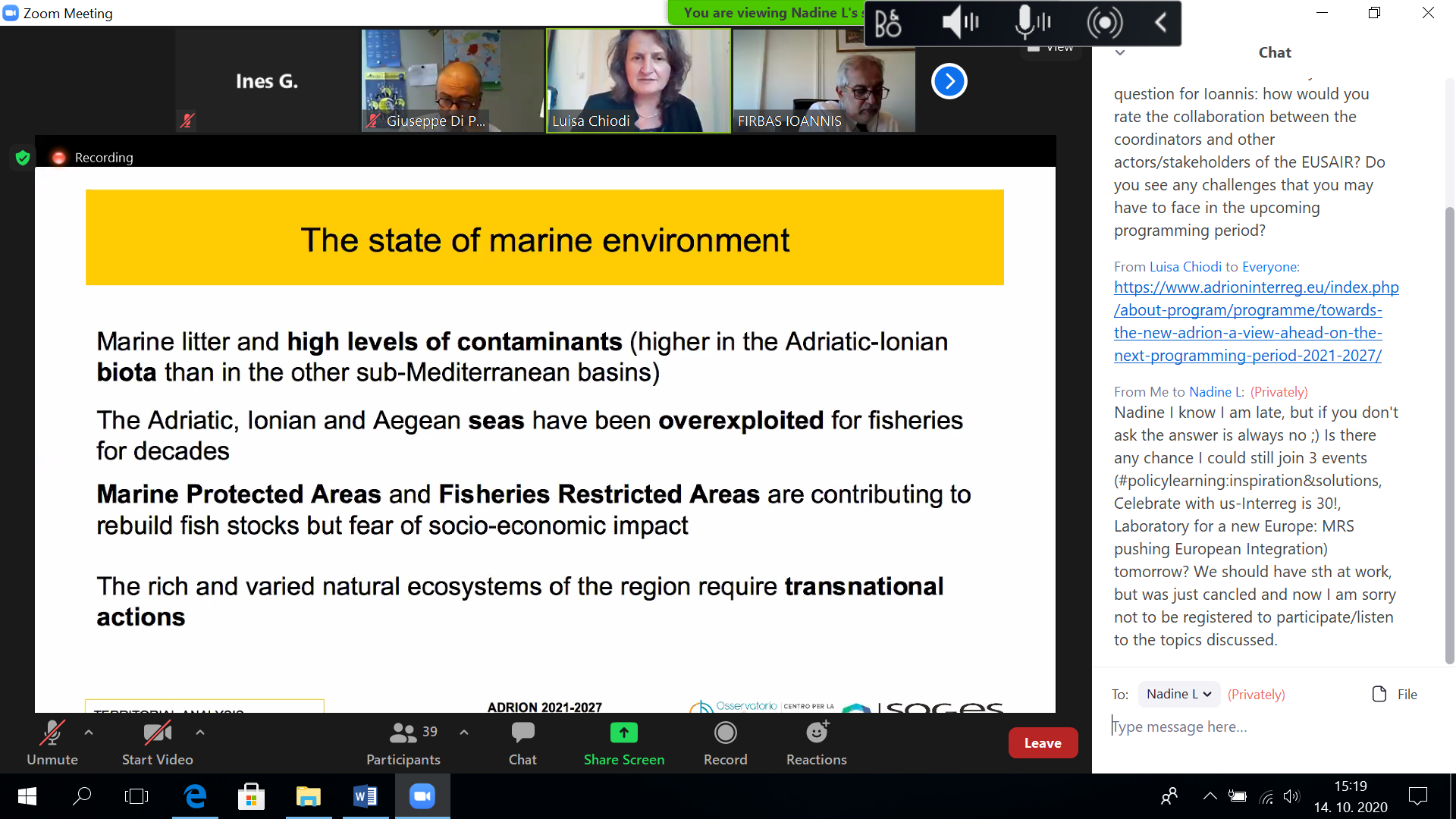

Participants of the event recognised EUSAIR cooperation in 4 sectors as sufficient in 21%, whereas enlargement to the topics of safety and security (7%), migration (21%) and digitalization (50%) should be considered in the future. Taking into account the negative effects of the pandemics, Sustainable Tourism (50%), Green Economy (40%) and Blue Growth (10%) were adviced to be prioritised as well.