Adriatic-Ionian > News > European Green Deal: Developing a sustainable blue economy in the European Union
European Green Deal: Developing a sustainable blue economy in the European Union
21. May, 2021
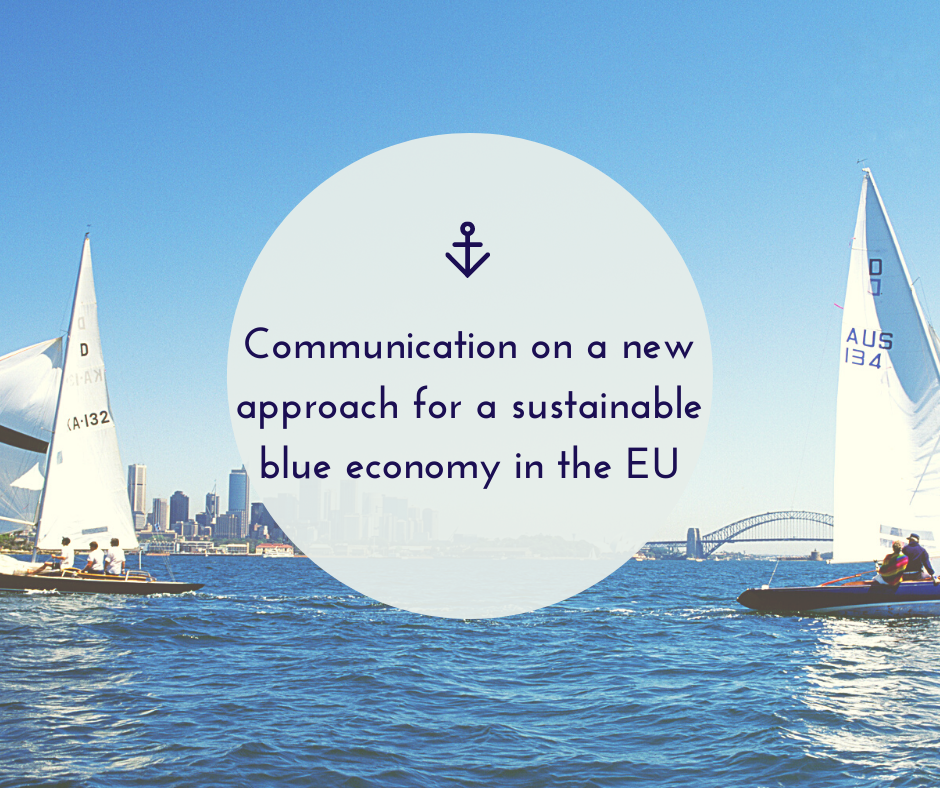
European Commission is proposing a new approach for a sustainable blue economy in the EU for the industries and sectors related to oceans, seas and coasts.
A sustainable blue economy is essential to achieving the objectives of the European Green Deal and ensuring a green and inclusive recovery from the pandemic.
“Healthy oceans are a precondition for a thriving blue economy. Pollution, overfishing and habitat destruction, coupled with the effects of the climate crisis, all threaten the rich marine biodiversity that the blue economy depends on. We must change tack and develop a sustainable blue economy where environmental protection and economic activities go hand in hand.” Frans Timmermans, Executive Vice-President for the Green Deal
“The pandemic has hit the marine economy sectors in different, but profound ways. We have an opportunity to start afresh, and we want to make sure that the recovery shifts the focus from mere exploitation to sustainability and resilience. Thus to be truly green, we must also think blue.”Virginijus Sinkevičius, Commissioner for the Environment, Fisheries and Maritime Affairs
All blue economy sectors including fisheries, aquaculture, coastal tourism, maritime transport, port activities and shipbuilding will have to reduce their environmental and climate impact. Tackling the climate and biodiversity crises requires healthy seas and a sustainable use of their resources to create alternatives to fossil fuels and traditional food production.
Transitioning to a sustainable blue economy requires investing in innovative technologies. Wave- and tidal energy, algae production, development of innovative fishing gear or restoration of marine ecosystems will create new green jobs and businesses in the blue economy.
The Communication sets out a detailed agenda for the blue economy to:
Achieve the objectives of climate neutrality and zero pollution,
Switch to a circular economy and reduce pollution,
Preserve biodiversity and invest in nature,
Support climate adaptation and coastal resilience,
Ensure sustainable food production,
Improve management of space at sea.
The Commission committs itself also to creating the conditions for a sustainable blue economy internationally following the international ocean governance agenda.
More on detailed agenda, financing the sustainable blue economy etc. is available HERE!
Why?
According to the most recent Blue economy report, the traditional sectors of blue economy provide 4.5 million direct jobs and generate over 650 billion euro in turnover.
The Maritime Spatial Planning Directive calls on all Member States to formally plan their maritime space by 2021 in line with this newest Blue Growth communication, since only with acting together we can achieve the great goals, necessary for our common and better future!
Manage Consent
To provide the best experiences, we use technologies like cookies to store and/or access device information. Consenting to these technologies will allow us to process data such as browsing behavior or unique IDs on this site. Not consenting or withdrawing consent, may adversely affect certain features and functions.
Functional
Always active
The technical storage or access is strictly necessary for the legitimate purpose of enabling the use of a specific service explicitly requested by the subscriber or user, or for the sole purpose of carrying out the transmission of a communication over an electronic communications network.
Preferences
The technical storage or access is necessary for the legitimate purpose of storing preferences that are not requested by the subscriber or user.
Statistics
The technical storage or access that is used exclusively for statistical purposes.The technical storage or access that is used exclusively for anonymous statistical purposes. Without a subpoena, voluntary compliance on the part of your Internet Service Provider, or additional records from a third party, information stored or retrieved for this purpose alone cannot usually be used to identify you.
Marketing
The technical storage or access is required to create user profiles to send advertising, or to track the user on a website or across several websites for similar marketing purposes.