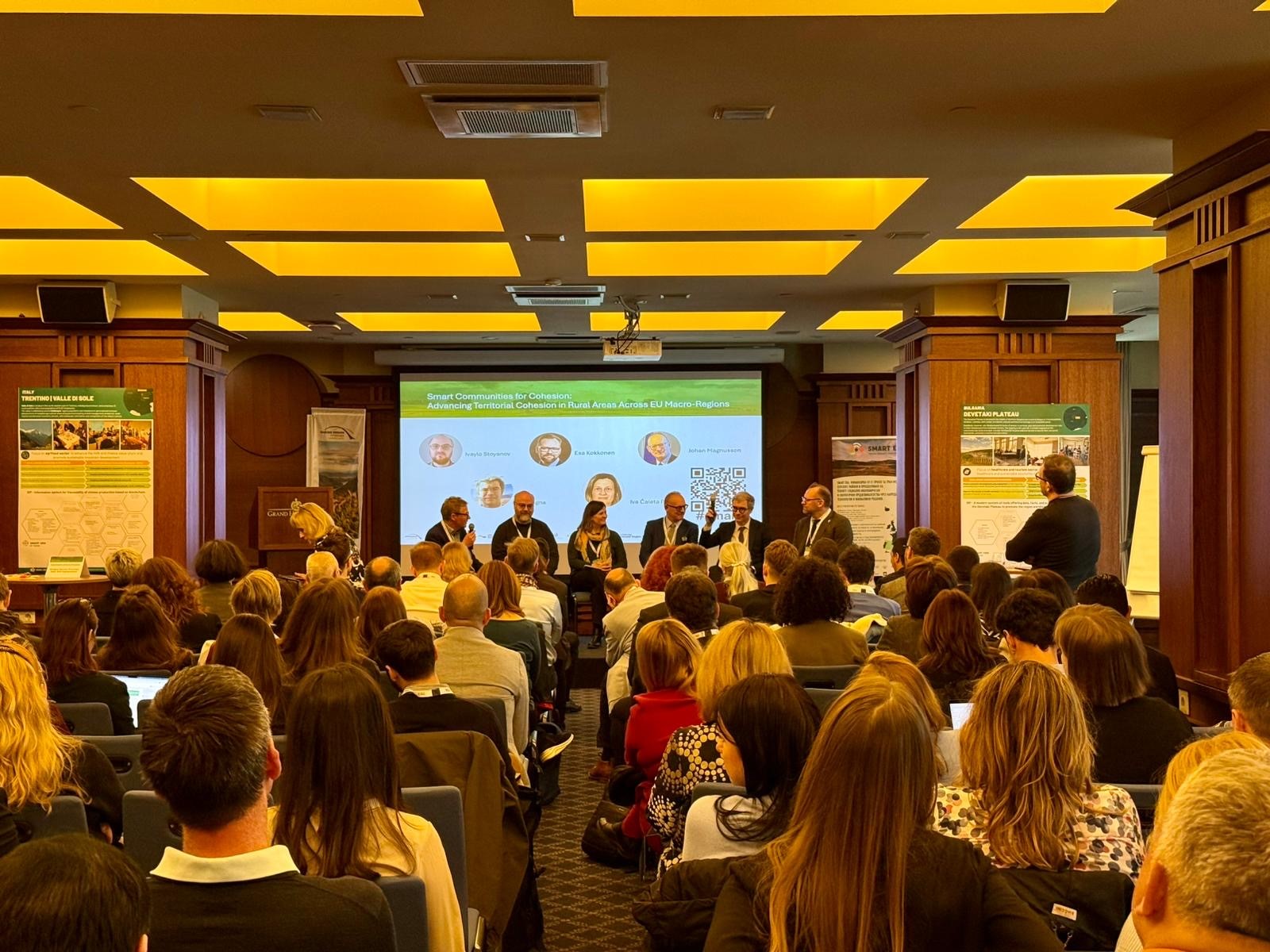
The panel brought together representatives of all four macro-regional strategies -Danube, Alpine, Baltic, and Adriatic-Ionian – as well as representatives of the European Commission, who emphasized that cooperation and trust drive development and improve the well-being of people and regions.
The Ministry of Tourism and Sport of the Republic of Croatia, together with the Ministry of Tourism, Culture and Sports of the Republic of Albania, coordinates the fourth thematic pillar – Sustainable Tourism – of the EU Strategy for the Adriatic-Ionian Region. During the panel, the potential of smart rural tourism within the Strategy was presented, taking into account the revised Action Plan.
Rural development has been part of EUSAIR since its inception. However, greater emphasis on cooperation across all thematic pillars on this topic has been introduced through the new Action Plan adopted in May 2025, where it is defined as a horizontal priority. This creates new opportunities for collaboration between thematic pillars and opens pathways for cooperation with other macro-regional strategies.
The SMART ERA project, funded under the Horizon Europe programme, aims to empower rural areas through a methodology developed within the project, which involves community engagement and collaborative problem-solving. The Smart Innovation Packages methodology is being implemented in several pilot regions, which were presented at the event in Sofia.
Furthermore, the SMART ERA project includes cooperation among all four macro-regional strategies, recognizing the importance of rural areas in Europe and highlighting shared challenges such as depopulation, climate change, insufficient connectivity—both physical and digital—and a lack of business and other opportunities. By applying this methodology, project partners will have concrete results and conclusions that can be applied to other regions, improve rural conditions, and enhance governance policies for the benefit of local communities, with the aim of attracting new residents and opportunities.
The event of all four macro-regional strategies brought noteworthy conclusions that require continued work: cooperation is essential for the prosperity of people and regions; strategies that involve communities and rely on continuous collaboration and communication are challenging but necessary and the only possible approach; the experience of cooperation within macro-regional strategies should be further utilized and deepened, as all these activities contribute to strengthening EU cohesion policy as well as enlargement policies. Only together can Europe move forward.