
In Slovenia, there are as many as 9 cultural routes that have in the past managed to obtain the Council of Europe’s Cultural Routes certificate. In 2005, the European Cultural Trail of St. Martin was the first to be registered in Slovenia. This year the Iron Age Trail along the Danube and the Trail of Sts. Cyril and Methodius were added as last ones on the list.
The central aim of the Council of Europe’s Cultural Routes is in informing about the common European cultural heritage – there are as many as 45 such routes throughout the Europe, which build a network of routes across more or less all European countries and associated members.
The primary project of Interreg Mediterranean BEST MED is to increase the sustainability of Mediterranean destinations that are part of the Council of Europe’s Cultural Routes, with the main challenge being to address the issue of mutual cooperation between major tourism actors in policy making. The BEST MED project is developed on the basis of an action-research methodology, in which the participation of local stakeholders (from the public and private sectors) is crucial for success. The project involves 11 partners from 10 Mediterranean countries. The project is co-financed by the European Regional Development Fund.
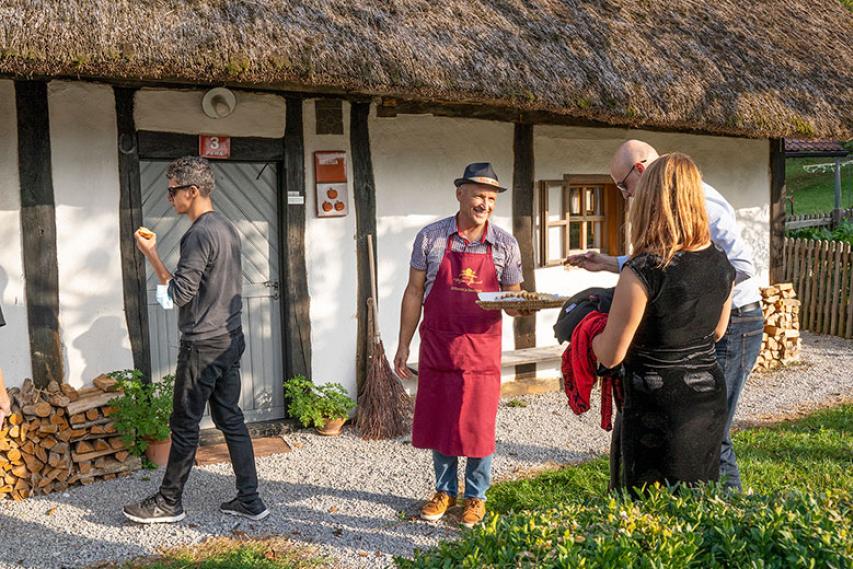
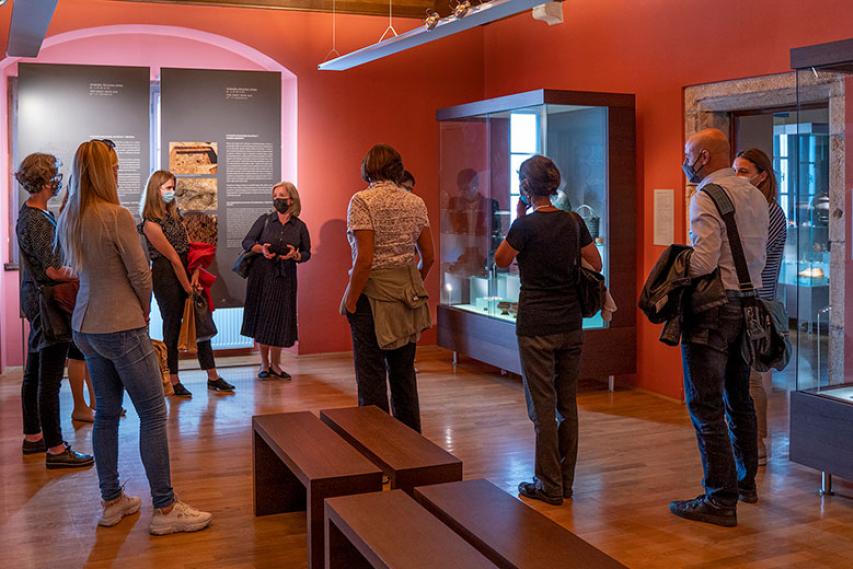
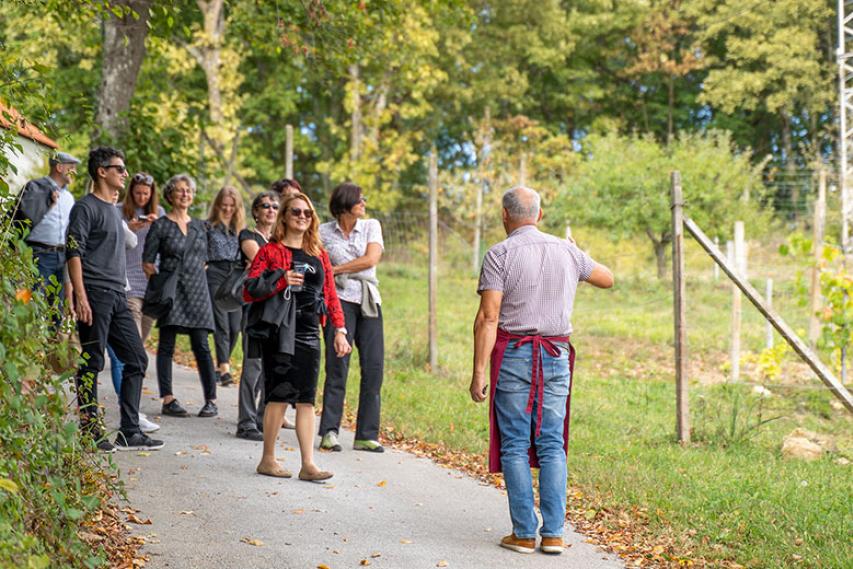
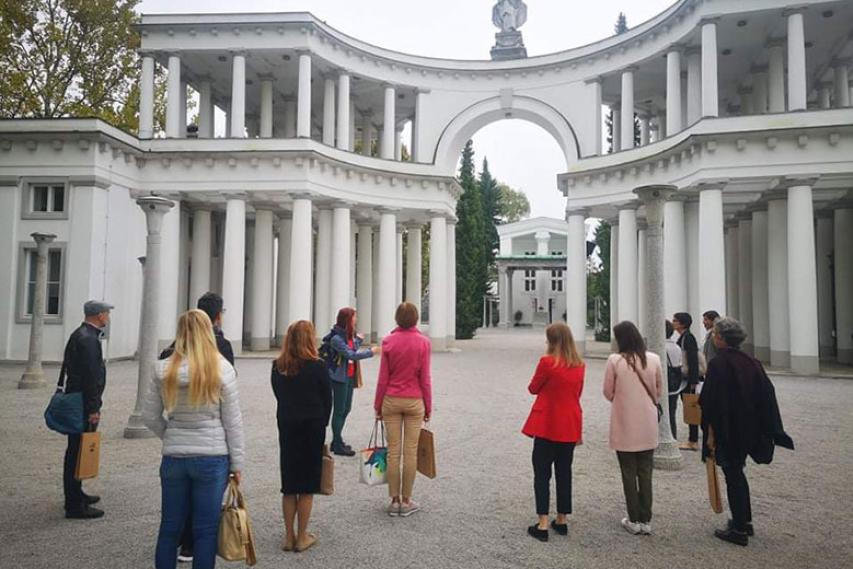
The participants of the event gathered at the Žale Cemetery in Ljubljana, where the Path of European Cemeteries was presented with a guided tour of Plečnik’s Žale, and was first greeted by a representative of the Slovenian Tourist Board, Mrs. Nataša Hočevar. The study tour continued with a tour of the Church of St. Martin in Moravče, which is part of the Cultural Route of St. Martin. The participants were addressed by the mayor of the municipality of Moravče dr. Milan Balazic. At the Dolenjska Museum Novo Mesto, the participants were received by Mrs. Petra Stipančič, who also presented the newly created Iron Age Route along the Danube. In the Dolenjska Museum, the participants had the opportunity to listen to a presentation by the representative of the Ministry of Culture of the Republic of Slovenia, Mrs. Irena Marš and the main coordinator of the Best Med project in Slovenia, assoc. prof. dr. Maja Turnšek. The event ended with a tour of the vineyard cottages and Matjaž’s Homestead in Dolenjska, where the participants got acquainted with the tourist offer of the Iter Vitis Cultural Trail, focused on wine tourism.
Thus, the central conclusion of the participants was that the connection between cultural routes is necessary and that it is necessary to create an integrated and sustainable tourist offer that will be attractive to potential tourists and at the same time provide long-term positive effects of tourism.