Adriatic-Ionian > News > Official Opening of the 10th Edition of the Mediterranean Coast and Macro-regional Strategies Week
Official Opening of the 10th Edition of the Mediterranean Coast and Macro-regional Strategies Week
16. September, 2025
On the occasion of the Opening ceremony of the 10th Mediterranean Coast and Macro-regional Strategies Week, the 10th Anniversary edition is both a celebration of past achievements and a forward-looking dialogue on future challenges. Over the past decade, the Mediterranean Coast and Macro-Regional Strategies Week has established itself as a vital platform for cooperation, knowledge-sharing, and sustainable action across the Mediterranean region.
To further this cooperation representatives from all four EU macro-regional strategies – Baltic Sea Region, Danube Region, Alpine Region and Adriatic-Ionian Region, join alongside policymakers, experts, academia, civil society, and citizens to raise awareness of sea basins and coasts, as well as the imminent need to balance their economic potential with environmental sustainability.
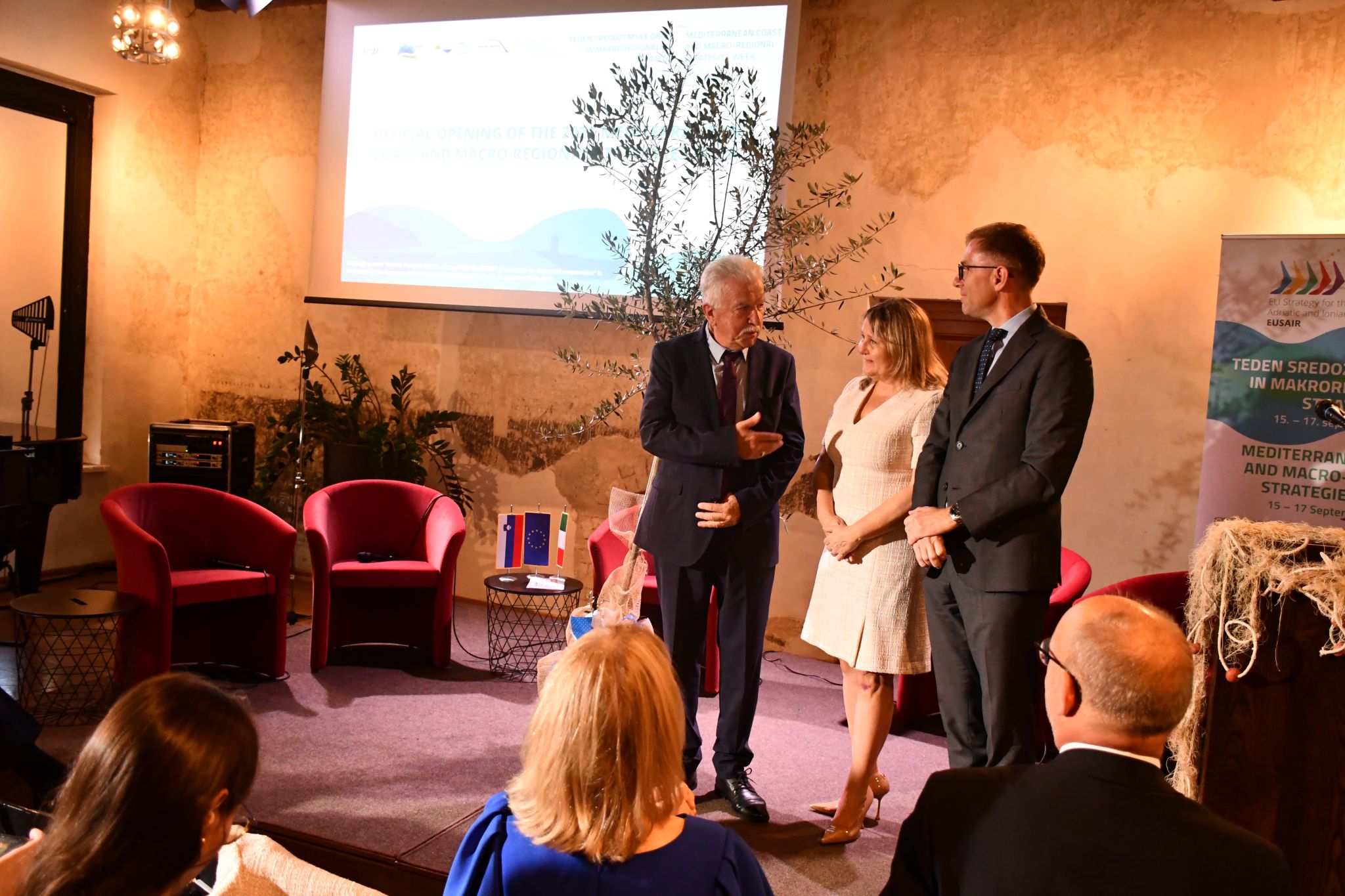
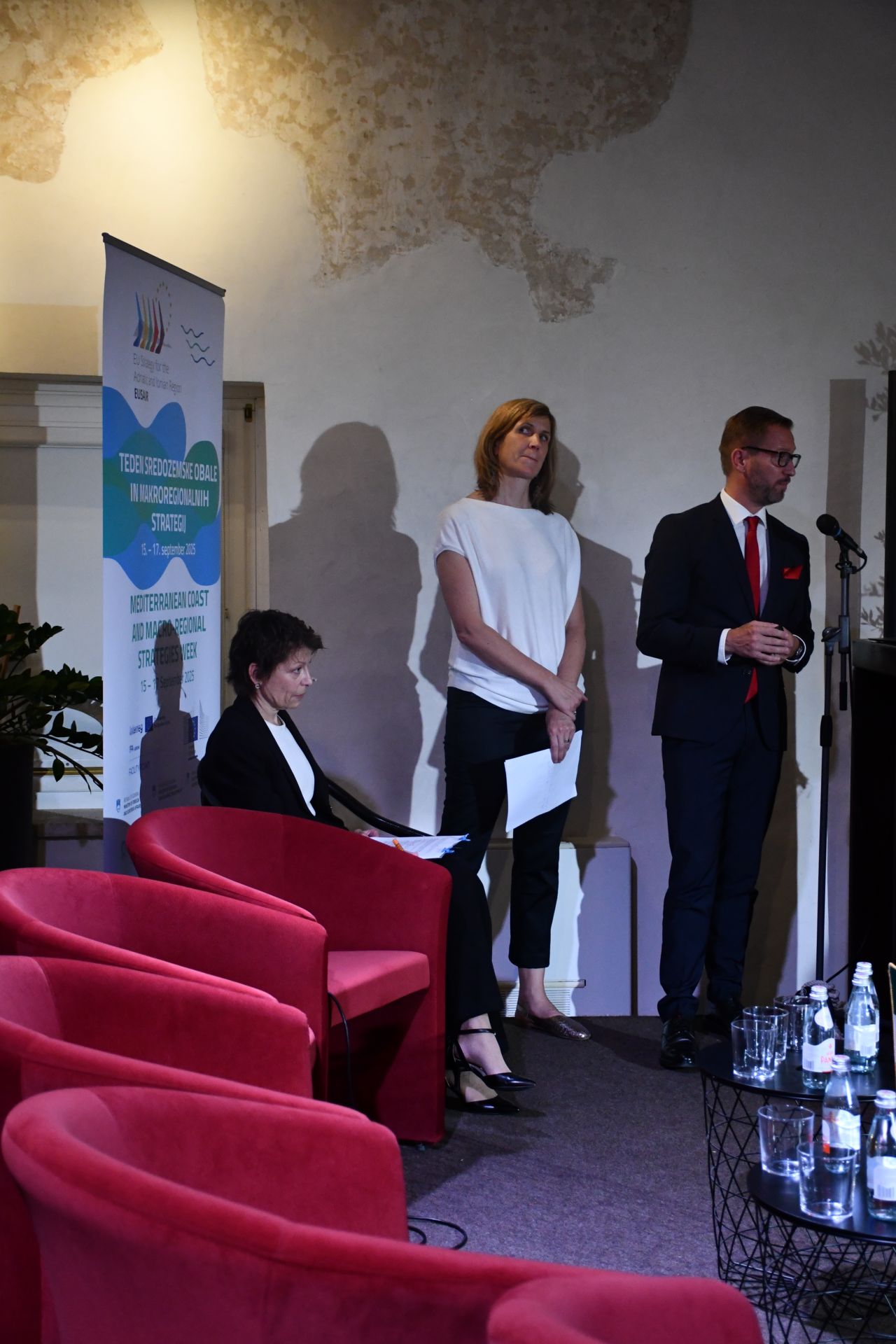
Mr. Milan Bogatič, Mayor of Municipality Izola, and Ambassador Barbara Žvokelj, Secretary-General, Ministry of Foreign and European Affairs of the Republic of Slovenia at the Opening ceremony emphasised that strategic planning and mutual dialogue are crucial for successfully addressing challenges through coordinated action at local, national, and European levels. And while their results may not be immediately visible or tangible, macro-regional strategies serve as intercessors between EU policies and the needs of European citizens, adding significant value through macro-regional cooperation for both member and candidate countries.
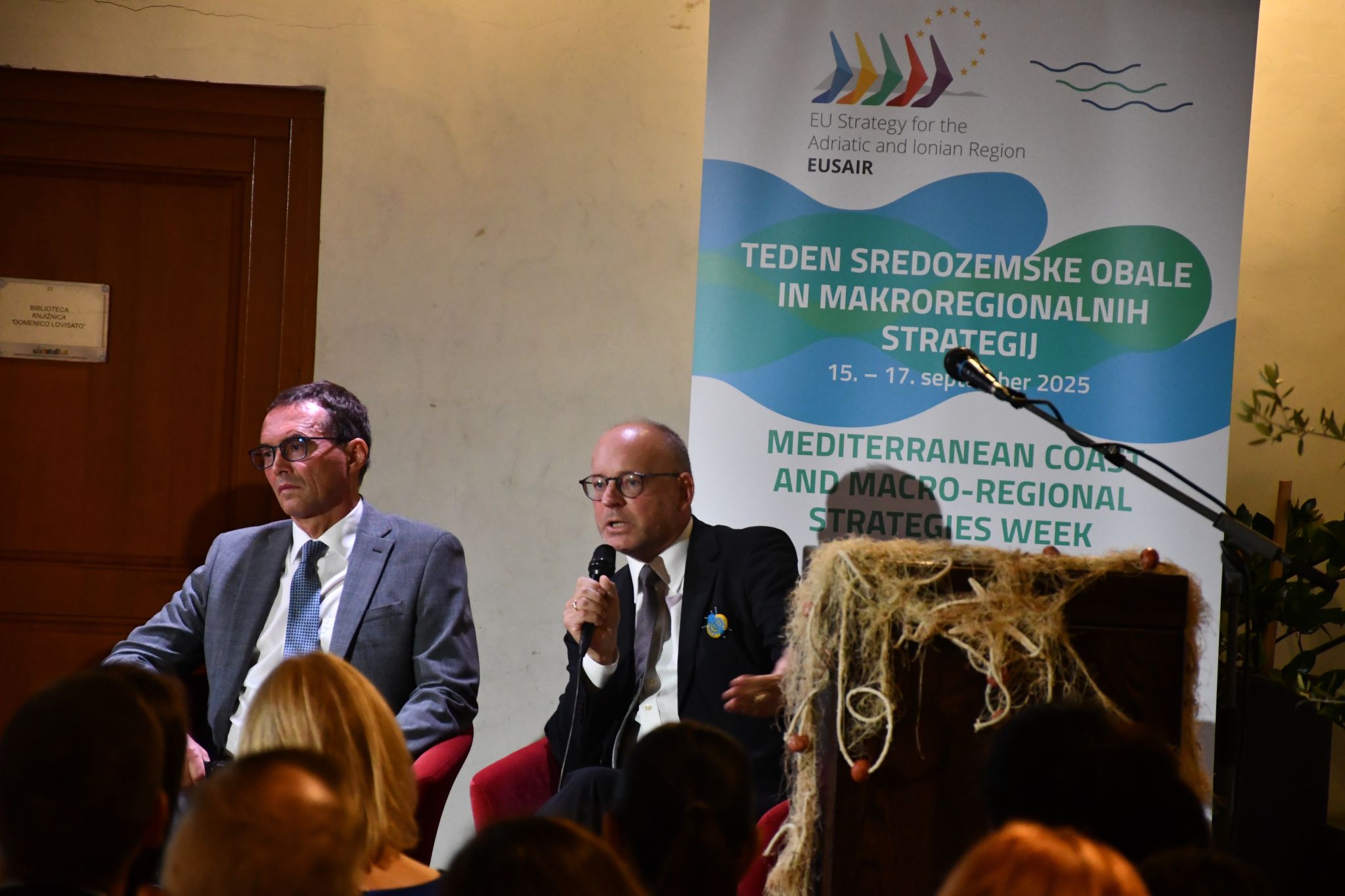
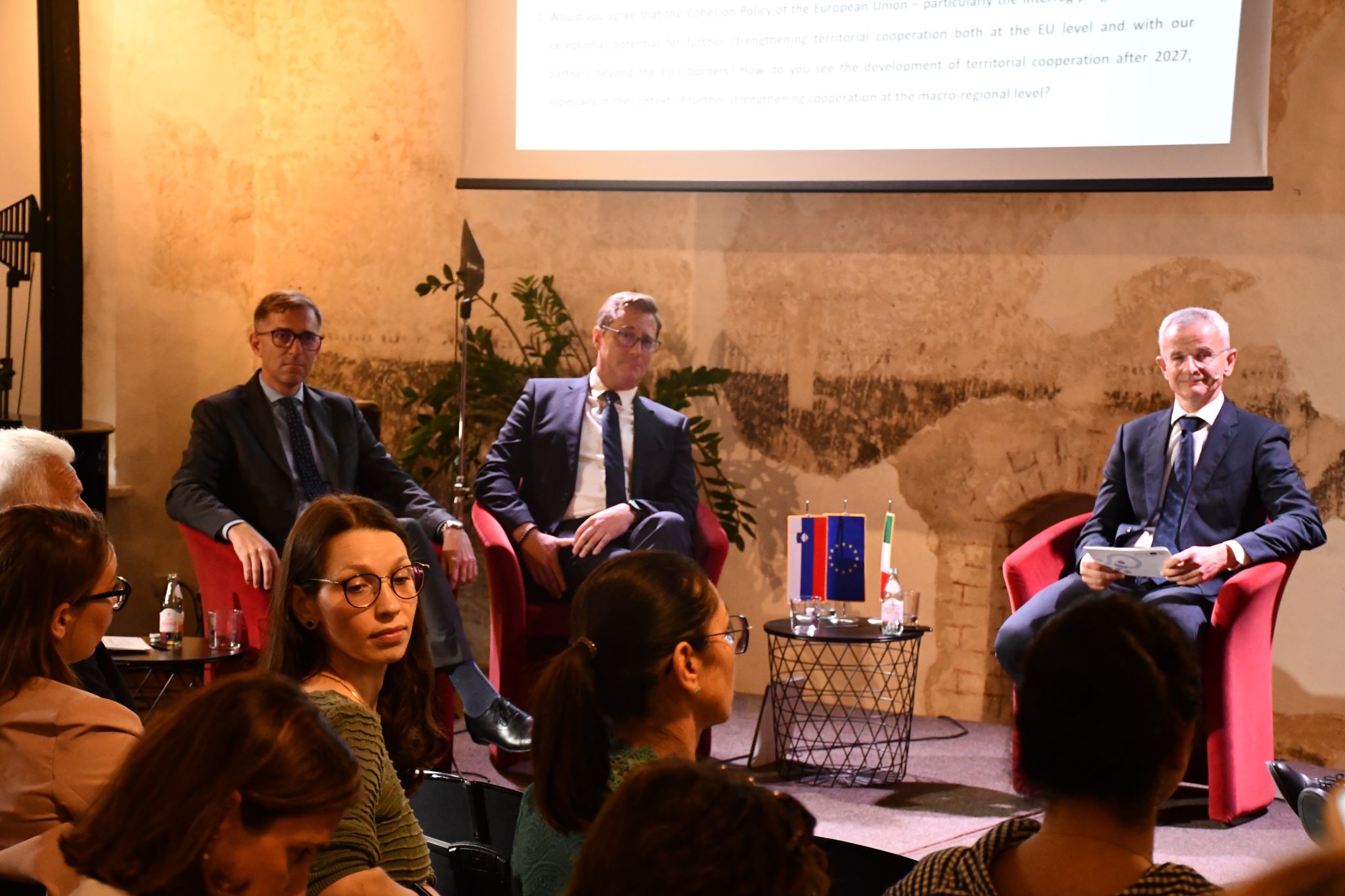
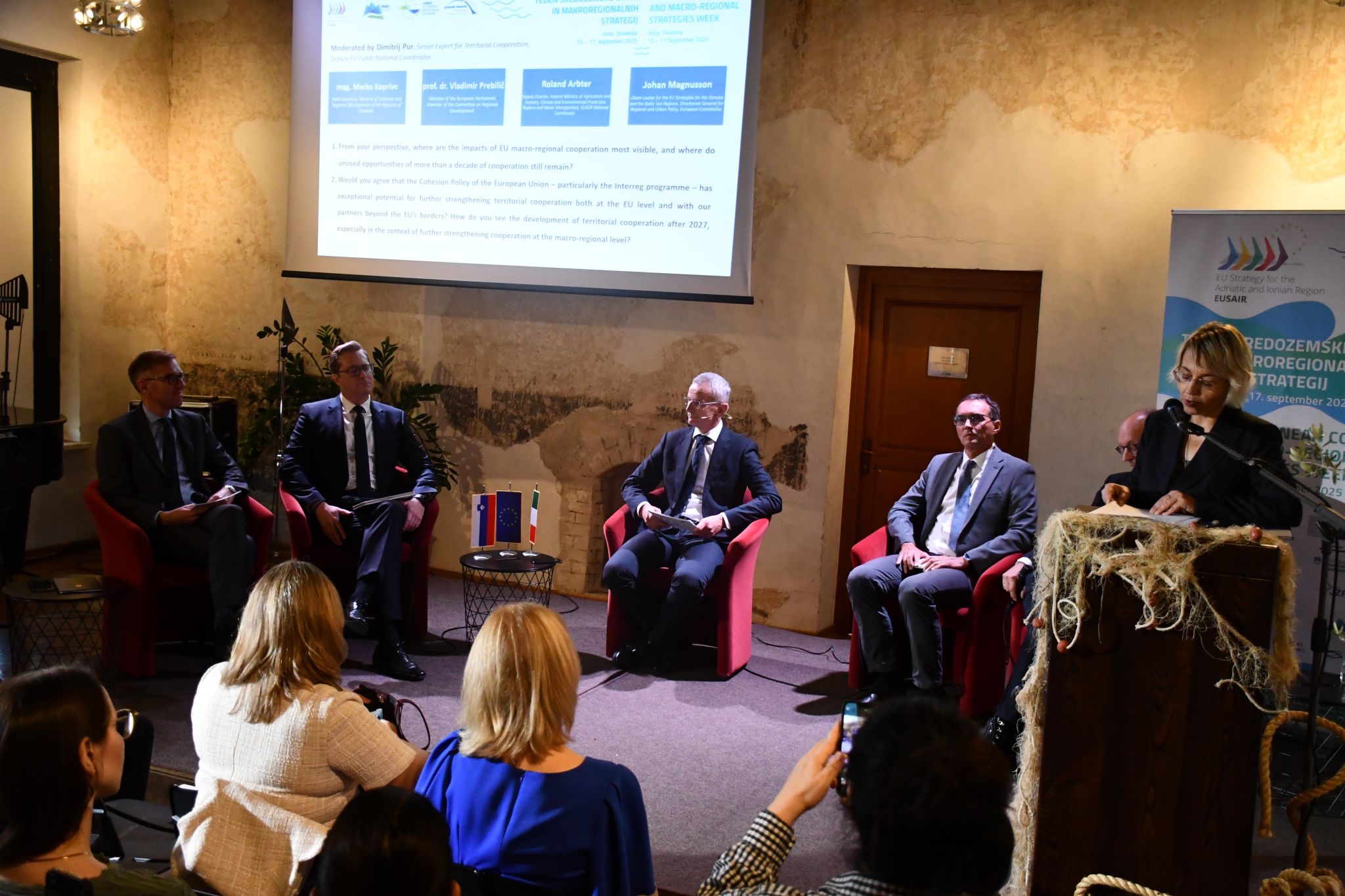
The High-level kick-off panel on the topic of the Cohesion Policy post-2027 included local and international speakers. The European Union’s macro-regional strategies have shown clear impact in strengthening cross-border cooperation, while untapped opportunities remain to further align policies and scale up results. Looking beyond 2027, the Cohesion Policy, particularly through the Interreg programme, holds exceptional potential to deepen territorial cooperation both within the EU and with partners beyond its borders.
“Macro regions should play a stronger role in supporting candidate countries. Slovenia shares common challenges with its neighbors and for us, territorial cooperation is not only important, it is natural, as progress cannot halt at borders.”Mag. Marko Koprivc, state secretary of the Ministry of Cohesion and Regional Development of the Republic of Slovenia
Has warned that shrinking financial investments for cohesion is a dangerous path to take, and additional financing for the lower-level stakeholders is essential because it offers concrete results for every citizen of the European Union. Honesty and transparency, as well as truthfulness and confidence in our work are the keys to successful simplification.Prof. dr. Vladimir Prebilič, member of the EU Parliament and the Committee on Regional Development
Has praised the use of macro-regional formats for sharing good practices, cooperating in different sectors in a horizontal manner, as well as skillfully linking stakeholders between sectors.Mr. Roland Arbter, deputy director of Federal Ministry of Agriculture and Forestry, Climate and Environmental Protection, Regions and Water Management
Has rounded off the discussion by stating that the four macro-regional strategies, which primarily held focus on environmental issues, further ventured into digitalisation and social issues. It is essential to look at how these strategies are developing over time, since they must be able to cope with changes, and what more could they do for the enlargement of the EU.Mr. Johan Magnusson, team leader for the EU Strategies for the Danube and the Baltic Sea Regions at the directorate general for Regional and Urban Policy,
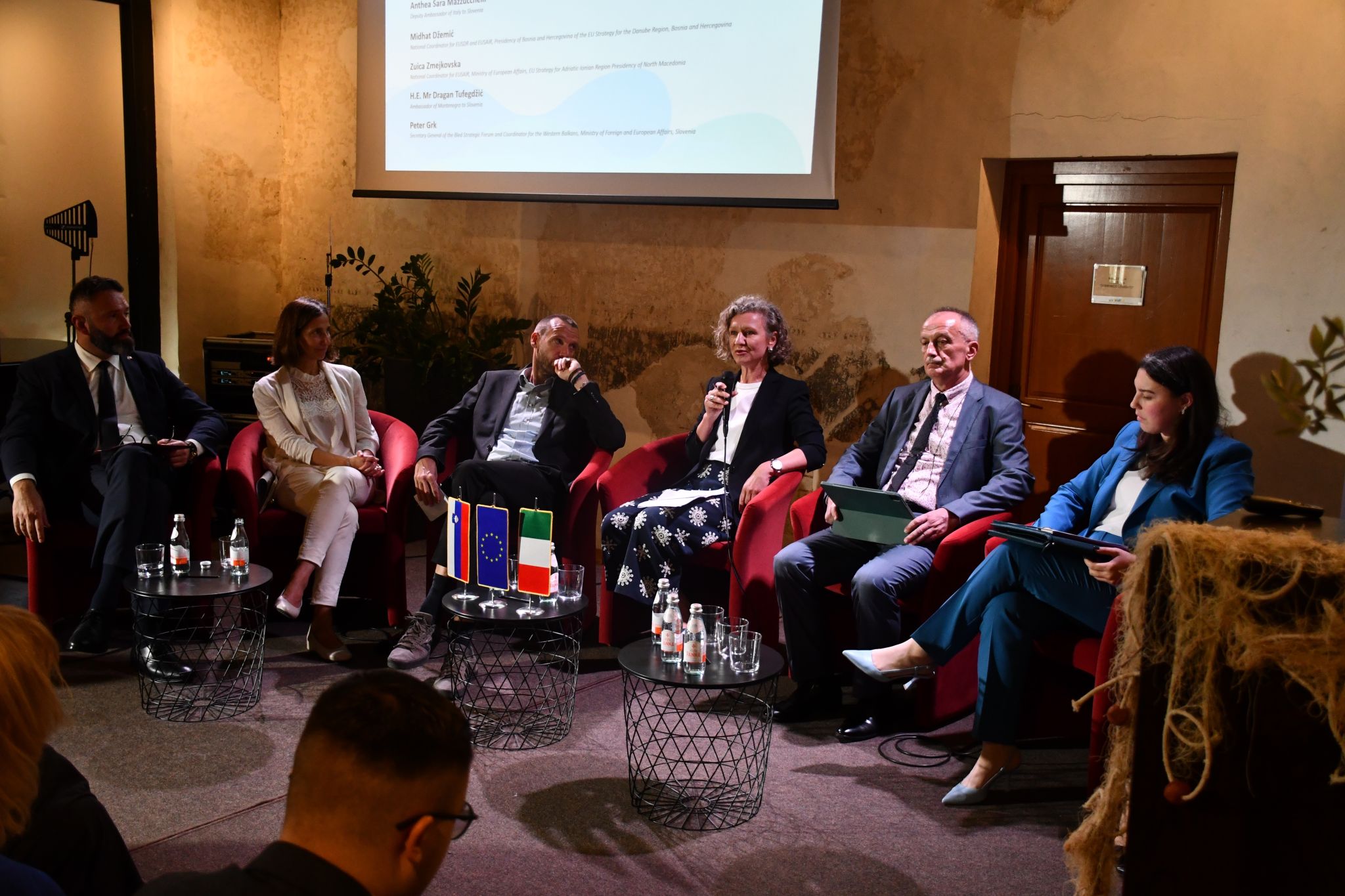
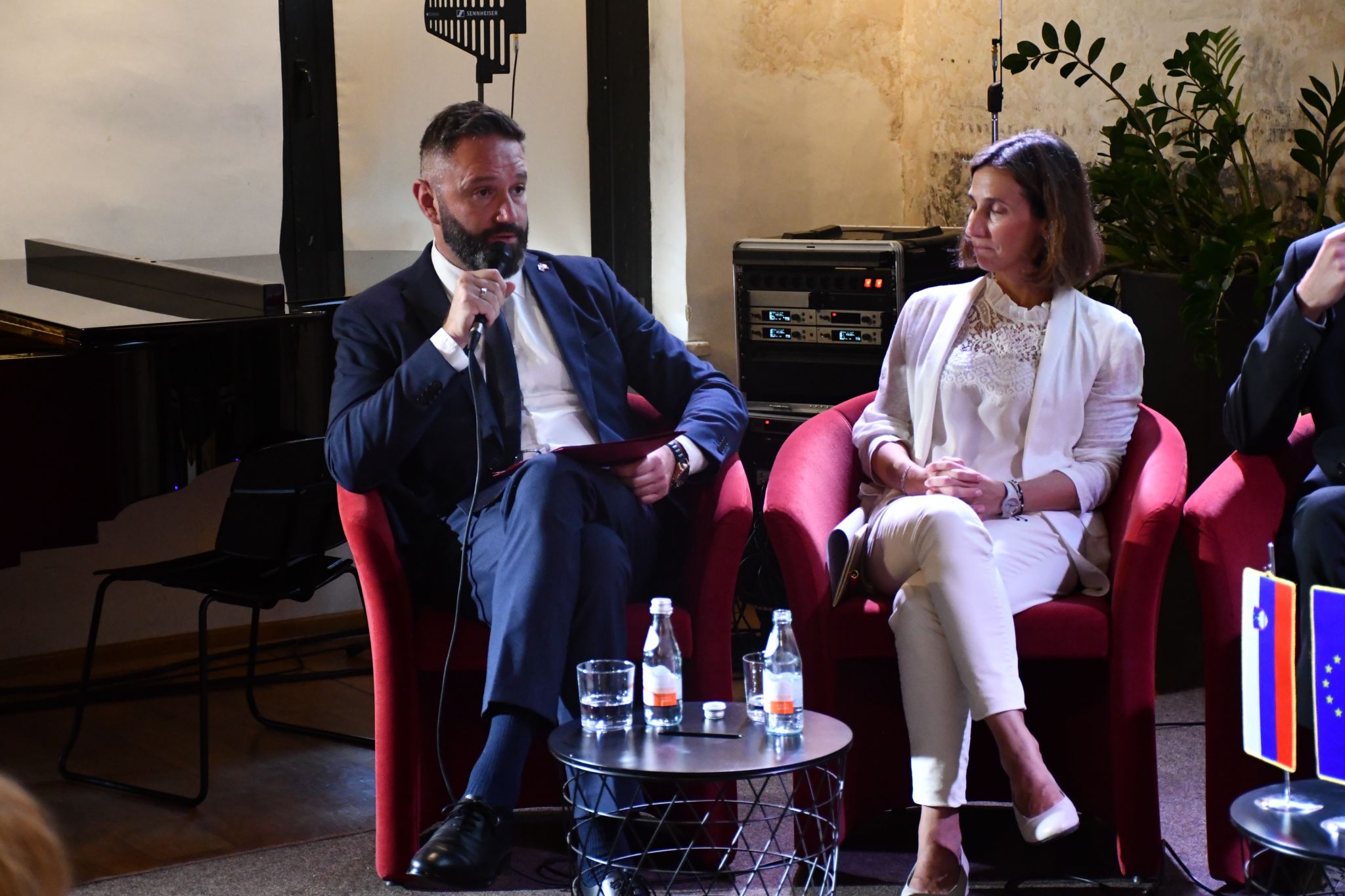
A dedicated panel also explored the role of EU Macro-Regional Strategies in supporting the enlargement process. Speakers emphasized that macroregional cooperation adds value by fostering trust, accelerating alignment with the EU acquis, and addressing cross-border challenges collectively. Integrating macro-regional priorities into national policies boosts the impact of EU funds, prevents fragmented investments, and supports coordinated enlargement. Involving stakeholders from candidate countries strengthens their capacities, prepares them for membership, and builds lasting networks for European stability and development.
“We want to support Montenegro in becoming a member country by 2028. With the gradual integration approach we try to integrate our partners before finalization to allow their citizens to enjoy the benefits of EU prior.”Anna Vezyroglou’s, Deputy Head of Unit, Directorate General for Enlargement and the Eastern Neighbourhood
“We support that enlargement remains the number one priority, as a geostrategical investment. Italy is promoting gradual integration because it is crucial for the citizens to enjoy benefits of political and economical spheres. We must continue to advocate for clear road maps, realistic timelines and predictable rewards for progress.“Anthea Sara Mazzucchelli, Deputy Ambassador of Italy to Slovenia
“Macro-regional strategies are instruments that support enlargement and are essential for the Danube Region. They can significantly influence the enlargement process, by promoting cooperation, standards and regional development, deeply relevant to my country as well.”Midhat Džemić, National Coordinator for EUSDR and EUSAIR, Presidency of Bosnia and Hercegovina of the EU Strategy for the Danube Region
Highlighted that macro-regional cooperation opens many doors for cooperation in the future and allows building important longterm networks that reach beyond macro-regional cooperation.Zuica Zmejkovska, National Coordinator for EUSAIR, Ministry of European Affairs, Presidency of North Macedonia, EU Strategy for Adriatic-Ionian Regio
“Enlargement is modern and significant, and in this geopolitical moment not only for us but the EU as a whole as well. Montenegro is a small country in territory but a big country in values, and enlargement for us is not just a contract to become a member of EU, it is so much more.”H. E. Mr. Dragan Tufegdžić, Ambassador of Montenegro to Slovenia
What do we want to do with the Europe of the future?” My answer is to preserve the quality of life that is higher than anywhere else in the world and for that we need a strategy and a policy. Currently, technological autonomy is the biggest obstacle of the EU.Peter Grk, Secretary General of the Bled Strategic Forum and Coordinator for the Western Balkans, Ministry of Foreign and European Affairs of the Republic of Slovenia
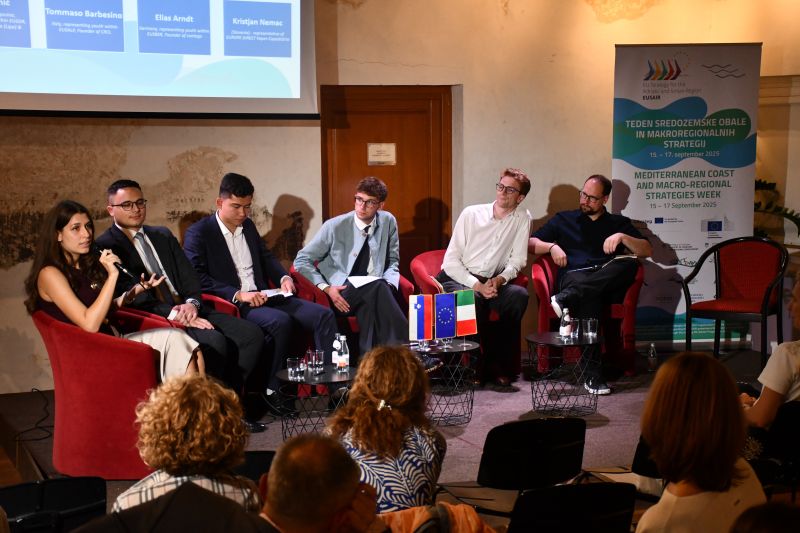
The youth session highlighted the vital role of youth engagement in shaping Europe’s future. Young entrepreneurs across all four macro-regions face barriers such as limited funding, restricted networks, and insufficient innovation infrastructure. Panelists presented innovative projects, including apps improving financial literacy and motivation, eco-friendly fashion initiatives reconnecting youth with nature, and digital tools simplifying everyday tasks, showing how young innovators tackle real-world challenges while bridging borders and generations. The discussion emphasized that quality of life, education, and security are key to retaining populations, while boosting competitiveness requires private investment, streamlined bureaucracy, and cross-border collaboration. Smarter funding, stronger ecosystems, and meaningful engagement are essential to empower youth and drive Europe’s sustainable growth. With the final meesage being: Let’s build the future together. Bring our EU dream home.
Stated that you need to have your own company to get EU grants, which means most national funding programs dedicated to the issue of young companies not being able to pay fixed costs that arise early on, cannot meet all the needs of more innovative start-ups. “More than 31% of adults are insufficiently active, which is a leading cause for heart disease and depression, and the lack of motivation is a key factor. Peak Beats is a solution that addresses this problem by setting a new way of how we listen to music because you will not only be listening to music, music will be listening to you too.”Lana Rakovec, Slovenia, EUSAIR, Founder of Peak Beats
Stated that the quality of life, consisting of better level of democracy, more opportunities and good educational systems, and security are the two main reasons we see the Danube Region retaining its population. Moreover, we need to increase competitiveness by fostering private capital and less restrictive bureaucracy to support the growth of start-ups and new companies in the region. His multilingual mobile app Lipa tackles the issue of low financial literacy by offering quality educational materials in cooperation with AI.Pejo Bosnić, Bosnia and Herzegovina, EUSDR, Co-Founder of Verdia (Lipa) & EASToK, stated
Tackles the issues of fast fashion, disconnection from nature and the lack of engaging initiatives for the youth, aiming to use fashion to reconnect young people with nature. CRCL is both a clothing line and a movement, joining clothing made from natural and eco-friendly materials, and offering one-of-a-kind experiences in nature. “I need to work to learn how to fail, and despite it being stressful, that is a key factor in learning how to successfully create and run a prosperous company.”Tommaso Barbesino, Italy, EUSALP, is a founder of CRCL
Highlighted that the advantage of the EU is that countries can easily hold on step together, however different countries have different systems, bureaucracies and cultures, all of which applies to the implementation of innovations as well. His company, contags, tackles the everyday problem of misplacing things by offering a multilingual digital tag, which allows the owner to decide which information (name, email etc.) and when it becomes visible, therefore simplifying the process between the finder and owner.Elias Arndt, Germany, EUSBSR, Founder of contags,
Presented the various options for young entrepreneurs who are starting their business journeys. “We need to follow our dream, but also the system. The young need to know that support exists to aid them with challenges.”Kristjan Nemac, Slovenia, representative of EUROPE DIRECT Koper-Capodistria,
Manage Consent
To provide the best experiences, we use technologies like cookies to store and/or access device information. Consenting to these technologies will allow us to process data such as browsing behavior or unique IDs on this site. Not consenting or withdrawing consent, may adversely affect certain features and functions.
Functional
Always active
The technical storage or access is strictly necessary for the legitimate purpose of enabling the use of a specific service explicitly requested by the subscriber or user, or for the sole purpose of carrying out the transmission of a communication over an electronic communications network.
Preferences
The technical storage or access is necessary for the legitimate purpose of storing preferences that are not requested by the subscriber or user.
Statistics
The technical storage or access that is used exclusively for statistical purposes.The technical storage or access that is used exclusively for anonymous statistical purposes. Without a subpoena, voluntary compliance on the part of your Internet Service Provider, or additional records from a third party, information stored or retrieved for this purpose alone cannot usually be used to identify you.
Marketing
The technical storage or access is required to create user profiles to send advertising, or to track the user on a website or across several websites for similar marketing purposes.