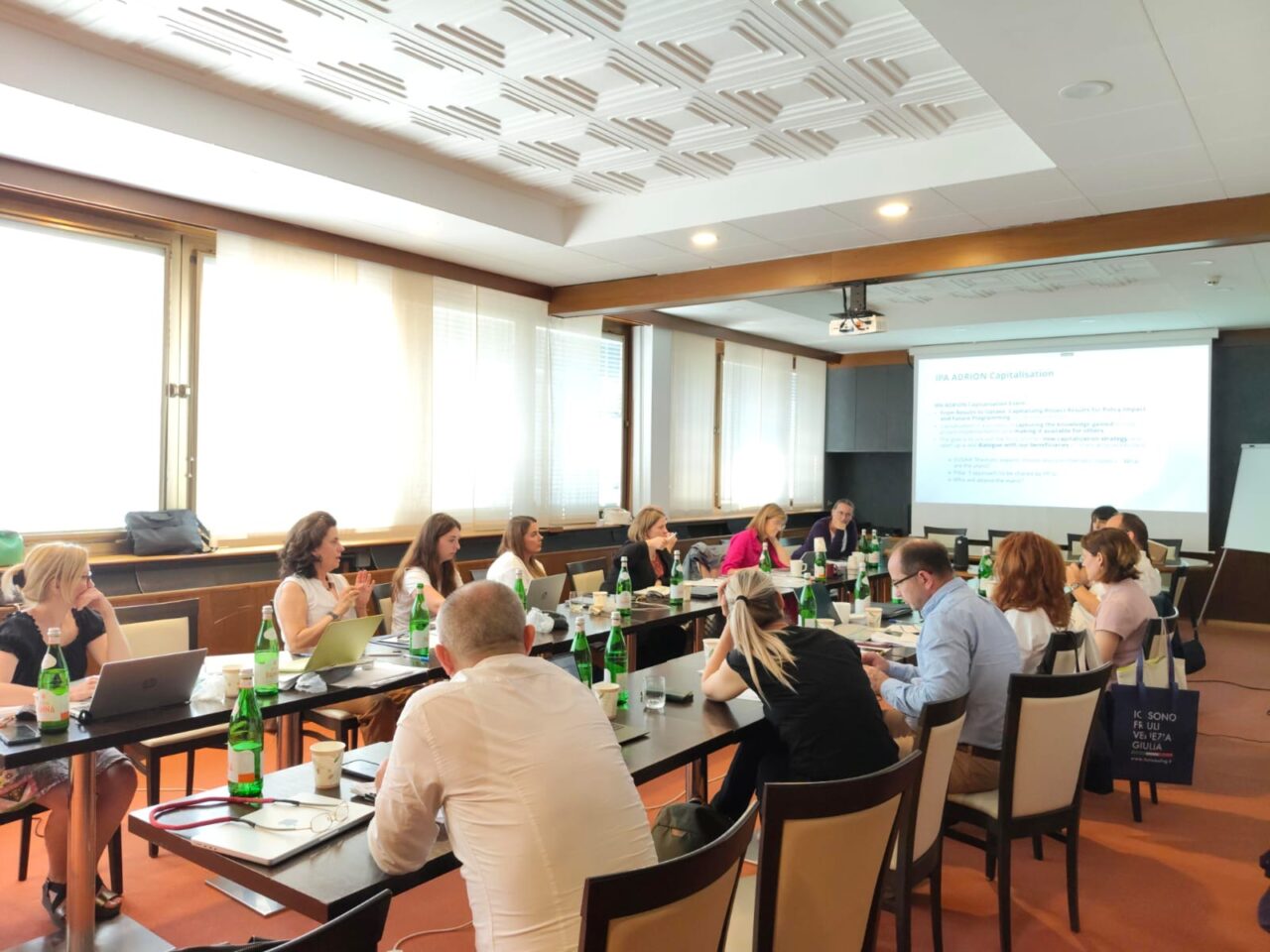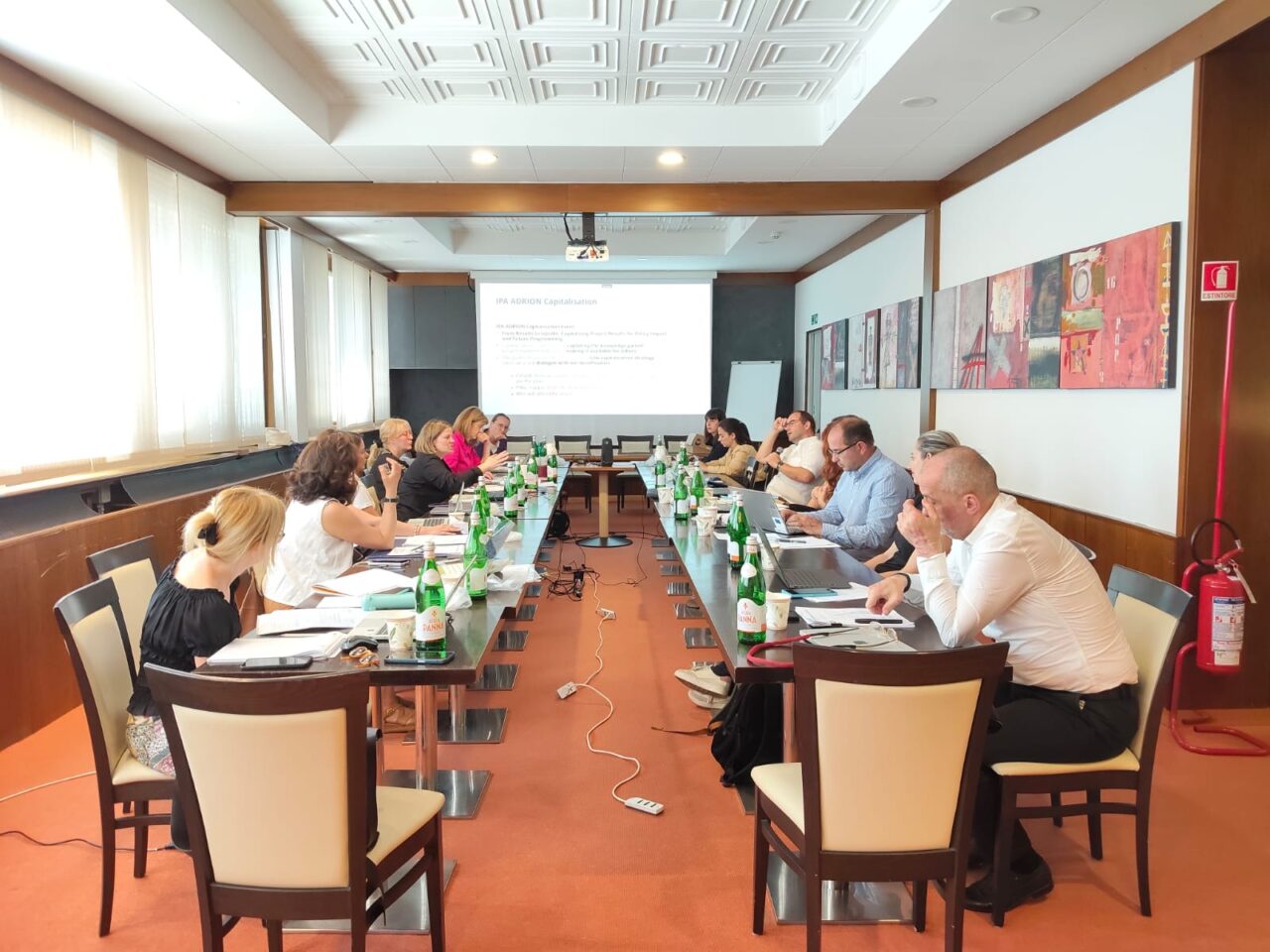
On 16–17 June 2026, the EUSAIR Facility Point Project Partners met in Gorizia (Italy) for the 5th Project Steering Group meeting, with the aim of reviewing progress achieved and planning upcoming activities.
The meeting was attended online by representatives of the European Commission (DG REGIO), the Joint Secretariat of the Interreg IPA ADRION Programme, and the EUSAIR Governance Support Project STEP.
Discussions focused on the state of play of project implementation and on the support provided to EUSAIR governance structures, in view of the forthcoming mid-term review to be conducted by the Interreg IPA ADRION Programme by the end of 2026.
Particular attention was given to the engagement of thematic experts across all Pillars, supporting Thematic Steering Group (TSG) members and Pillar Coordinators in the implementation of the EUSAIR Action Plan, as well as to the ongoing development of Issue Papers addressing key thematic priorities.
An update was also provided by the Italian Facility Point on the preparation of the programme and priorities of the Italian EUSAIR Presidency, currently under development by the Department for Cohesion Policies (DPCoe), in coordination with the Ministry of Foreign Affairs and International Cooperation (MAECI).
The meeting also addressed the activities of the EUSAIR Youth Council, including a presentation of the initiatives carried out under the current mandate and an update on the ongoing selection process for the 2026–2027 cycle, reaffirming the strategic importance of youth engagement within the macro-regional governance framework.
Overall, the exchange confirmed steady progress in the implementation of the EUSAIR Action Plan across all Pillars, as well as in coordination and knowledge management activities, including capacity-building initiatives and strengthened cross-cutting cooperation.
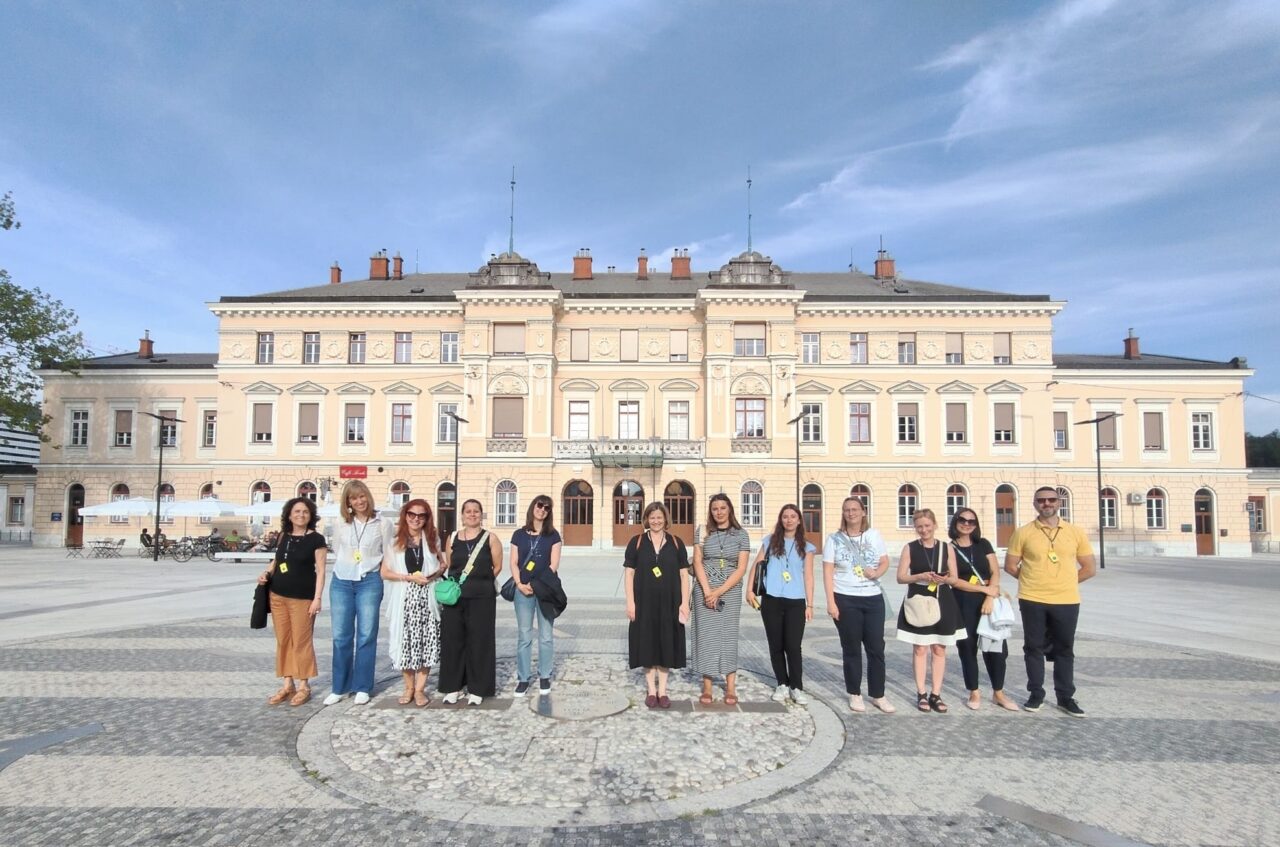
In addition to the technical sessions, participants joined a guided visit of Gorizia and Nova Gorica, gaining first-hand insight into the historical and cultural heritage and cross-border dimension of the two cities, jointly designated as European Capital of Culture 2025. The visit provided a concrete example of cross-border cooperation in practice, highlighting the role of culture as a driver of integration and showcasing tangible results of the long- standing collaboration between Italy and Slovenia.