Izola, 9 April 2026 – The opening of the 7th Adriatic Maritime Law Conference (AMLC VII) took place in Izola, Slovenia marking one of the most important professional events in the field of maritime law in the Adriatic-Ionian region. The conference brings together renowned legal experts, representatives of international organisations, academics and decision-makers from across Europe and beyond. Once again, Izola has confirmed its position as one of the key venues for high-level professional and expert dialogue in the wider Adriatic and European region.
The opening ceremony was held at the Manzioli Palace, where the Mayor of the Municipality of Izola, Milan Bogatič, underlined in his welcoming address:
“Izola continues to establish itself as an important space for dialogue, knowledge exchange and reflection on the future of our shared maritime area. Maritime law is not merely a professional or academic discipline; it represents a fundamental legal framework that significantly shapes life by the sea. It affects navigation safety, port operations, protection of the marine environment, and the development of the maritime economy, nautical activities and tourism. We are particularly pleased that one of the co-organisers of the conference is the Public Institute for the Promotion of Entrepreneurship and Development Projects of the Municipality of Izola – JZP Izola, which is celebrating its 10th anniversary this year.”
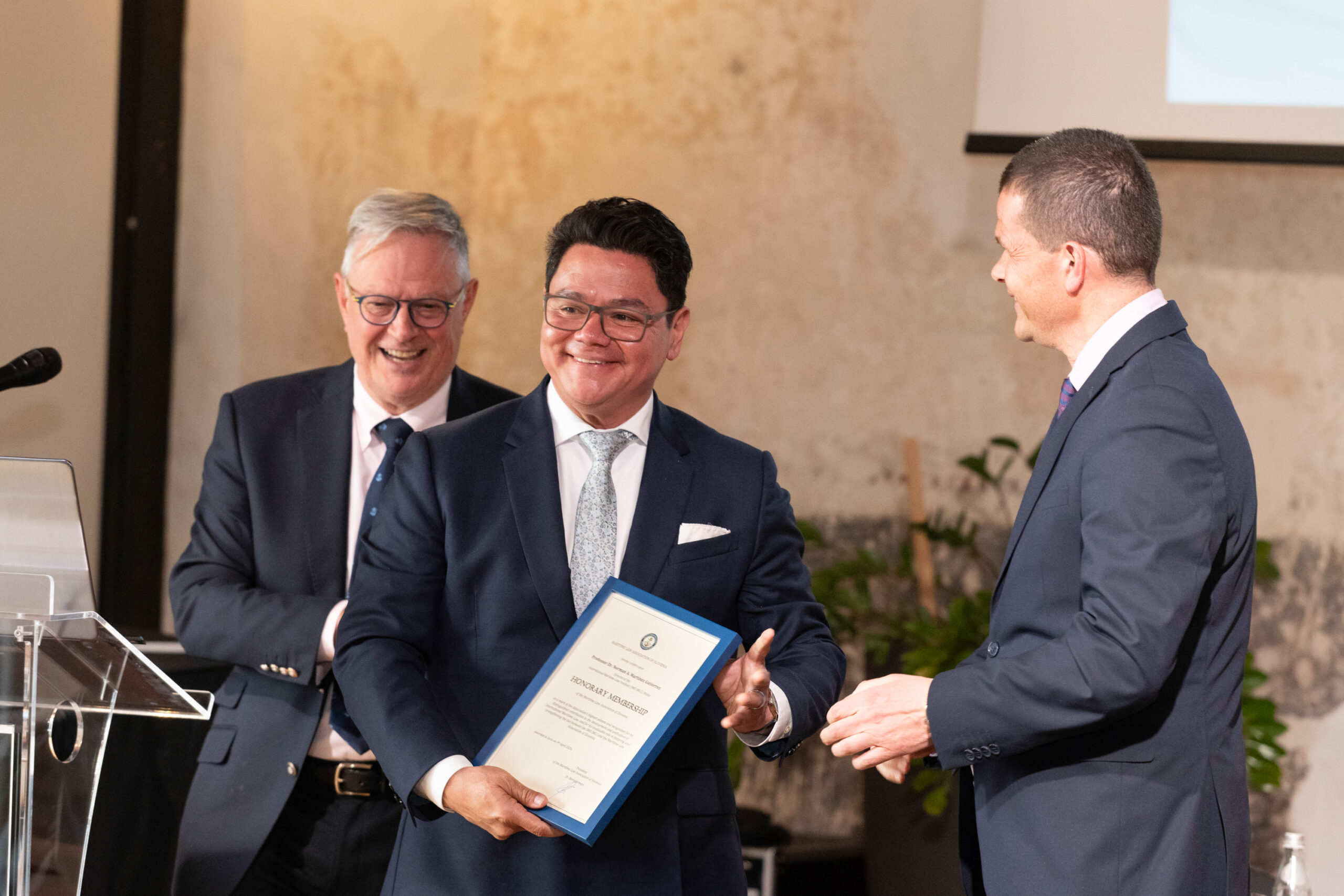
Dr. Mitja Grbec, Secretary General of the Slovenian Maritime Law Association, expressed great satisfaction with the fact: “that this year we welcomed the Director of the IMO International Maritime Law Institute (IMLI, Malta) as an honorary member of our Association. IMLI is one of the world’s most prestigious institutions in the field of international maritime law, and this recognition therefore reflects international cooperation, professional excellence and a shared commitment to the development and respect of international maritime law.”
Key addresses by world‑renowned experts
The central part of the first conference day featured a high-level keynote panel, chaired by Prof. Dr Mitja Grbec, bringing together internationally recognised authorities in maritime law:
- Giorgio Berlingieri, President of the Italian Maritime Law Association and Honorary Vice-President of the Comité Maritime International, highlighted the centennial development of maritime liens and mortgages on the occasion of the 100th anniversary of the 1926 Brussels Convention. He is considered one of the most influential living authors in maritime law worldwide.
- Vesna Tomljenović, former Judge of the General Court of the European Union and Full Professor of Law, presented the latest case law of European courts in the field of maritime law, offering direct insight into the functioning of EU judicial institutions.
- Dr Marko Pavliha, internationally recognised Slovenian expert in maritime and transport law and former minister, marked the 25th anniversary of the Slovenian Maritime Code and its importance for the legal stability of maritime affairs in Slovenia and the wider region.
- Dr Norman A. Martínez Gutiérrez, Director of the IMO International Maritime Law Institute (Malta), presented the role of the International Maritime Organization (IMO) in shaping global standards of maritime law and ocean governance. He is among the leading global academics in this field.
Prof. Dr Marko Pavliha emphasised:
“The new regulation of Exclusive Economic Zones in the Adriatic Sea is not merely a question of states’ economic rights, but above all of their responsibilities. Within these zones, states are obliged to ensure good environmental status of the sea, sustainable fisheries management and the protection of sensitive marine environments. Exclusive Economic Zones are therefore not only ‘economic’ zones, but also environmental and governance zones, requiring close regional cooperation. Only through respect for international law and joint responsibility for the Adriatic can its sustainable development be ensured.”
Dr Ilarija Tani highlighted that:
“European Groupings of Territorial Cooperation (EGTCs) are becoming one of the key instruments for the joint management of marine and coastal protected areas, as they enable stable cross-border coordination and effective implementation of European environmental policies. In the Adriatic-Ionian region, Thematic Steering Group 3 (TSG 3) within the EUSAIR framework has already established important legal foundations for the creation of an EGTC dedicated to the joint management and planning of protected areas. Such governance models allow for overcoming administrative boundaries and addressing marine ecosystems as inherently shared natural systems. EGTCs thus provide a concrete tool for linking nature conservation, spatial planning and sustainable development at European level.”
Thematic panels: Law, Sustainability and Technology
Over the course of two days, the conference features a series of content-rich thematic panels addressing:
- Harmonisation of maritime law and the implementation of international conventions at national level;
- New technologies in maritime transport, including autonomous vessels, electronic bills of lading and drones;
- Legal regulation of sustainable port operations in the Adriatic;
- Protection of the marine environment, marine protected areas and the use of marine resources;
- Decarbonisation of shipping and alternative fuels;
- Legal challenges related to nautical tourism and marinas.
Dr. Mitja Bricelj, coordinator of TSG 3 EUSAIR, chaired the session “Protection of the Marine Environment and Exploitation of Resources of the Adriatic Sea.” The main conclusion was that, for effective maritime governance in the Adriatic (ICZM/MSP Adriatic), it is necessary to strengthen the application of international (UNCLOS, ESPOO) and EU legal frameworks, as well as existing agreements for the protection of the Adriatic. The EUSAIR process is therefore very important.
Particular attention was devoted to panels on shipping decarbonisation, where experts from academic, administrative and insurance sectors discussed the impacts of EU and IMO climate policies on shipowners, ports and seafarers. In this context, Dr. Mitja Bricelj highlighted:
“As the EU Council Presidency holder in 2022, Slovenia achieved a consensus among Mediterranean states at the Conference of the Parties to the Barcelona Convention on the designation of a Sulphur Emission Control Area (SECA) in the Mediterranean, which has led to a reduction of sulphur emissions by more than half to date.”
International participation and regional importance
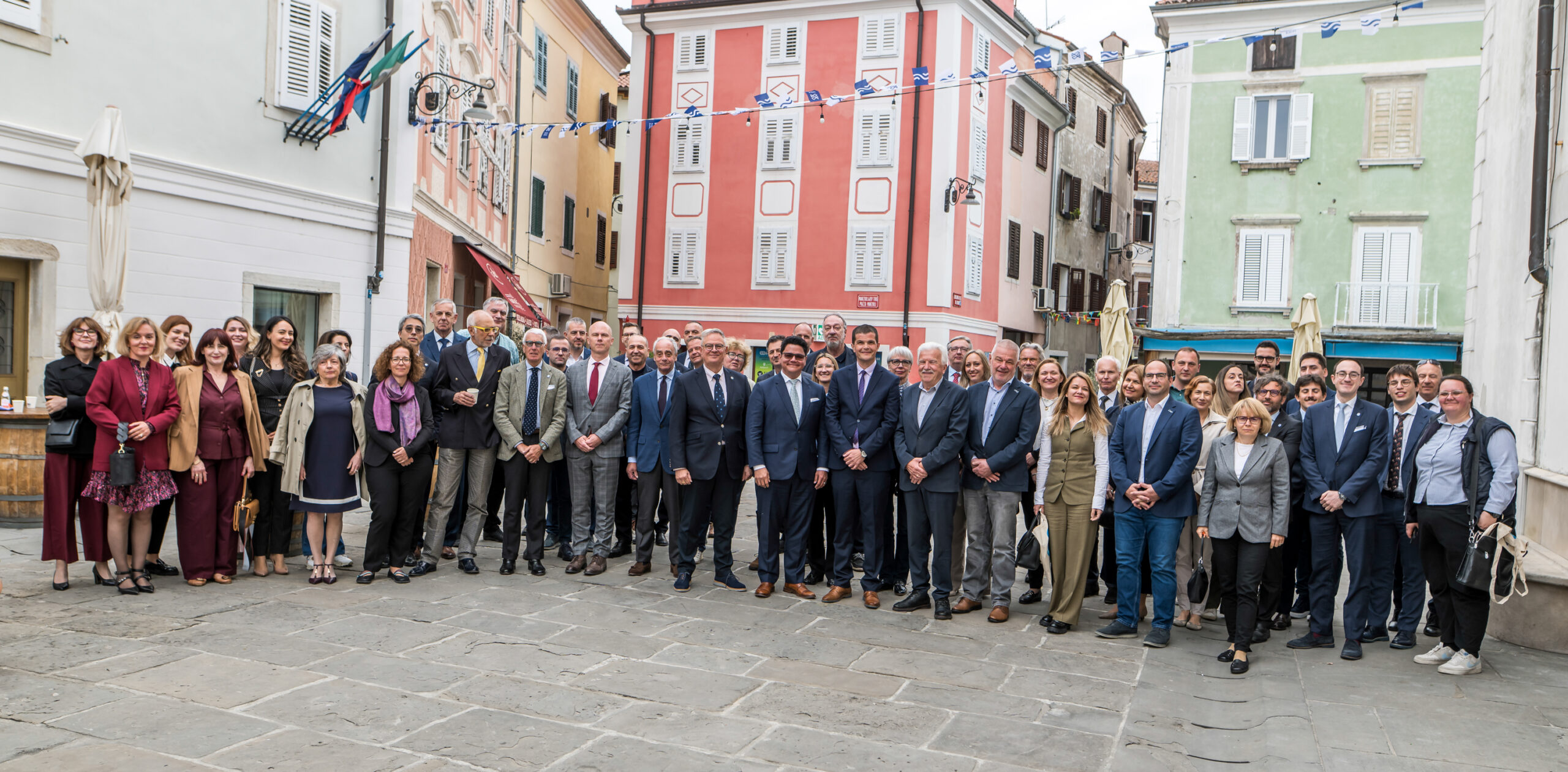
The conference brought together 70 distinguished legal practitioners, judges, professors, representatives of ministries, administrations and ports from more than ten countries, further strengthening AMLC’s role as a key platform for legal dialogue in the Adriatic area.
The event also contributed to achieving the objectives of EUSAIR and to strengthening regional cooperation in the field of sustainable marine development. Part of the accompanying activities is co-financed under the Interreg IPA ADRION 2021–2027 Programme.
Photos: Branko Furlanič. The first photo shows more than 70 conference participants; the second shows Prof. Dr Norman A. Martínez Gutiérrez receiving a commemorative plaque from Dr Mitja Grbec and Prof. Dr Marko Pavliha.